Is it time for Louis Vuitton to exercise and enjoy some restraint?
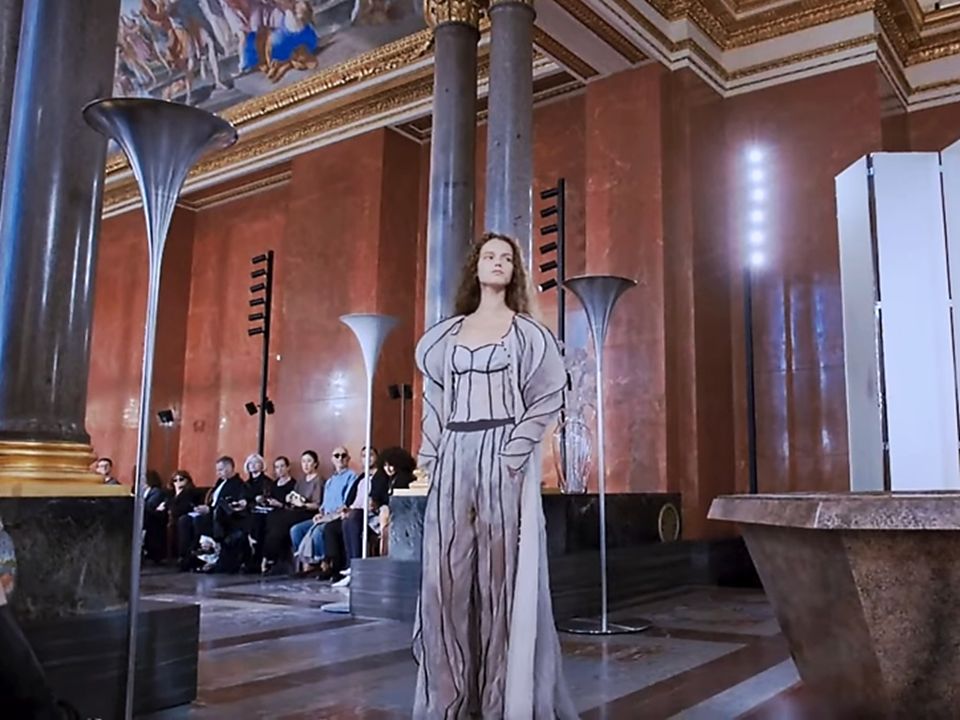
The Louis Vuitton show was back inside the Musée du Louvre. This season, it was held in the one-time summer apartments of Anne of Austria, Queen of France, who, despite a difficult royal marriage, secured the throne for the future Sun King, Louis XIV. Outside, another royalty had arrived, but to the shattering, un-17th century screams of fans: Lisa Manobal. This jarring juxtaposition—the ornate salon of old Europe keeping the 21st-century superfans at the gates—served as the dichotomous prelude to Nicolas Ghesquière’s Spring/Summer 2026 collection. The Louvre has for a long while been Mr Ghesquière’s preferred show venue, serving as a backdrop for his dialogue between the ages. This time, the exchange was not so clear, but his conceptual complexity remained as certain as the ornate frescoes and vignettes of the Rotunde.
In the collection itself, Mr Ghesquière staged not a simple conversation with one era, but a motion sickness-inducing jump through time. One report went by the headline: “Louis Vuitton reinterprets house codes at Paris Fashion Week”. And what house codes were these? Mr Ghesquière’s personal aesthetic has been so strong that there are only his codes: building a wardrobe for a chic, intellectual woman with a taste for futuristic styles by filtering Louis Vuitton’s historical elements through real-world histories, speaking his singular design language that could have been Na’vi. The result can sometimes be—and had been—highly conceptual and complex, and overwrought with ‘effects’, both technical and decorative. In a word, dense.


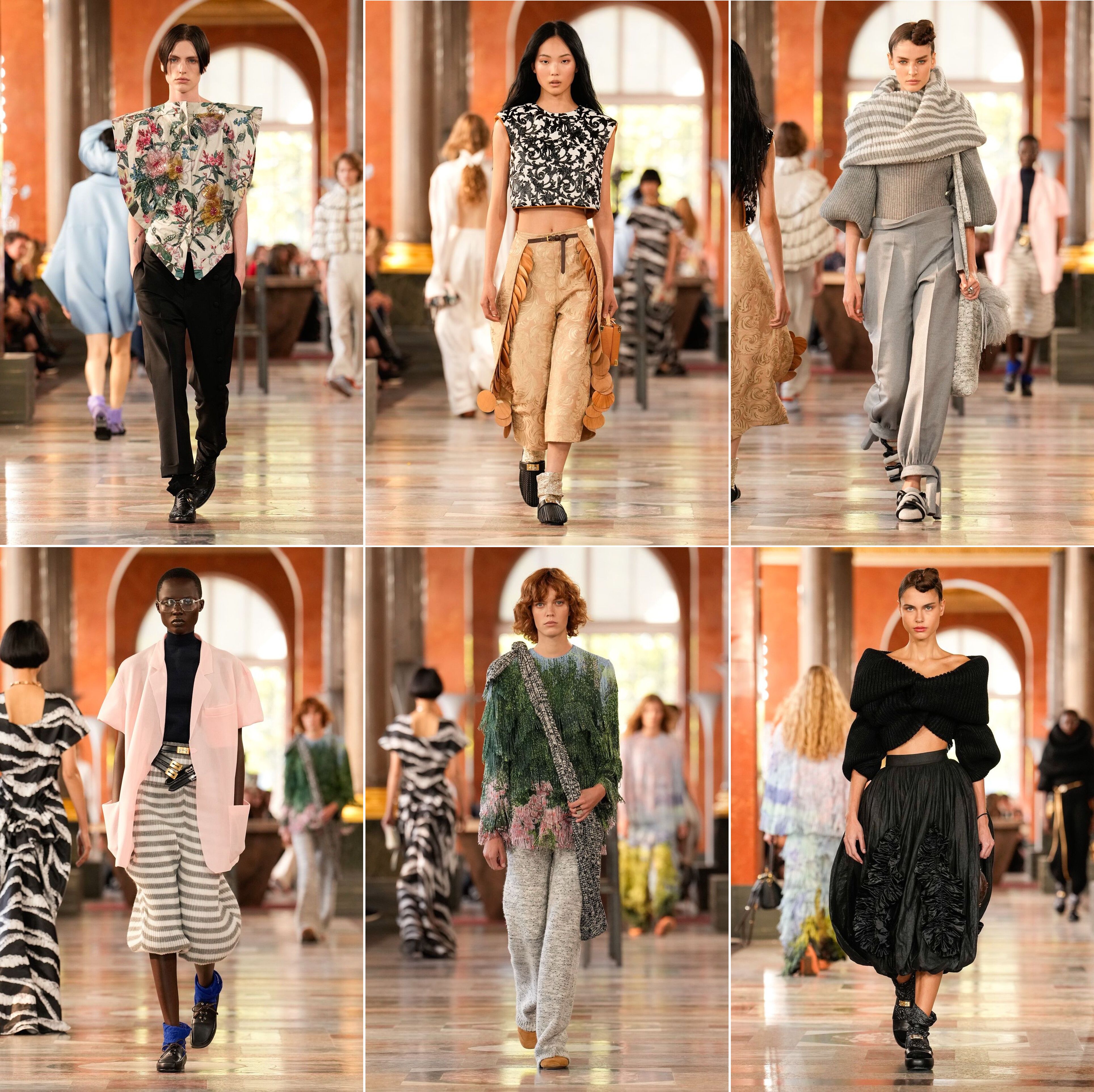
Mr Ghesquière’s runway has often been a living collage of centuries. You don’t always know where one begins and another ends. This time, there was purportedly “Renaissance power-dressing” (we did not detect that) and “Ottoman decadence” (which we discerned). The thing is, where did all that oscillation bring us? To the same lavish perch, only more ridiculously dressed. We have always been partial to Mr Ghesquière’s work, but this time, it was too rich in questions and too poor in answers. His inspiration is rarely simple or linear and his layering of references can make a single garment feel like it has too many competing ideas. Take the diaphanous, pink tunic-dress. It has a sharp, elongated collar that look like the neck sprouted fangs. These crowned the ruffled and pleated garment which was belted with a wide sash in a contrasting fabric of indeterminate print. Classic clouding of clarity.
Fans extol his treatment of clothing like a work of art or an artifact from a different dimension. We don’t have a problem with that, but after more than ten years, some ideas are really tiring us out. We are not asking for a reduction of the mash-ups, but a clarity of what they truly propose. In the current season, the recurring visual rhythm involving a clash of extreme volumes remained, so did textures and intricate embellishments and the androgynous silhouettes. But between them were mystifying additions, such as the ungainly, calf-length lantern skirt; the ruffle-top tunic that opened in the centre like a puppeteer’s curtain; the floral, embroidered tabard that could have been a repurposed pillow sham; and the ridiculous turban the size of an armchair cushion. There was even a set of samfoo. Unfortunately for Nicolas Ghesquière, Prada beat him to it. So did Ong Shanmugam.
Screen shot (top): louisvuitton/YouTube. Photos: Louis Vuitton
 Style on the Dot