Yes, you can build an entire collection around sleepwear. Dolce and Gabbana did
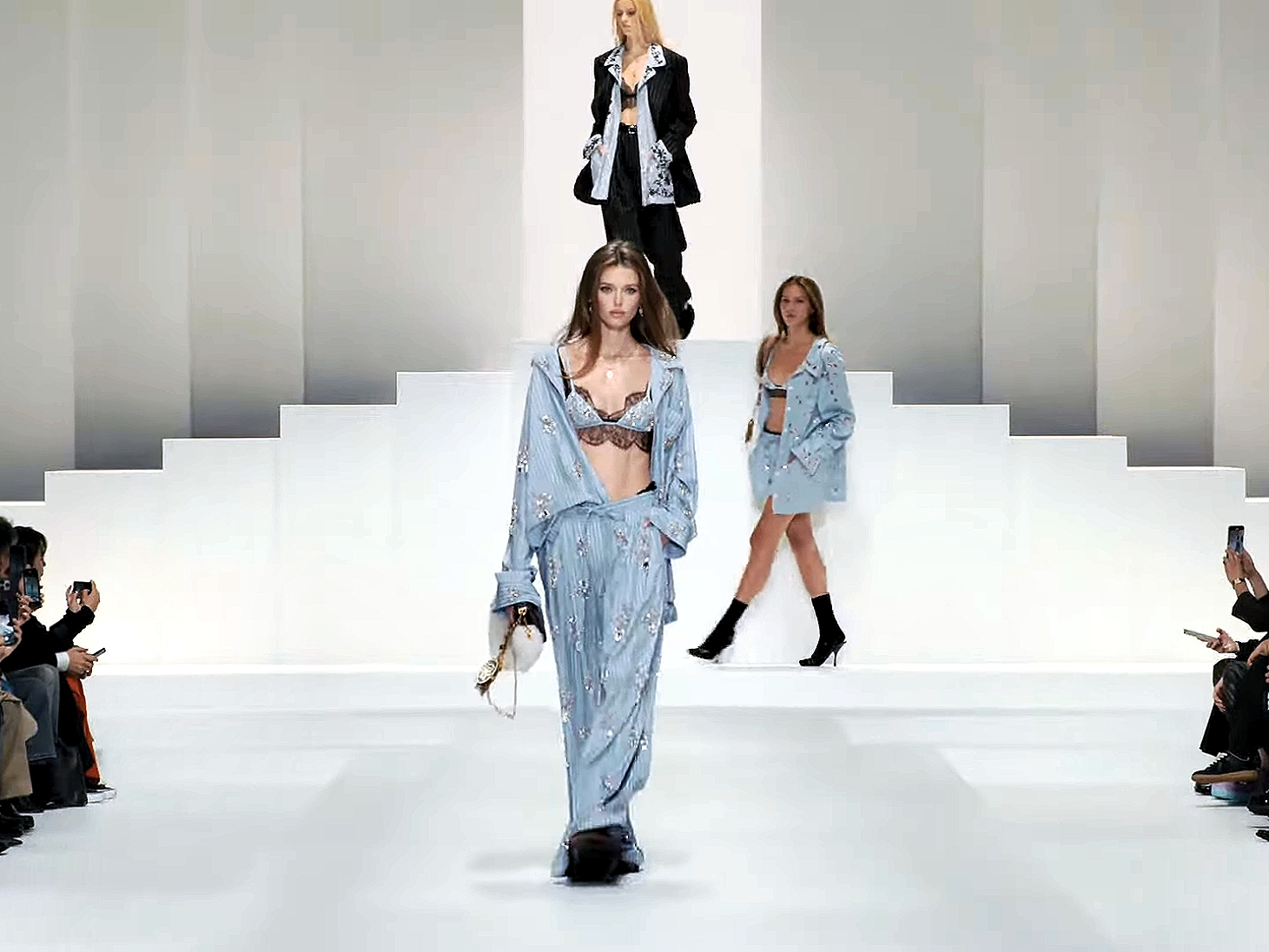
If you can smudge the line between luxury and mass, you definitely can blur the one between sleepwear and streetwear. For spring/summer 2026, Dolce and Gabbana decided to declare neutrality on the subject of definition, turning to the bedroom to turn out clothes appropriate for stepping out or social engagements. The entire collection of 66 looks was based on classic, menswear-inspired pyjama sets, reintepreted so that they can be worn for both lounging at home, in a staff canteen, and at a martini bar. The pyjama theme was, in fact, a continuation of what their menswear was based on back in June—the Pyjama Boys, except that this time, for the girls, the pyjamas were pressed to a near shine. The message did not strain itself trying to escape the stereotype: women iron, men don’t.
The migration of the men’s thematic lint on the runway to the women’s presentation was not only clumsy, it was predictable, bordering on lazy. The modern men’s pyjamas, not the Victorian nightshirts that preceded it, is essentially a simple sleepwear that is derived from the Hindi pay-jama or “leg garment”. Men continued wearing them for bed or lounging at home until around the 1920s when women adopted them as beachwear and lounge wear sets. The more ‘complicated’ half of the pyjama set—the shirt—is loose and flowing, using only the fabric itself, no internal canvas or padding is required. Dolce & Gabbana’s pyjama tops are based on this constructional approach. There was no reinvention, only recontextualisation. But the idea of wearing a set of pyjamas away from sleep has been part of the D&G DNA since the ’80s, culminating in the Pyjama Party capsule of 2016.


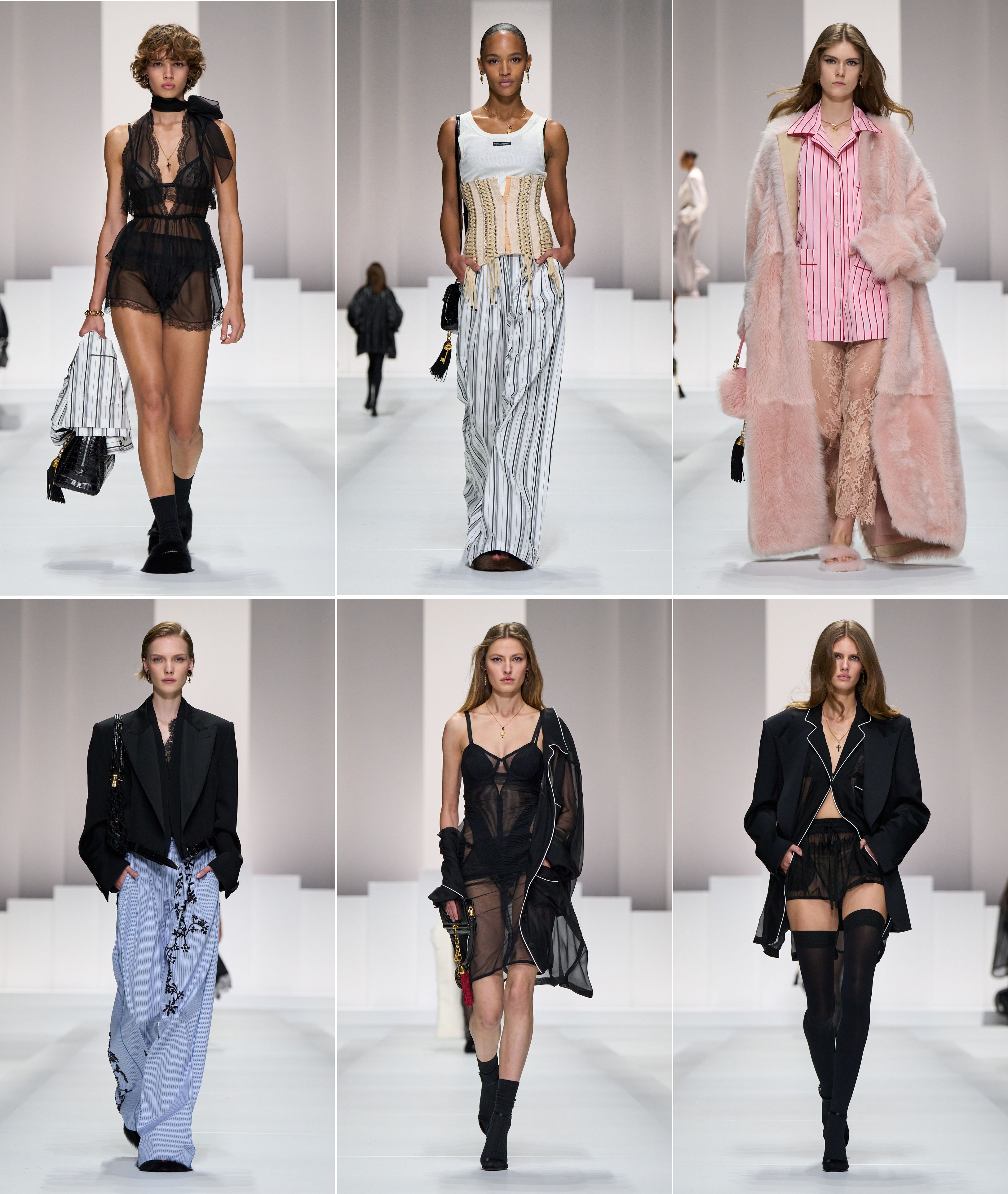
But pyjamas that looked like they were sourced from Yue Hwa emporium won’t sell massively. To ‘elevate’ them, Domenico Dolce and Stefano Gabbana cunningly embroidered dainty flowers on the stripe-y fabrics, which could pass off as merchandise from 6ixty8ight. The collection became a tedious exercise in juxtaposition: pair everything with sexy underwear that is basically coverage’s nemesis. These are underwear and sleep wear that the brand has done before, now teamed up as if they were fresh off the innovation lab. Pretty pyjamas with with lace bodies, pyjama shirts unbuttoned to allow the bralette to peek out and worn with denim overalls with pyjama bottoms, or, if the evening demands, a cropped tuxedo jackets with pyjama pants. After the first ten looks, the conceit was sleep-inducing. The muddling of lines between intimate wear and daywear did not feel subversive; it felt like overworked styling, stripped of the wit and intellectual fillip that defines a collection that’s compelling.
The most energetic thing about the presentation was the celebrity drama filmed on the front row. In an act of desperation to distract from the snooze fest, Dolce & Gabbana allowed the show’s front row to become more than the celebrity pageant it usually is. Now, a staged circus provided the backdrop for the highly publicised filming of the sequel to 2006’s The Devil Wears Prada, complete with Meryl Streep and Stanley Tucci reprising their caricatures, as the models strutted on the runway. It lent a certain crassness to both brand and movie. With Miranda Priestly, the ultimate editor-in-chief cliché, in attendance, wearing D&G, the brand gained free media coverage. The beastly Priestly, taking her seat to cheers from the audience, was outfitted in a vinyl khaki trenchcoat from the brand. For Dolce and Gabbana, it’s a commercial, not critical, coup. Life, as seen, is just bad art’s muse. And vice versa.
 Style on the Dot