Louise Trotter’s debut at the house of the Intrecciato weaves it future with textures and sublimity

It is rare that when one watches a fashion show, especially online, that one gets goosebumps. It has not happened for us at the various ‘debuts’ this Milan season, some visually challenging, others only less. But at Bottega Veneta, we experienced a shiver of sheer electricity. Louis Trotter’s first season for the Italian house was a frisson of luminous comprehension. She had a clear command of the brief. Hers was not reverence that bordered on ritual. There was, of course, the use of the Intrecciato and very good use, but we sensed that she was not obligated to, rather, it was a happy encounter. If fit is vital to the brand and creative director pairing, as it has been bandied about, Ms Trotter to Bottega Veneta is an exacting correspondence of form.
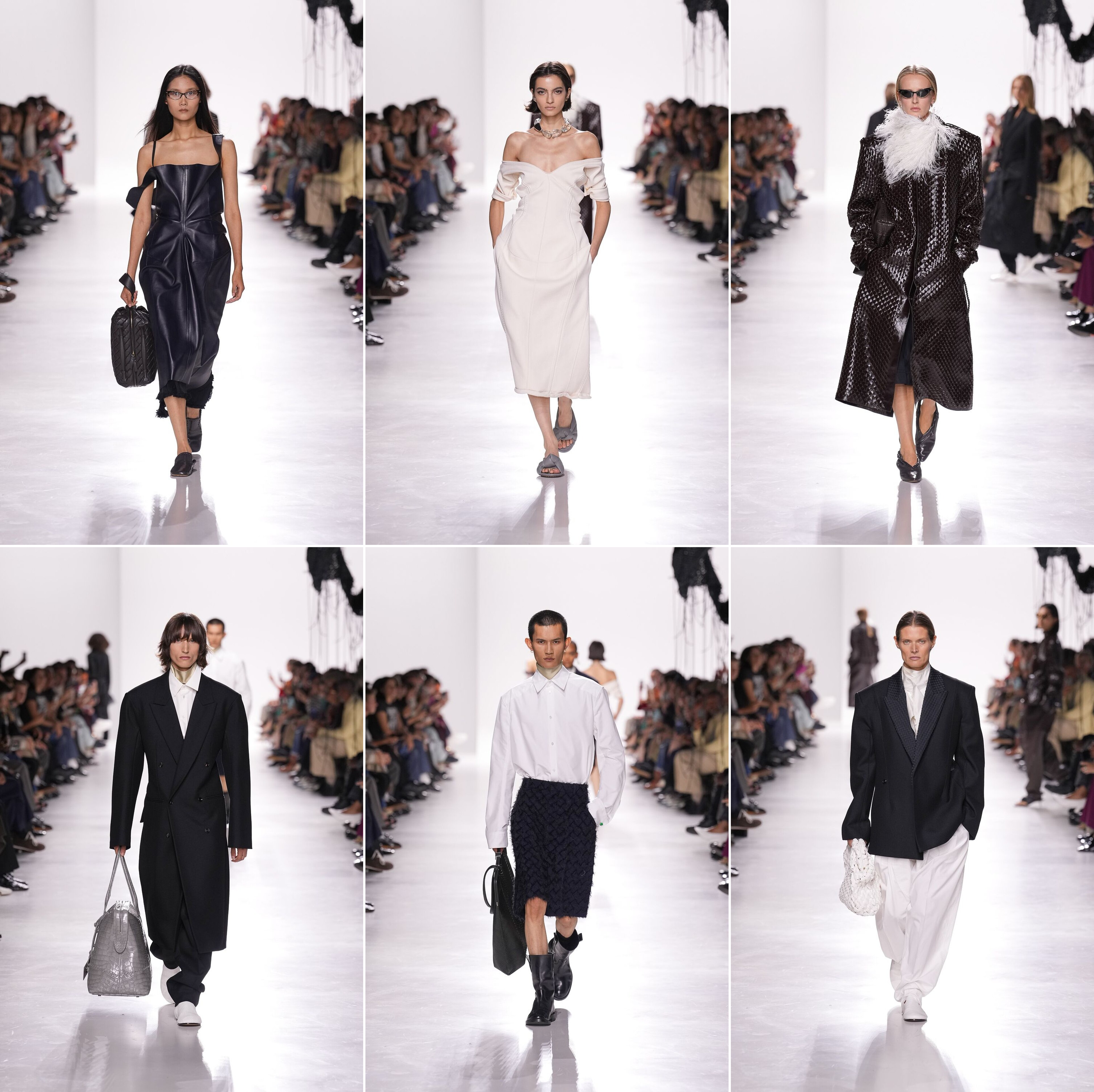
This year marks the fiftieth anniversary of the Intrecciato, which means weave or braid in Italian, and Ms. Trotter deployed this signature technique at the optimal moment. Apart from the coats, jackets, and the trousers, the odd cape, admittedly sumptuous, and the bags, there were other smaller pieces of the Intrecciato. These were fashioned into removable collars that can be worn to accentuate necklines or even as extra-long epaulettes that dropped to the cuff of the sleeves. The refined leather work and their possibilities for distillation stemmed from her engagement with the atelier. Bottega is, after all, Italian for ‘workshop’, and the collection was a celebration of the eloquence hands can command. This emphasis on the hand (also the substance of the surface) of the artisan meant every garment possessed a palpable weight, grounding the collection in the physical reality of luxury craft.
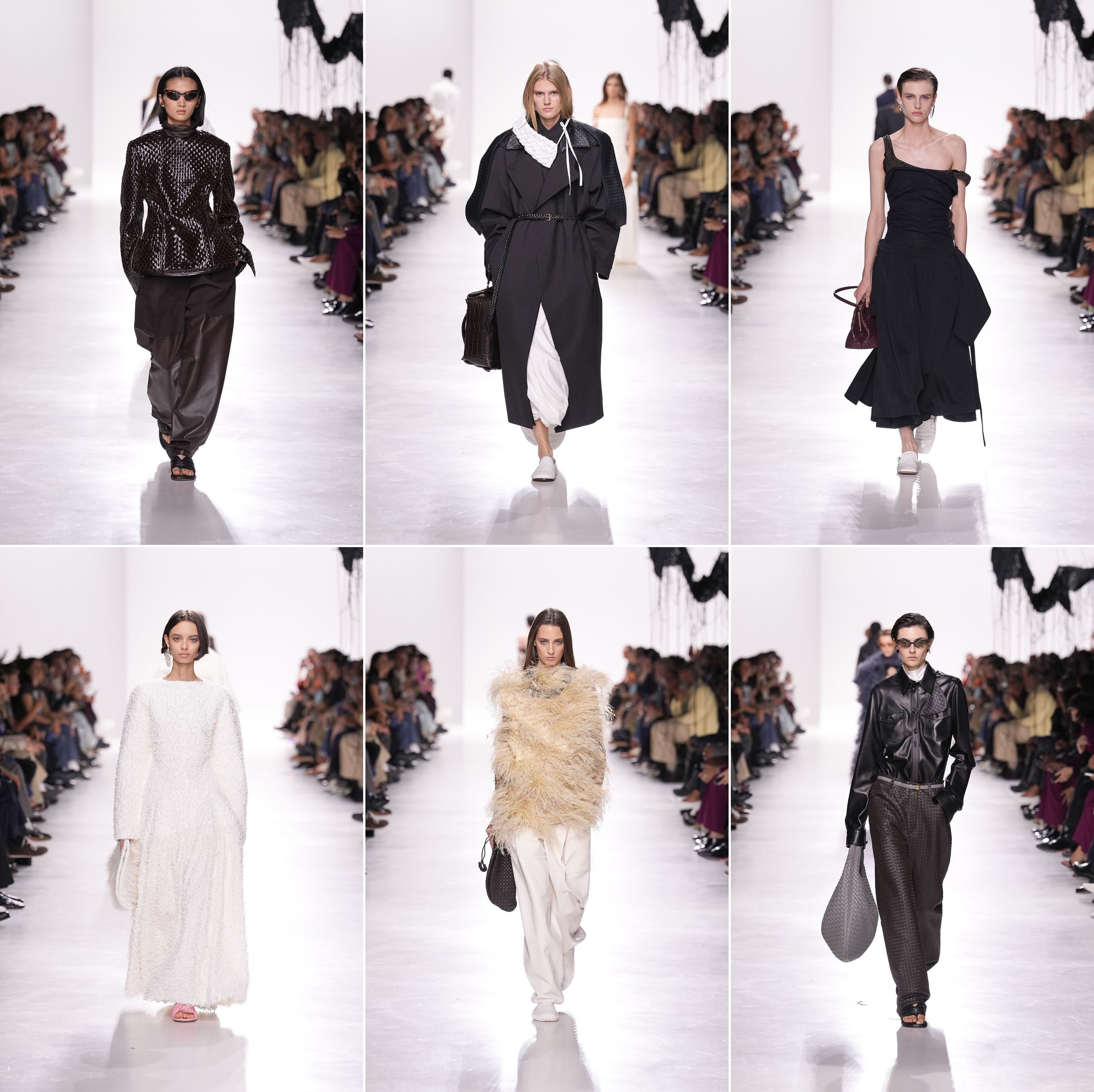
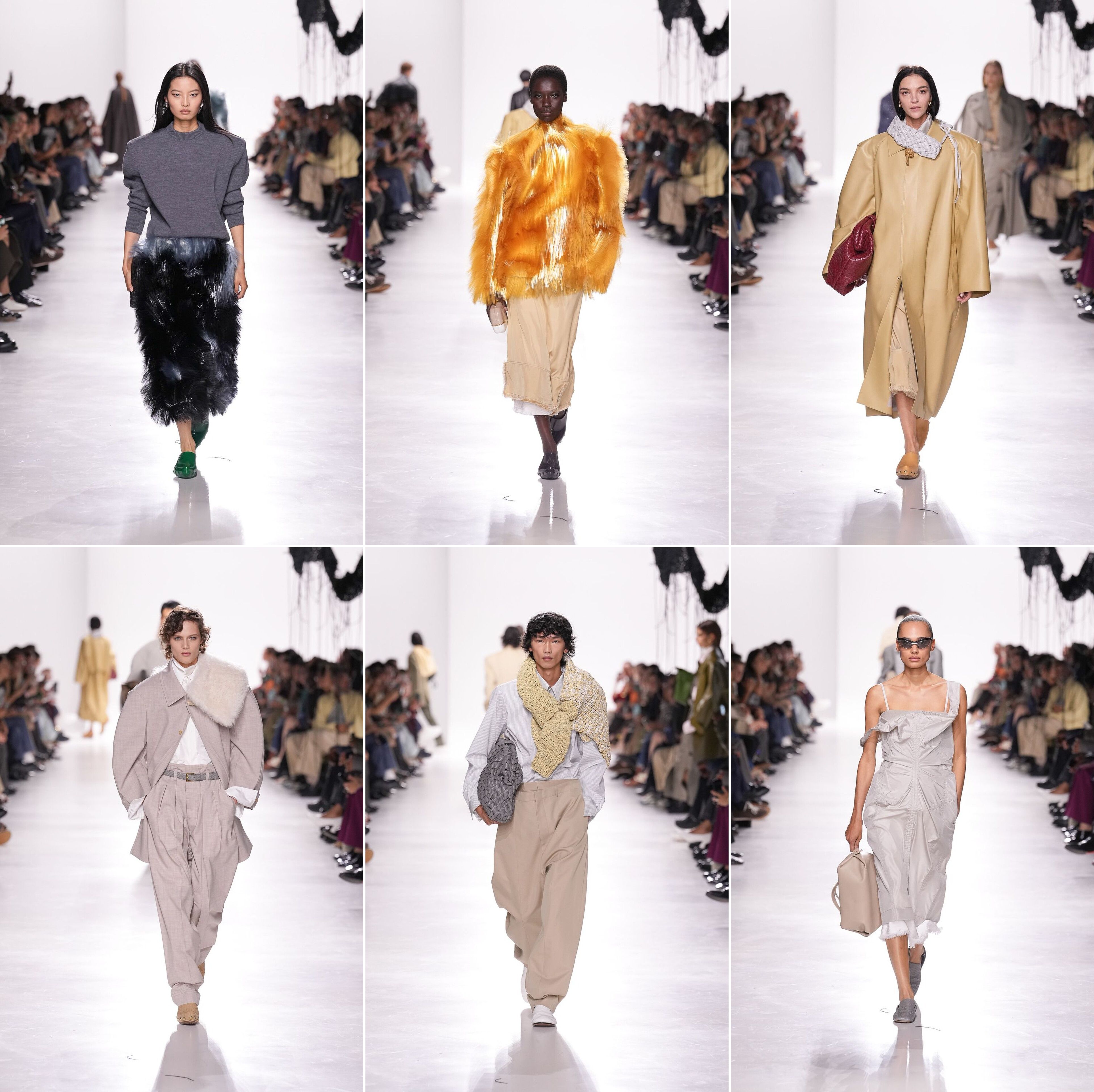
This tactile confidence in textiles stood out powerfully in the strange furry fabric that was not fur (or similar fibre), but recycled fibreglass. They were, surprisingly, not rigid since filamentary surfaces tend to move like hedgehog spikes. Rather, these swayed with the ease of feathers, and beguiled like tinsel. Interestingly, the needles extruded from a woven base (more Intrecciato?), which could have allowed the pins to be applied like tufting. Ms Trotter was able to create some enthralling effects—puffy skirts with painterly colour gradation or tops with colour treatment that allowed a bleached centre to move, as the models strode, like a koi in water. By next summer, the wealthy gallerists will sanction them as new cultural artefacts.
More than just the optic signatures, there was also what Ms Trotter is known for: tailoring,. This was well expressed during her tenure at the British brand Joseph (that unfortunately was shortlived here). Her Bottega Veneta showed an identifiable mastery of cut and execution, particularly evident in the precision of the wide-shouldered coats and defined-waist blazers; yet, in a season where exaggerated proportions are still ubiquitous across the major European houses, the volumes felt somewhat overdone. They positioned the silhouettes not as a visionary counterpoint to the fashion moment, but rather as a convenient echo of it, despite the excellence of their construction.
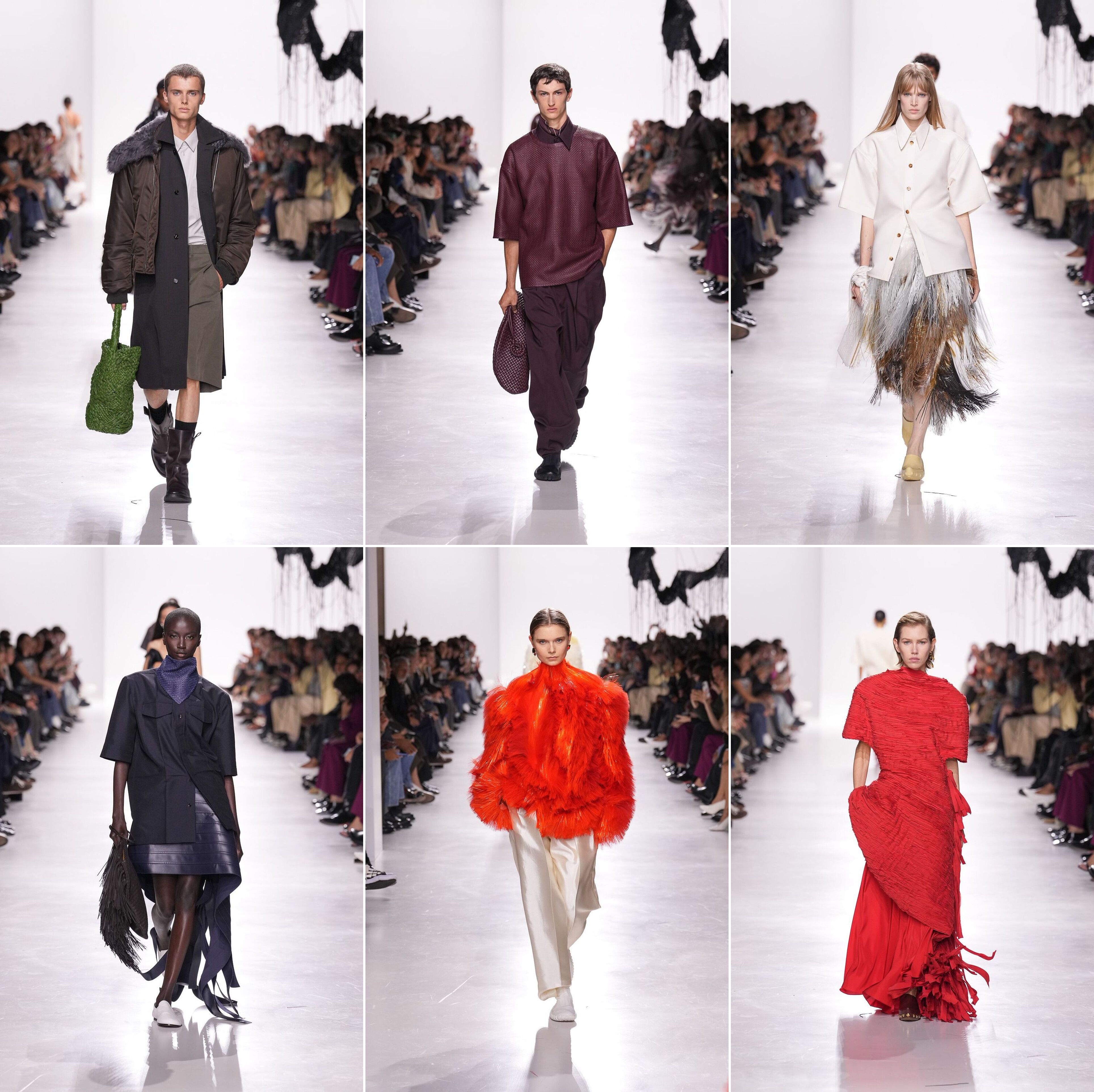
With the experimental materiality and the convincing tailoring expressed, Ms Trotter gave dresses their pride of place. These were, however, not an overture of the over-feminine. She did not succumb to the sheer or the shorn. Her dresses were subtle homage to Thomas Maier (the first creative director after the Gucci Group acquired the brand) in their forms that suggested Sophia Loren, minus the aggressive seduction. They achieved a desirable and elemental femininity without ever having to shout their identity, employing expert shirring, sculptural volume, controlled tailoring, and the drop of one shoulder that embraced and then released the body—a sophisticated, quiet elegance that many women truly appreciate, a sleekness once found in the work of Phoebe Philo, but not presently.
The marvelousness of Bottega Veneta is their ability to maintain a clear, consistent aesthetic that stretches back to their first creative director Laura Braggion, who, according to the show notes, was the CD from the 1980s to the 2000s. Ms Trotter’s own, while non-fungible, is closer to her predecessor, Matthieu Blazy, soon to be subjected to scrutiny when he unveils his first collection for Chanel the week after the next. Although she is only the second woman to design for the nearly 60-year-old house, Louise Trotter did not bank on the common pride of “a woman designing for a woman”. She allowed herself to be in touch with her masculine side and, for that, her spirit found its ideal equilibrium. Bottega Veneta is now placed within the imaginative and capable custody of a designer whose vision is as much about the pitch as the palette.
 Style on the Dot