Prada is back to spotlighting the skirt. All bets are off, but the gloves are on
The first two looks really threw us off. They were nothing short of a bait-and-switch. For spring/summer 2026, Prada opened the show with one boilersuit and then another, both uniform-like, epaulettes perched on shoulders. They were fascinating because it was hard to tell if they were, in actuality, two pieces, but they did look like boiler suits, both in one solid colour for the seemingly conjoined top and bottom. It immediately suggested that Miuccia Prada and Raf Simons were back to exploring, reworking, and subverting workwear. Except that no one wears opera gloves to work.
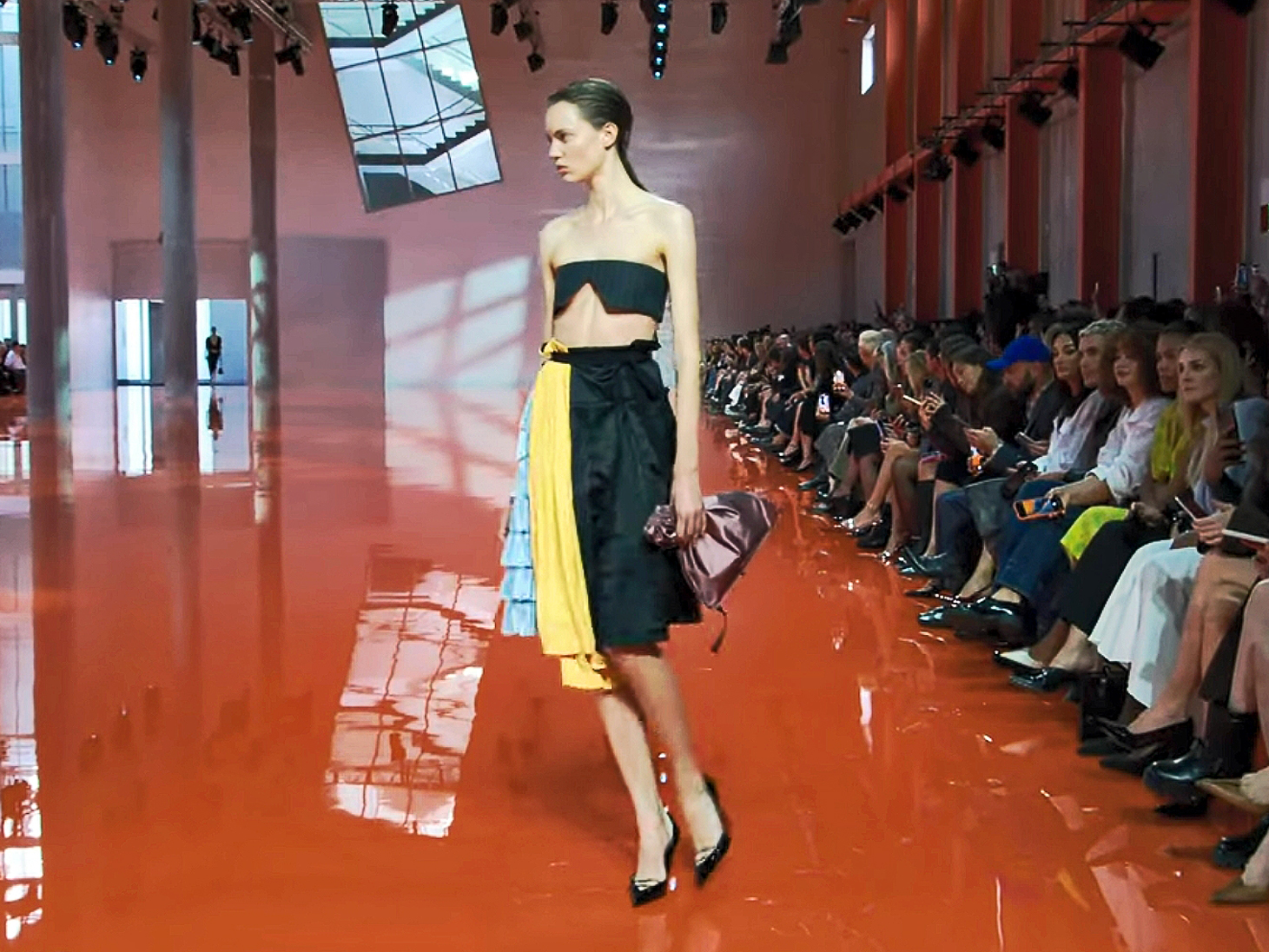
And then a total shift. The third outfit was an inverse of the utilitarian. The model was strapped with a minimal and abbreviated top that looked like visors for breasts. She wore a skirt that comprised of parts: taffeta and lace panels for the front that were ruffled at some points (certainly a portion of the hem), and a rear that appeared to be horizontally pleated across the derriere. A black band gave the impression it held the skirt together, The whole skirt was worn as if the side seams did not align with the hips.
That gave way to more skirts with more compositional intrigue. The designers played with volume, texture, and silhouette to the hilt. There were those in shapes more typical of a Prada show: full-skirted that Mrs Prada herself often wears and the many wealthy women who still count themselves as Park Avenue princesses. There were liquid, slip-like pieces; pleated-and-still-voluminous skirts, mashups of texturally curious pairings that were rather Sacai in spirit; puffed-up merengues; and what could be pinafores, except that they had stringy straps that allowed you to focus on the skirts that sort of hangs… and floats. Is there even a name for such an article of clothing?


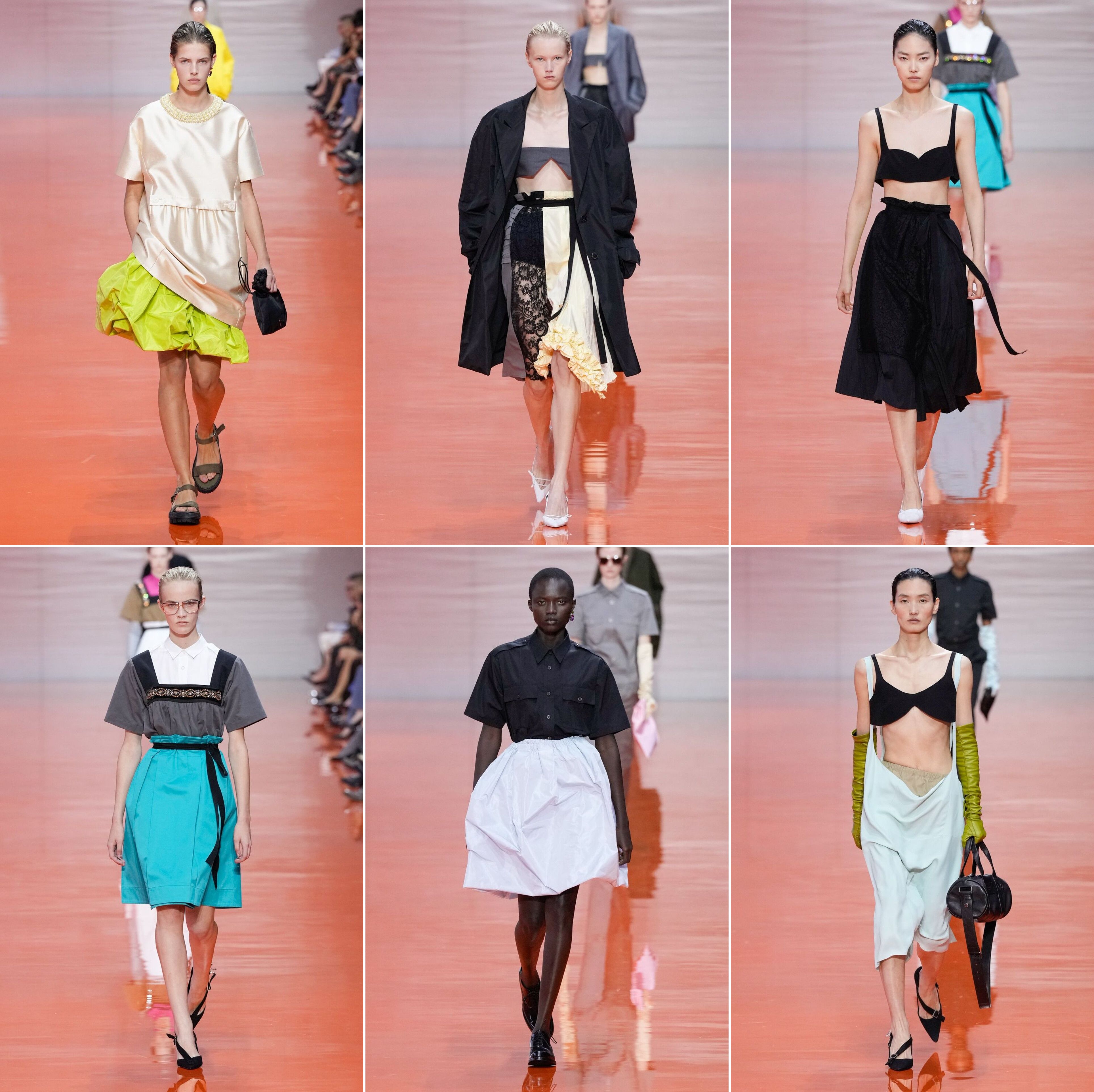
For Prada, skirts have always been their thing, but this time, what were worn above them would have fans leaning in too. Unexpected pairings continued to dominate, in case those hybrid skirts themselves were not nearly enough. The utilitarian was worked into shirts too (to cater to some kind of fetish?), but the pieces worn over them were, perhaps, the point. Apart from slinky sweaters with very deep V-necks and geeky leather jackets that could come from any Prada store now, a trio of square-neck blouses with embroidery on the vertical sides of the border couldn’t help but crack a smile. When paired with those shirts, gave off a glamorous Heidi of the Swiss mountains vibe.
The show was staged in its usual space at the Prada headquarters, but, this season, there were no sets; even the pillars were not painted. There was just a gleaming orange floor that could have been designed by the team behind the iPhone 17 Max Pro’s ‘Cosmic Orange’, beloved by algorithms of social media apps. The colour is associated with playfulness, creativity, and happiness. This is why it’s often used in entertainment and children’s branding, like Nickelodeon. In this regard, the collection appeared to be a shift in attitude, moving away from the serious, (but not less intellectual) and toward a more playful, effortless, and even naive approach, like a child walking out of her mother’s closet after rummaging through it.
Prada soundtracked the show with The Art of Noise’s Moments in Love, a seminal piece of electronic music of the mid-’80s. We have always suspected that it has really been Raf Simons behind the music choices of the Prada shows since he joined the house as a co-designer, and we still think that’s true. Moments in Love was released as a single in 1985, ten years before Mr Simons launched his eponymous label. He would have been familiar with it and would have known that the slow-burning, ambient piece created a sense of mood and atmosphere that was revolutionary for a pop song at the time. He, too, would be well aware that the track was featured in the group’s debut album, Who’s Afraid of the Art of Noise? Indeed, after a collection that skirted all the rules, the question still is, who’s afraid of Prada’s art of noise?
 Style on the Dot