The recent announcement that Jaden Smith will be a creative director of Christian Louboutin sent ripples through the industry. But more importantly, it points to a particular picture that is shaping up unmistakably
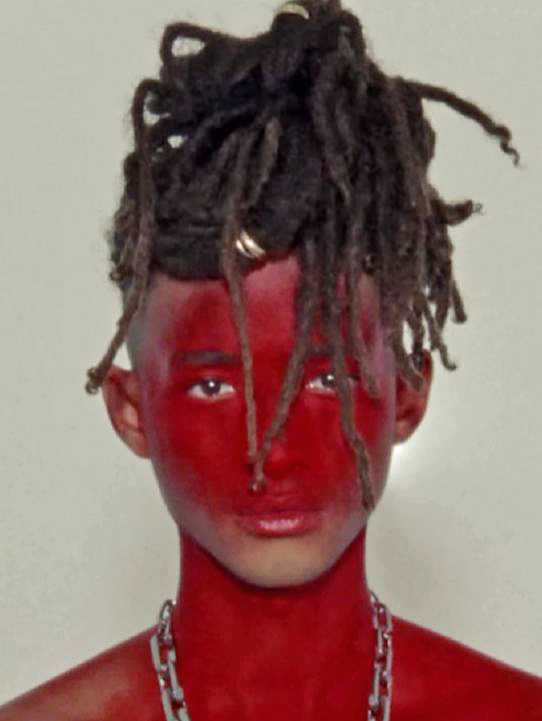
Jaden Smith goes red to show that he is at one with Christian Louboutin’s signature shade. Screen shot: christianlouboutin/Instagram
It was a development that no one saw coming although it was not exactly surprising. Parisian shoe brand Chritsian Louboutin send jaws to the floor with the announcement, 30 minutes ago, that they have hired the actor/singer/influencer Jaden Smith as the brand’s creative director for their men’s line. At just 27 years old, Jaden Smith is indeed among the youngest creative directors to be appointed to a major, long-standing European fashion house. While the trend of hiring younger creative leads is growing, his age still stands out, especially for Christian Louboutin. The other individual younger that we can think of is Olivier Rousteing, Balmain’s current creative director, who was 25 years old when he was appointed to the role in 2011. But Mr Rousteing did not come in with a blank toile. He started his career at Roberto Cavalli in 2003, working his way up from an intern to the creative director of the brand’s women’s ready-to-wear collection, a position he held for five years before he decamped for Balmain in 2009 to work alongside then-creative director Christophe Decarnin.
However, Mr Smith’s youth is seemingly immaterial, even when he has not started on training wheels. In a message shared on the brand’s socials, Mr Louboutin said: “When I first met Jaden, I saw in him a natural fit for the Maison, his world is rich and multidimensional, his style and cultural sensibility are inspiring and his curiosity and openness are remarkable.” This seems to point to the kiddo’s cultural footprint. In the fashion industry, it is increasingly evident that the player has officially stolen the show from the practitioner. Mr Smith’s fans point out that he is “in fashion” as he co-owns (with his sister Willow ), the streetwear brand MSFTSrep, but ownership does not necessarily equate to connoisseurship, especially when it comes to the highly technical craft of shoemaking. As one marketing consultant told us, “Would Bugatti hire him to design a car?” The question speaks volumes about the chasm between having a cultural point of view and owning the skills to execute a complex, engineered product. One more telling point: Unlike the ‘serious’ black and white portraits that brands send out to announce new appointments, Mr Smith’s that are now handed out, show photos that could have been swiped from Hype Off Life magazine.
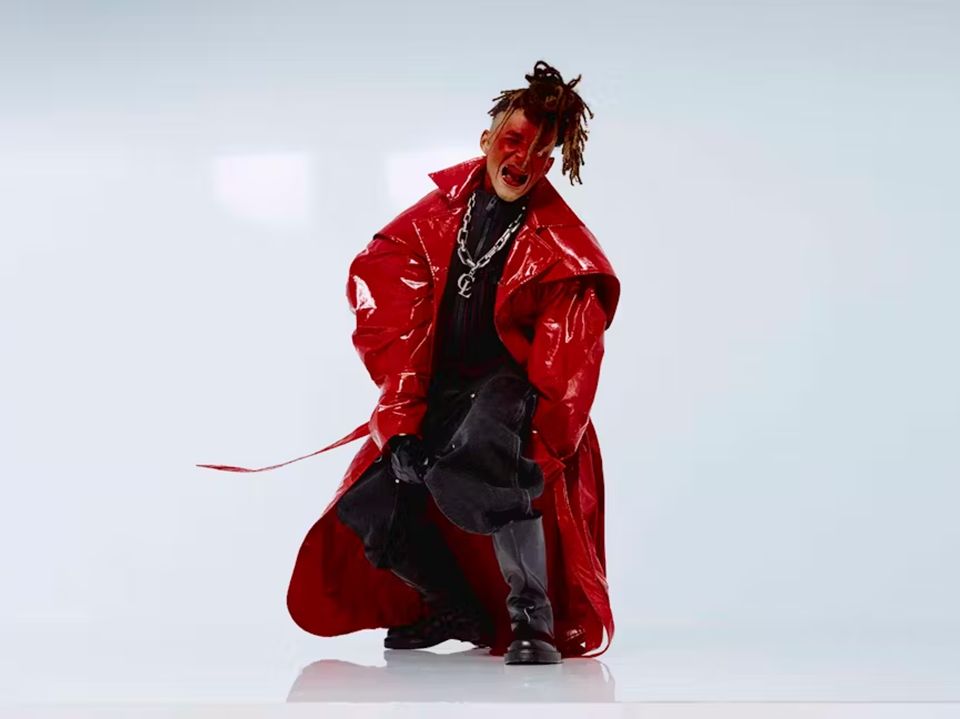
Publicity image of Jaden Smith. Photo: Christian Louboutin
The hiring of Black creative directors is not happening in a vacuum; it is the industry’s response to the visible ascent of the Black aesthetic, even if that is now being redefined in the wake of the Sean Combs scandal and the fallout of the popularity of Kanye West’s Yeezy. For decades, Black culture has been a powerful, yet often uncredited, engine of fashion expression. From the rebelliousness of the Harlem Renaissance to the defiant self-expression of the Civil Rights movement, Black artists and creators have shaped global style. The most profound influence, however, has come from hip-hop (think Run DMC and Missy Eliott, both the first non-athletes to collaborate with Adidas). What began on the streets of the Bronx—with its oversized silhouettes, logomania, and sneaker culture—has been assimilated into fashion at the highest level, as evidenced by the appointments at Louis Vuitton’s menswear. From Virgil Abloh to Pharrell Williams, his successor, LV has shown that luxury needs cultural cachet more than design clout. Other brands wouldn’t miss the fray, with Ray-Bans hiring A$AP Rocky in February this year.
This shift, while seemingly a victory for representation, points to a more complex and troubling dynamic. The fashion industry, recognising the immense buying power and cultural influence of Black consumers, has been compelled to acknowledge a style it once dismissed as “street”. However, instead of nurturing and promoting the countless talented designers and artisans who have toiled in obscurity, brands are taking a different, more expedient route: hiring a cultural figure with an established fan base, or famous parents. The desire for a new, younger audience and a “cultural sensibility” is clearly calculated. By choosing a creative director whose primary qualification is their social media following and their image as cultural barometer, these storied houses risk devaluing the very craftsmanship that made them legendary. The question is not whether the Black aesthetic belongs in luxury fashion—it has always been there—but whether its gatekeepers are choosing to honour its originators or simply capitalise on a trend by hiring the most fabulously famous face.
 Style on the Dot