When a casual tee trades comfort for a cause
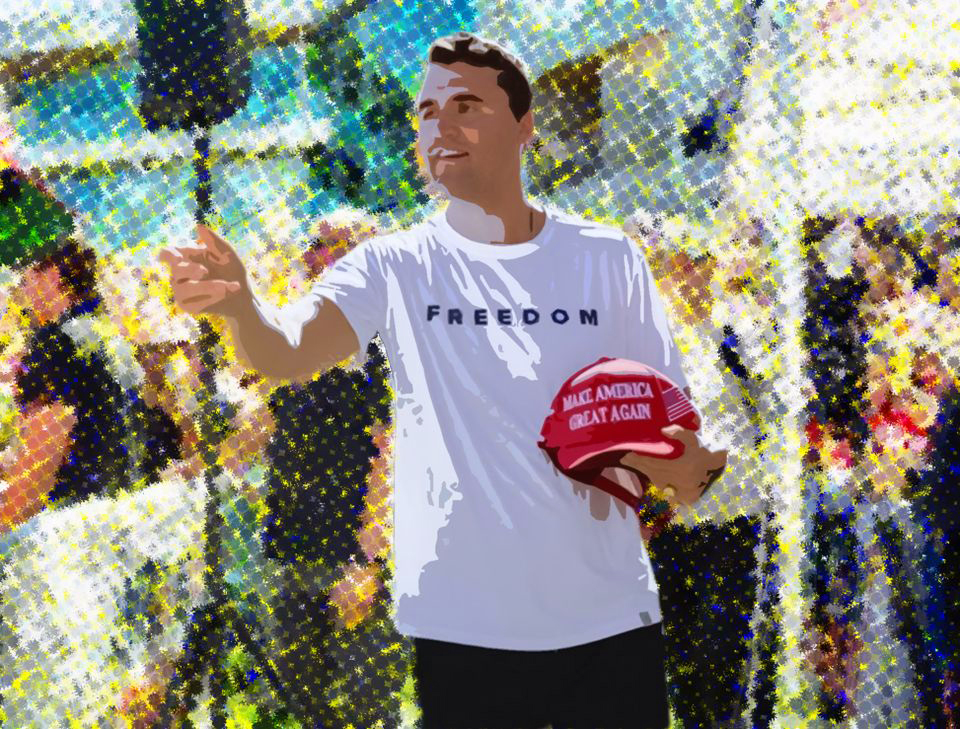
On the day he was slain, right-wing, conservative political activist/agitator Charlie Kirk wore a white T-shirt. Emblazoned across the chest of the top was the word ‘FREEDOM’, in all caps, all black, all sans-serif font. On its own and on any given day, the garment would not have meant much other than a call for freedom, even if Americans enjoy an unparalleled abundance of it. But this was no ordinary day of already extraordinary times; this dramatically highlighted and deepened the existing political divides in the United States. His death did not just rigorously stir the pot, it threw in the match. And the seemingly innocuous T-shirt he wore has become a powerful and multi-layered symbol in the aftermath of his assassination. A piece of clothing has turned into a convenient canvas onto which both sides of a deeply polarized nation have projected their own narratives about its political quagmire.
We have to be upfront: As much as we abhor Charlie Kirk’s odious rhetoric, we consider his killing a deplorable act that we do not condone. For his many supporters, Mr Kirk did not die in vain—what has become the ‘Freedom’ T-shirt now serves as a hero’s cloak, a martyr’s shroud. It represents the core of his not-quite-new message: freedom of speech, liberty, and conservative values. And the monumental idea that he was killed for championing these principles. For those who opposed Mr Kirk, the T-shirt is a symbol of the very political climate he helped to create. It represents a divisive form of “freedom” that, in their view, often veered into hate speech and misinformation. The T-shirt, in this light, is a stark and ironic image of a man who relentlessly pushed the boundaries of political rhetoric and was killed while wearing it, proclaiming the very freedom he was using to do so.

Charlie Kirk at his ‘American Comeback Tour’ on the campus of Utah Valley University. Photo: The Salt Lake Tribune via Getty Images
Furthermore, the brand-indeterminate T-shirt has become an emblem of a bizarre and controversial pop-culture phenomenon. Its rapid rise in popularity is understandable, but less so is the sale of those with a print of a splat of blood above the text, as seen on Amazon not long after the assassination. Many find this to be a “ghoulish” and disrespectful mockery. Although the listing of the article by the seller/brand that goes by the name “Sjisio” was removed, its very sale is still widely criticized as insensitive and exploitative, even if the criticism goes against the grain of the message that Mr Kirk wore on his chest when he died. It is undeniable that this commercialisation of a violent tragedy underscores how quickly political events can be co-opted and commodified in the digital age. The message of “Freedom” is, ironically, not one from violence.
Political text on T-shirt is one of the oldest means of carrying a message for the communicators’ causes. And designers have employed it well, with a striking number of its most iconic political uses pioneered by women. From Katherine Hamnett’s “58% DON’T WANT PERSHING” to the late Vivienne Westwood’s “I am Julian Assange” to Maria Grazia Chiuri for Dior’s “WE SHOULD ALL BE FEMINISTS”, the T-shirt reveals a great deal of its unique power: it is easily a walking billboard, can be used as a tool for personal and collective identity, is generally inexpensive, therefore accessible. It can be a form of propaganda, blurring the line between fashion and activism. A deceptively simple medium, it leverages the power of visibility, identity, and accessibility to make a profound statement. Charlie Kirk knew that and he used the T-shirt well, and, even after his death, his message stays in a loop.
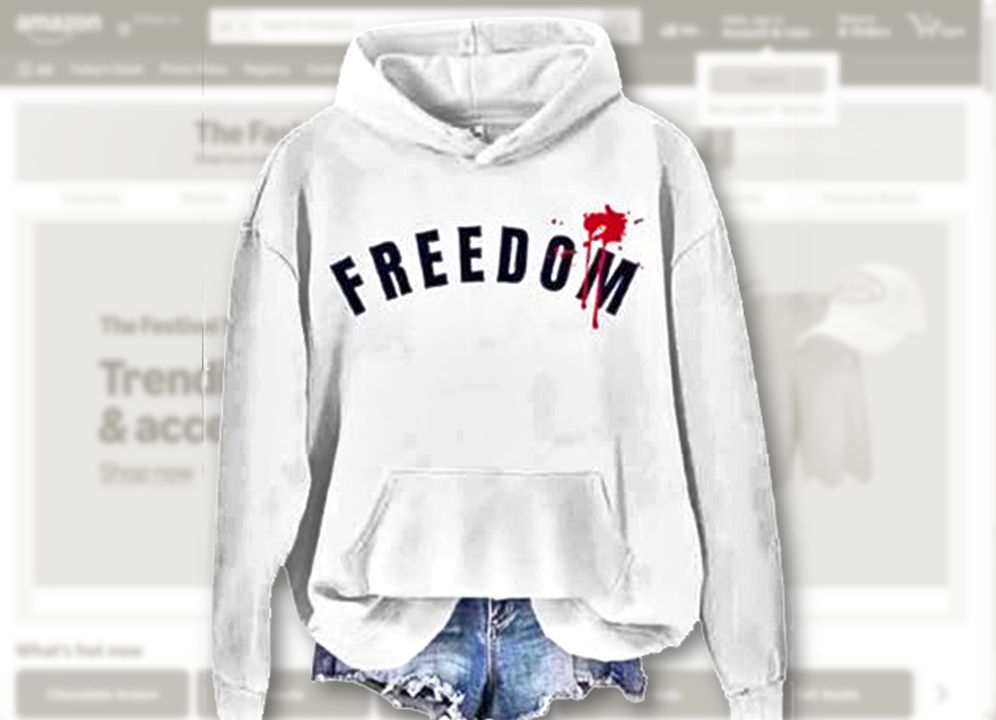
The controversial ‘Freedom’ hoodie sold on Amazon US. Illustration: Just So
The clothing choices of Charlie Kirk tell a vivid story about his personal brand and the political movement he helped to define. It’s a narrative that goes beyond personal style, using apparel as a direct medium for political and spiritual messaging, culminating in a powerful, and ultimately tragic, symbol. While his tees were the uniform of a political agitator, his wife, Erika Frantzve, used the same medium for a different, yet somewhat complementary purpose. The Miss Arizona USA in 2012 started the “streetwear” brand Proclaim six years after her win, while dating Charlie Kirk, whom she married in 2021. It is a line of nondescript apparel, many of them tees, that is explicitly and unapologetically based on her fervent Christian faith. While her messages are explicitly religious—to “spread the Gospel throughout a culture in desperate need”, they are no less political in their function and impact.
For many, a public declaration of faith is inherently a social and political act. In many parts of the MAGA world, religious identity is deeply intertwined with political and social conservatism. By wearing a faith-based garment, an individual is not just expressing their personal belief; they are also signaling their alignment with a broader set of values that may include views on family, morality, and social issues. This makes the religious T-shirt a form of identity politics. Ms Frantzve’s mission through Proclaim, however, distinguishes itself from Ms Hamnett’s or Ms Westwood’s work, which were rooted in a more secular, counter-cultural or social-activist tradition. For her, the T-shirt is a tool for evangelism and ministry. And, as they are “proudly” made in America, encourage an even purer form of patriotism.

A Proclaim T-shirt with their overtly religious messages. Photo: Proclaim
In this way, the couple created a powerful and unified public brand: he fought the political battles in the public square, while she provided a spiritual foundation for their shared mission. Ms Frantzve’s focus on “biblical values” and “Made in the USA” is not just a personal style choice, but a direct reflection of the political and cultural arguments that her husband publicly champions. Her religious activism is, in essence, a political act in itself, perfectly complementing her spouse’s more aggressive rhetorical approach. After his death, Ms Frantzve spoke to the nation via a podcast and said: “If you thought that my husband’s mission was powerful before, you have no idea.” Her speech framed her husband’s death as martyrdom in a spiritual and political war. Her “cries of this widow will echo around the world like a battle cry”, reinforces the idea that his mission will now resonate with a new, wider audience, and that the fight for their values will persist.
In some photographs circulating online, Mr Kirk was seen holding a red MAGA hat, the very same style Donald Trump is fond of wearing. The “Freedom” T-shirt, which was a symbol of the Turning Point USA CEO’s movement before his death, is now imbued with the vivid image of a political-activist-turned-martyr. This makes it a potential rallying symbol for his followers in a way that is similar to how the MAGA hat became a symbol for Donald Trump’s base. Both the MAGA hat and the “Freedom” T-shirt serve as simple, clear, and unmistakable declarations of political identity. For years, Charlie Kirk cultivated a specific public persona. He was not a polished politician in a suit, but a young firebrand in a T-shirt, jeans, and a baseball cap. It was the uniform of a culture warrior, a powerful and potent symbol, even more so now that he, as Erika Frantzve hoped, “is received into the merciful arms of Jesus”.
Illustration (top): Just So
 Style on the Dot