The iPhone 17 and variants have been announced. The ‘Air’ version looks awfully familiar
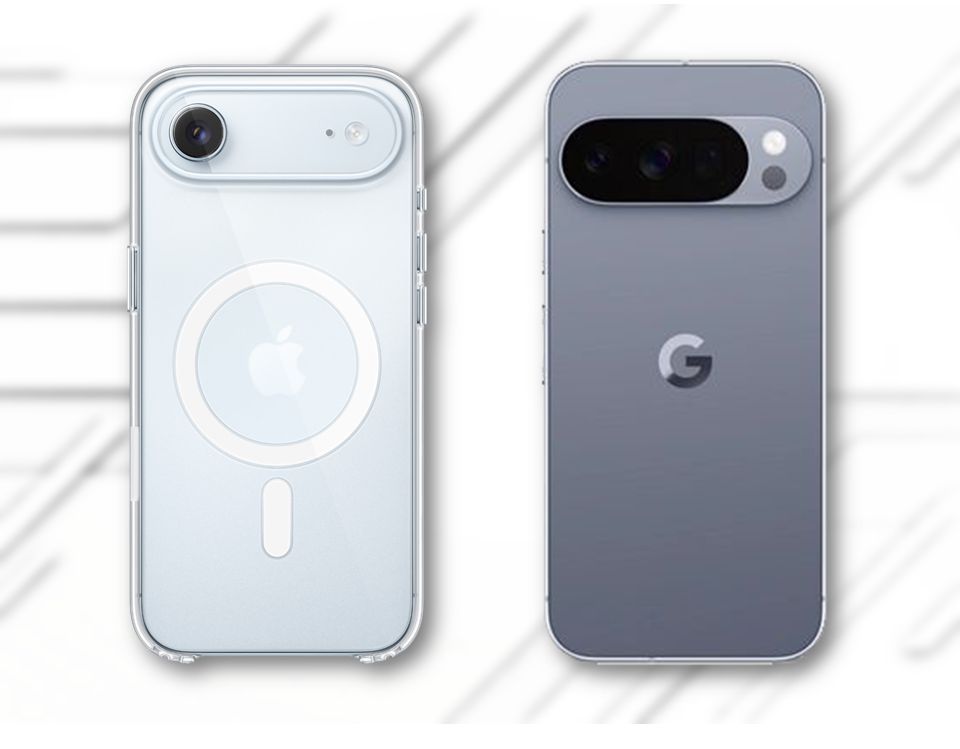
Battle of the gadget giants: the new iPhone Air and the Google Pixel 10 Pro. Photos*: respective brands. Illustration: Just So
By Low Teck Mee
It has been described as “the biggest iPhone design refresh in years”, but why does it look strangely similar to another phone, also from the golden state California? The first thing that struck me when I saw images of the new iPhone Air ( name that recalls to he Sony Discman Air from 2004( is how much, at the back, it looks like the Google Pixel line, the 10 series. The resemblance is so striking that I nearly mistook it as a case of identity theft. I am, of course, referring to the camera ‘plateau’—a horizontal bar, which, for Apple, is a major departure from their traditional square or vertical camera bump, places to the left corner of the device. I thought that Apple had merely changed the casing and swapped out the Google lago, and added a MagSafe ring around theirs. How clever, I thought. This is less flattery than running the end result through a 3D printer.
I keep reminding myself that Apple is the preeminent perfector of the already perfect (to me anyway). They didn’t invent the MP3 player, but they gave us the iPod. They didn’t invent the tablet, but they gave us the iPad. They didn’t invent the smartwatch, but they gave us the Apple Watch. It’s a testament to their brilliance that they can take an existing concept and, after years of diligent and detailed observation, present a shiny new product to us as if it’s the first time it has ever truly been seen. They didn’t just develop a recipe; they managed to bake a delicious case of mistaken identity. And the iPhone-using world is going quite delirious—that Apple came up with a brilliant idea out of thin Air!
They didn’t just develop a recipe; they managed to bake a delicious case of mistaken identity
It is still fresh in my memory that Google Pixel’s signature camera bar that techies cleverly called “plateau” was first introduced with the Google Pixel 6 series in October 2021. I recall touching it for the first time and told myself that if (or when—the rumours were that strong) my favourite smartphone maker were to stop their mobile business, I will switch to Google Pixel. So, yes, I remember it well. I thought that Google cleverly solved the problem of housing a larger, more advanced camera system with the raised camera bar that, since Pixel 8, has become a key identifying feature of the Pixel brand. I have never quite reconciled with the preferred left-placement of the camera bump in most phones. I really liked the symmetry of the Pixel camera. It gave the phone a unique and instantly recognisable look.
Apple probably shared the same thought. They can’t resist a good thing when they see one. Many fanboys of the brand call the iPhone’s own camera plateau twinning a “design evolution”. They would, of course. Apple is never inspired by others; they only “refine” the design or engineering ideas already seen in the market. They “adapt”, as tribute bands do. Google Pixel’s bold, almost unapologetic celebration of its camera system did not have to be theirs alone. Apple has, over decades, forged a narrative of being a master innovator and perfectionist. The Apple community see the company as not only a product maker, but one that creates entire experiences. These necessitate the convening of exisiting design language from everywhere to generate Apple speak, one dialect that is a proactive simplification of design diversity.
Many fanboys of the brand call the iPhone’s own camera plateau twinning a “design evolution”. They would, of course. Apple is never inspired by others; they only “refine”; they “adapt”
When I asked my tech friends (also Apple die-hards, who often tells me that I am the only one they know who doesn’t use an iPhone) why Apple could not approach the camera bump design differently, they told me that it is about “convergence” and “the natural progression of modern smartphone design.” Many acolytes tried to convince me that in Apple’s case, it is often described as “convergence” because iPhone’s product development reflects the market’s shared engineering challenges and how smartphones will evolve. It is more than just the visual resemblance—it’s about the deep integration of design with hardware and software to create a product that feels new, even if the core idea and the exterior details have been seen before. I guess this is not like milk—there are no brand name cows.
But there are agrarian lands-turned-iterations of Silicon Valley. In an astonishing feat of modern supply chain management and product convergence, there’s one final, outstanding piece of irony. It’s not just the elongated oval camera plateaux that these two phones doled out. It’s also their birthplace: India. The iPhone Air is manufactured in the home of the Taj Mahal, where the new Pixel 10 series is, as I understand, also made. The world’s two most famous tech rivals, desperate to differentiate themselves, began dancing to the same tabla beat. Donald Trump has gleefully slapped a 50% tariff on Indian goods. But as of now, iPhones and Pixel phones are largely shielded from the import tax due to exemptions for certain electronics. With that welcome comfort, the annual pilgrimage to the iStore zealously begins.
*Images are not to scale
 Style on the Dot