Obituary | In the ’80s and ’90s, Singaporean designer Bobby Chng was the last name in menswear. He passed away this morning
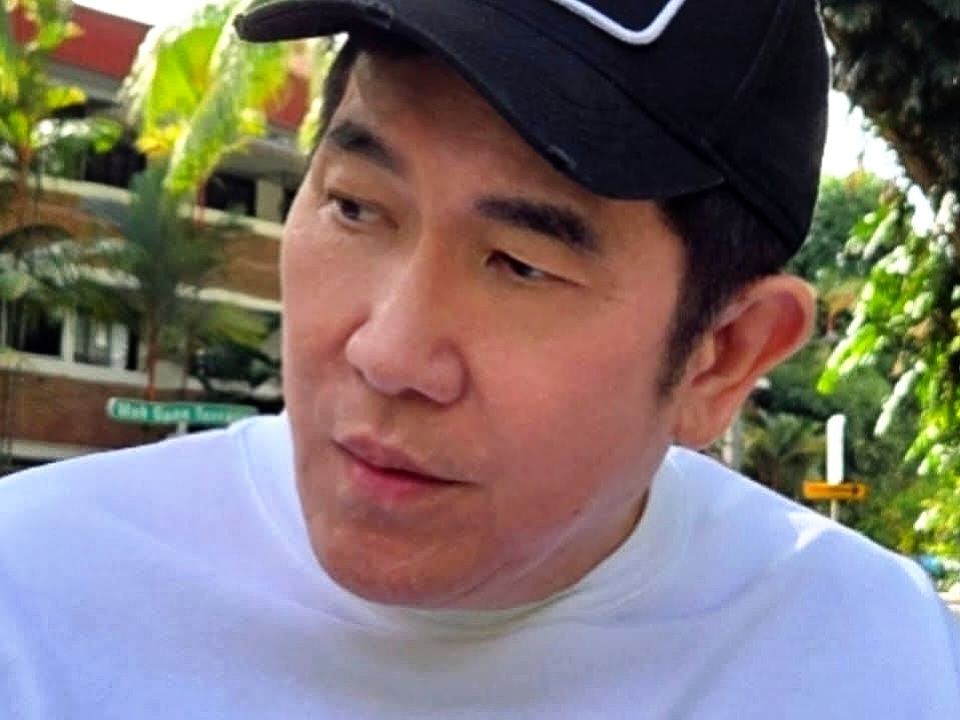
Designer Bobby Chng passed away this morning. Photo: bbbychngbcoshome/Facebook
Bobby Chng Peck Huan (庄柏恒, Zhuang Baiheng), who passed away this morning, knew that his days were numbered. He had been battling cancer since he was 26, a fact known among friends, but became public after The Straits Times mentioned it last month in their profile on “The Magnificent Seven”—Mr Chng was one of them. When he became very ill, but still communicative several months ago, he was clear he did not want to wallow in misery. He had been receiving a constant stream of friends (among them Dick Lee and his gang) at his ground-floor flat in Tiong Bahru. Each time, he was well groomed and cheerful, and palpably thankful for their visit and well wishes. He wanted, as he told a former editor, to be remembered for his life, not his impending death. Mr Chng was 69.
About a month before National Day, Mr Chng planned from his bed and sent out e-invites to a tea dance on the same day our city-state was to celebrate its 60th birthday. As crazy as that sounded, he really was serious about the party. It was to be held at the Shangri-La Hotel, the venue of the annual inter-governmental security conference in late May, the Shangri-La Dialogue, organised by the London-based International Institute for Strategic Studies. Mr Chng’s tea dance was not as top-echelon, but his guests were high-level members of the Singaporean fashion community. Hailed as a “Friendship Party” and described as “a celebration of life”, the dress code was “Dress Up to 70s Disco Music”. When asked why a tea dance, he quipped, “so that everyone can rush home after that to watch the parade, mah!” The invitation was sent out via WhatsApp, with the message: “last party to see friends that matter to me. Try to come even for 30 mins. Just want to see and hug you.” The party was cancelled as he was not well enough to attend.
About a month before national day, Mr Chng planned from his bed and sent out e-invites to a tea dance on the same day our city-state was to celebrate its 60th birthday
A New York-based designer, who was Mr Chng’s colleague at a garment manufacturer in the late ’80s told us that “he had a wonderful life, in spite of the cancer. I will always remember him for his kindness, generosity, and humour.” Although among the fashion cognoscenti, Mr Chng was not considered to be in the same league as the international designers he admired or those whose designs he was inspired by, he was not bothered by how he was seen or how his output was perceived. In the late ’80s and the early ’90s, his eponymous label, also known as BC (which later spawned BC’s Sports), was the go-to for young men on a shoestring budget. At one late-’80s runway-on-shopping-aisle fashion show in Isetan Orchard, then at Liat Towers, Mr Chng was received with such enthusiasm, you would have thought it was Elton John performing. In fact, according to Amanda Chai, who co-wrote “The Magnificent Seven” story, he “misses the days when Singapore fashion designers were rock stars”.
Bobby Chng was born in 1956 and the eldest in a family of five boys and a girl. Little is known about the Chngs except that his father was a fish wholesaler. Similarly, not much of his childhood is known. He went to Anglo-Chinese Primary School (now the National Archives) and continued his studies in Outram Secondary School, rather than Anglo-Chinese Secondary School, which was the expected path for most ACSians back then. When asked, he said he cannot remember why he did not stay with ACS. In the ‘Outram Luminaries’ page of the school’s webpage, it is stated that Mr Chng was “shy by nature” and that “he found it easier to express himself through his talent in design, and his works could be seen everywhere in school.” Upon completing secondary education, he attended LCCI (London Chamber of Commerce and Industry) courses, although it is unclear if he completed them. After National Service, he apprenticed at an advertising firm so that he could pursue graphic design.
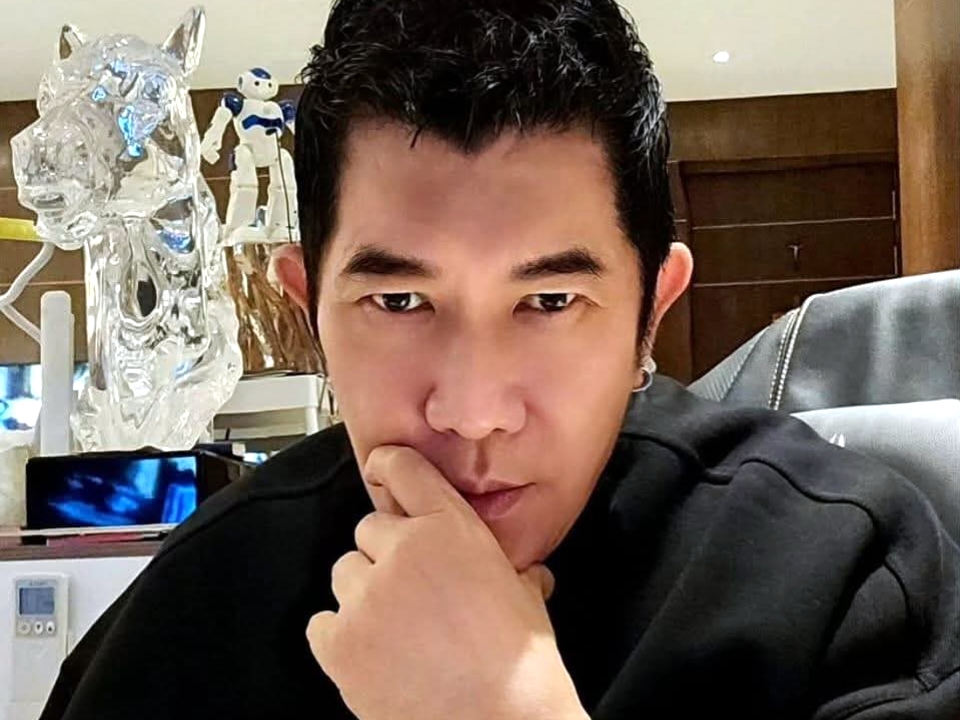
Mr Chng in 2023
It was, however, in fashion that he found his calling. While he was laying out artwork, he was also sketching clothes. In 1977, he was hired to design for the small, now-forgotten label Chic Collections. Mr Chng had spotted their ad in the papers and decided to approach them for a job. At the time, the aspiring designer had no experience at all. He had always proudly declared that he was “self-taught”. Without a killer resume to show, he brought along a sketch book. He was hired on the spot, based on his drawings within the pages. While working for Chic Collections, he modelled on the side and started hanging out with fashion impresario Dick Lee and his fashionable friends. And, later, it was through Mr Lee that his clothes would be stocked at the first multi-Singaporean-label store Hemispheres and he would show in the seminal SODA shows.
It is unclear if he remained with Chic Collections long, but he did freelance as a ghost designer, producing for private labels sold in department stores. In 1981, Bobby Chng became a true solo act, with a bold plan to do things his way. As the story went at the time, Isetan had wanted a menswear line for its stores. Mr Chng was already supplying them through a store-label arrangement. Interestingly, for the new line, they agreed to let him use his own name, which was highly unusual at the time, especially with department stores. Peter Kor, who has made a comeback at DORS, designed under the successful Metro label, Marissa, in 1985. Mr Chng would later frequently say, “I was the first to use my name as a label then”. He often joked that many of his relatives expected him to take over the family business, but he was not interested, saying, “very smelly, lah!” In August I982, Bobby Chng the clothing line debuted at the men’s department on the lower level of Isetan at Liat Towers. A fashion rock star was born,
He used to joke that many of his relatives expected him to take over the family business, but he was not interested, saying, “very smelly, lah!”
His eponymous brand quickly took off. Finicky shoppers with a taste for European labels dismissed his as not quite on top of the heap. But Mr Chng was not designing for them. Bobby Chng the label was for the burgeoning fashion crowd without the budget to consume unfettered. He offered affordable versions of what was trending at the time. Gianni Versace, one of his favourite designers, was the name to covet in the ’80s, so he did that look, offered those colours. But he did not stop with the Italians. It could be the French, it could be the Japanese. Mr Chng was so adept at adapting that he was known in the industry as “Colour Xerox”. It was especially humorous since colour photocopying was not available, yet. But chromatic excess did bring in the money that few enjoyed even back in the halcyon days of Singaporean fashion. The earnings grew and so staggeringly that it meant he could contemplate venturing overseas. In 1982, Mr Chng opened his first store abroad, in Perth, called Poris Coco, and it reportedly drew throngs of shoppers. It is not known how long that business lasted.
Back on home turf, he continued to do well. Although he did not charge as much as imported brands did, his prices, $49 to $129 at the time, were considered pricey. Mr Chng’s own label had a rather small production run, which may explain the prices he charged. Those who preferred more affordable clothes turned to house brands such as Metro’s men’s line Crash, which was known to be designed by him. By the mid-’80s, Mr Chng practically dominated the menswear scene. In 1985, one of his menswear looks was, when we look back now, ahead of its time: the models wore loose-fitted shirts over voluminous pants. Over their shoulders were long scarves, draped selendang style. Forty years later, Richie Koh (许瑞奇, Xu Ruiqi) would be similarly accessorised for the Star Awards. It was also in 1985 that veteran fashion journalist John de Souza, then with ST, wrote: “Okay, so Bobby’s menswear… is not all that original. Just a glance will reveal the obvious influences of world-famous designers. But however derivative—some say copied—no one can doubt its sportiness, easy wearability and, most important, reasonable pricing.” He added: “Neither can anyone doubt its popularity with the young and with fashion buyers. Often, his clothes sell so fast, they simply disappear off store racks.”
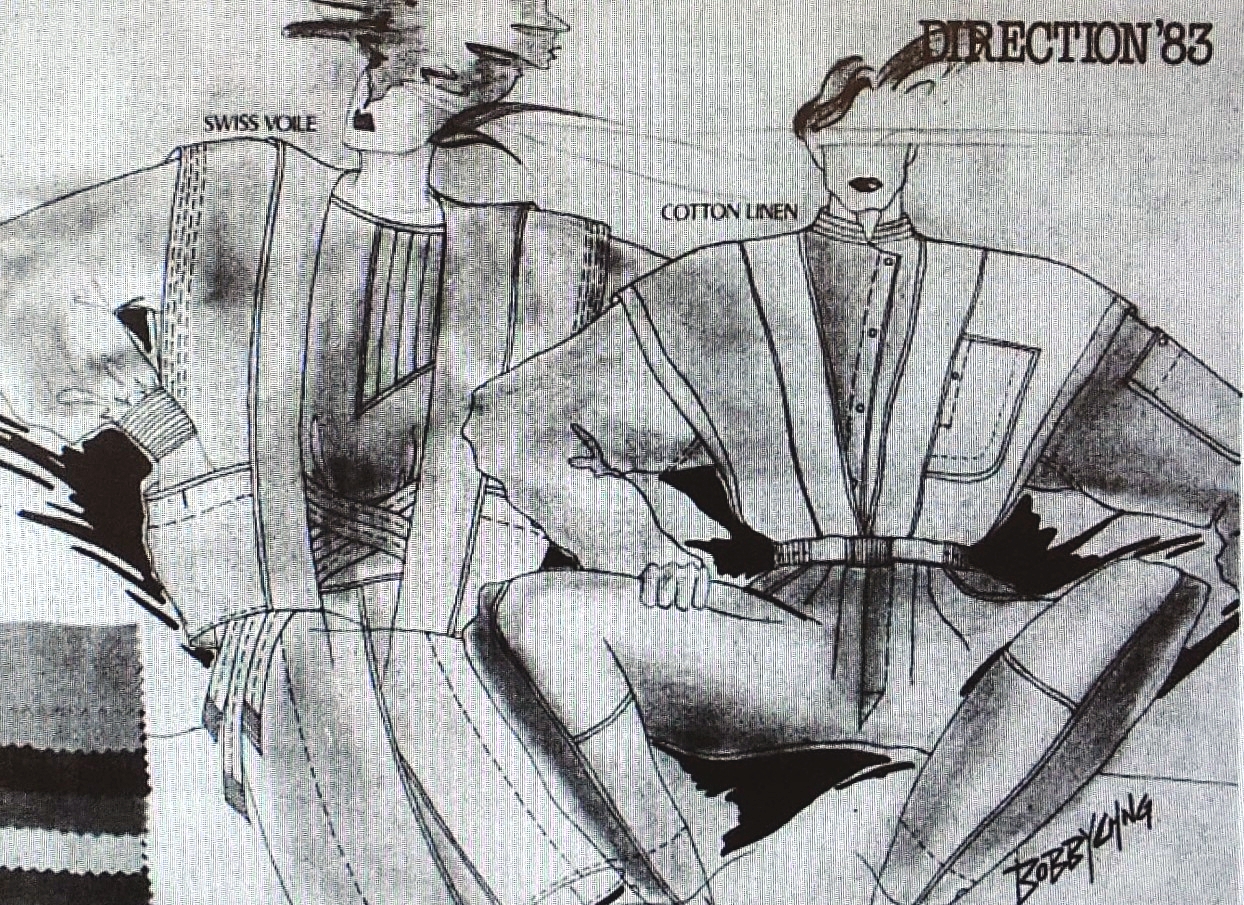
Bobby Chng’s own illustration for his 1983 collection. Image: Bobby Chng
Two years later, the Los Angeles Times ran a feature on Singapore titled ‘Home-Grown Styles From a Designer Society’, which mentioned Mr Chng’s work. The article described his menswear as “fashioned for street wear” and noted that he made “marvelous tiger-print knit ensembles” and ”prints zany gold patterns on large black T-shirts” for women. By the mid-’80s, he had gone into fashion full steam. In 1990, when Lee Kuan Yew stepped down as prime minister after 31 years in office, Mr Chng founded and incorporated his company, Bobby Chng Pte Ltd, with an unidentified “Australian partner” to produce his own designs, as well as private labels for department stores. His sister, a chartered accountant, handled the books while one of his brothers oversaw production at their factory in Macpherson Road (it is no longer there). At the time, it was reported he had 50 production workers in the factory. In the same year, he opened another in Pontian, Johor, to beef up his capacity so that he could, as he said, go into export.
Having established his own production base, Mr Chng was ready to think bigger. Less than a year after incorporating his company, he launched News, a unisex (or what we now call ‘gender-neutral’) diffusion line. With only two sizes available, this bridge collection was a clear signal that he wanted a bigger slice of the market—the same market he targeted with the private labels he designed. The idea of a designer putting out a cheaper line was not new, but it was still uncommon. Diffusion lines had emerged in the ’70s, when American designers discovered the advantage of working with synthetic fabrics, and offered lower-priced pieces to entice more shoppers. But it would take the Italian maestro of the soft suit, Giorgio Armani, to make diffusion acceptably mainstream when he launched Emporio Armani (and Armani Jeans) in 1981. Mr Chng found himself in good company.
Mr Chng was so adept at adapting that he was known in the industry as “Colour Xerox”
Bobby Chng was not only an eager adopter of European designs, he embraced their merchandising models, too. But despite the expanded product lines, including the stores labels, the company was beginning to experience difficult market conditions. At the close of the ’90s, his business was in decline. In 1999, he decided to just “pack up and move” to China. By then, his losses were hastened by some untimely investments, such as the short-lived Bobby Chng Art Gallery in Neil Road. It exhibited some 250 pieces from his own art collection that had no wall space in his swanky Phoenix Mansion apartment to reside. It is not known how many were sold. The gallery closed just ten months after it opened. Unclear too was why he was eager to terminate his chance at being a gallerist, but some friends said back then that he was just eager to leave for China.
China was a whole new world to him. He was quick to find a job in 成都 (Chengdu), rather than Guangzhou or Shanghai—as a senior design director for the 昱華集團 (Yuhua Group), with businesses in construction, decoration, and furniture, as well as textile. Mr Chng was responsible for designing exhibitions in trade fairs. In the same year, he started the homeware company BCoS (pronounced ‘because’, a clever play on Bobby Chng of Singapore). His foray into home furnishings had actually begun in 1997, when he launched a range of cushions called Plus because, as he said, “he loves [using] them”. They were sold to retail shops in Park Mall (then a home furnishing centre) and Centrepoint, as well as Tangs and Metro. He was also into interior decorating and had apparently helped one of his celebrity friends in Hong Kong to “do his house”. That turned out to be Faye Wong’s squeeze, Nicholas Tse. At Yuhua, where he stayed for over 15 years, he moved to the textile division in 2013 as its design consultant, where he became colleagues with the Malaysian designer Gillian Hung. “We had so much fun in China,” Ms Hung once told a journalist.

With friend and former colleague, the Malaysian designer Gillian Hung. Photo: gillianhung/Facebook
The former editor visited Mr Chng at his flat in Tiong Bahru in 2020, a year after he returned to Singapore, and now vividly recalls how eager he was to show what he had achieved in China. “I did not know he was sick,” he said. “I remember that we sat on his bed to chat, not on the living room chairs. He pulled out an iPad from under a pillow and showed me all the design work he did in Chengdu.” More than fit-outs, there were also images of his textile designs. “It didn’t look like he designed them by hand. It could have been done with Procreate. I don’t know.” Mr Chng appeared to have missed China, which to him, was where the opportunities were. He often said that it was so much cheaper to produce anything in China. “He told me he really had the best time of his life there,” the editor continued. “When I asked him what it was about China that he liked so much, he said, ‘everything’. When I asked him why he came back, he told me, ‘some family stuff’. Sensing that it was a private matter, I didn’t push him.”
When we spoke to the young, industry folks of the ’90s who had the opportunity to meet or work with Mr Chng, many said that they have fond memories of him. One, who is no longer designing, told us that he was “very happy to share ideas and was pretty generous”. Another revealed, “whenever I saw Bobby, he was always lively and energetic.” One journalist told us: “He was really very funny and when we spoke in Hokkien, he could be quite chor (vulgar)! ” One former stylist shared what could be a press release: “When I was just starting out in fashion Bobby was someone I often looked up to for inspiration. But what stays with me most isn’t only his talent—it’s the kind of friend he was: loyal, steadfast, and always true to himself.” Bobby Chng is the third person from the fashion industry of the ’80s and ’90s to pass away this year, after Derrick Lim (photographer) in February and the cheongsam designer Goh Lai Chan in April. Mr Chng’s legacy is now part of the indistinct tradition of our fashion history.
Photos (except indicated): bobbychngbcoshome/FaceBook
 Style on the Dot