Behati’s KL Fashion Week show was a flag-raising hail to Malaysia’s underpinning of independence. But it was hard to tell if the vibe was Merdeka Square or pasar malam
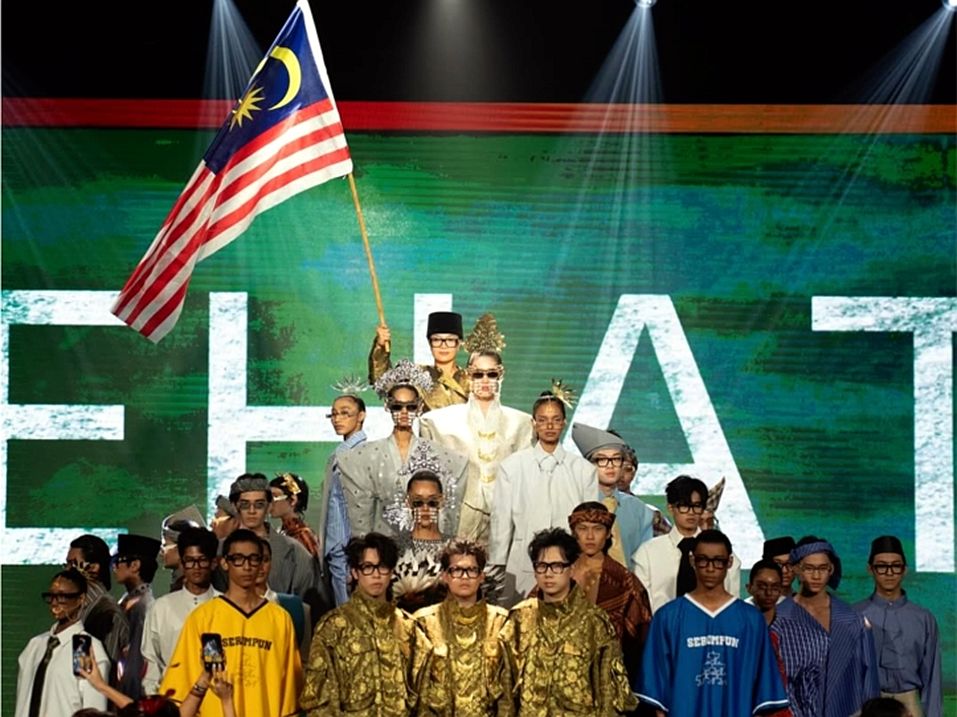
Finale of the Behati show at KLFW 2025
Behati closed Kuala Lumpur Fashion Week (KLFW) last Sunday with a show that was a tabik (salute) to merdeka (independence). Designer Tan Kel Wen staged his most culturally assertive collection that featured anything he could unearth from the bakul budaya (basket of culture). That he closed KLFW spoke volumes for his eight-year-old “vital” brand that, among KL fashion tribes, is now “untouchable”. On the runway, founder of KLFW Andrew Tan said: “After everything that Kel Wen has gone through, he deserves the closing.” The exact nature of the designer’s struggles was not disclosed, but it was tempting to wonder if what the self-touted “modern traditionalist” endured (assuming he did) was the continued criticism of his revisionist approach to traditional baju (clothes) or mash-up celebrations of Malaysian identity. It is not clear if his call for merdeka was a liberation of culture or a declaration of independence from substantial design standards.
The latest koleksi (collection) was again associated with merdeka, a foundational concept that underpins Malaysian national identity that Mr Tan had previously explored in his 2024, also during KLFW of that year. But this time, he went for the jugular: In the finale, the models gathered in front of the backdrop emblazoned with his brand in a font size larger than those used to announce the death of a head of state. The youngsters took up a pyramidal formation, with one emerging at the very top to wave the Malaysian flag. It immediately brought to mind the iconic finale in Les Misérables, where the cast came together to chorus the emotive ‘Do You Hear the People Sing?’ The character Enjolras, leader of the student revolutionaries, stood on top of a similarly-formed barricade, waving a flag. The scene is a symbol of unity, defiance and willingness to fight for a cause. What Mr Tan and his motley group was jousting for was unclear. Perhaps it was just to mimic the Tugu Negara (national monument)?
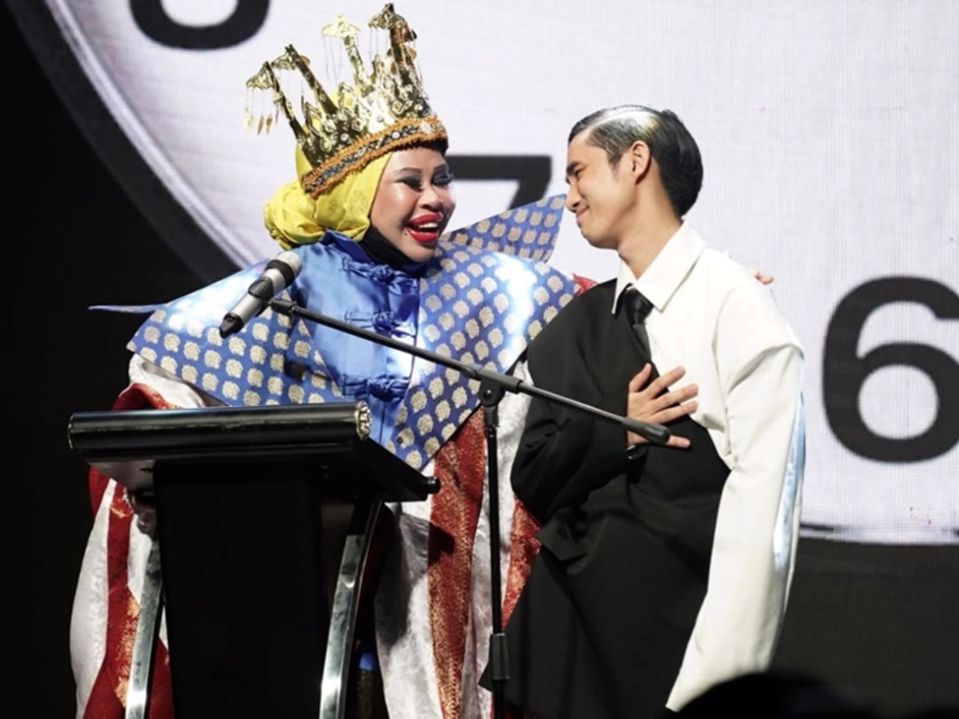
Dato’ Seri Vida with Tan Kel Wen
In the makeshift KLFW tent at the Esplanade of Suria KLCC, it was less a revolusi than a mild commotion of models getting into place. Instead of the rousing Les Miz anthem, they went about their catwalk duties to the tune of Mimifly’s Raya hit of this year, Serumpun (Malay for ‘of the same root’). The song’s core message of unity and togetherness sat as a comfortable bedfellow to Behati’s penchant for ethnic details, traditional silhouettes, and exaggerated proportions, cobbled together in individual looks. This was Mr Tan’s independence—do as he pleases, as capriciously as possible. To support this creative madcap merdeka, the influencer/beauty mogul/crispy salmon skin seller, Seri Vida, came on stage, wearing a crown and an outfit that seemed to be a deconstruction of the Malaysian flag, to cheer him on. In her famous pasar demeanour, she cackled: “mix and match Malaysian fashion in all one design”, before leading three cheers of “merdeka”, as a headmistress would, during primary school assembly. Was this a rallying call for defiance or a clever spectacle of defiance?
The upbeat and celebratory “joyous bop” of Serumpun capped a presentation that was typically kampung-hearted. Mr Tan, a pioneer of “ketupat kutior” (dumpling couture, using woven plastic casings to make clothes), was as good as he could muster. Although the mantra was merdeka, Mr Tan himself revealed on social media that he had, in fact, worked on the theme “school of culture”, with the intention of “bringing everyone back to school to study culture and unite everyone as one nation.” What the curriculum for this was, the self-appointed cikgu did not say. Additionally, the collection was “a dictionary of what I have created for my past eight years in Behati”. he enlightened. What that thin lexicon comprised was harder to discern on the runway. You can’t always make out what went into a rojak once it is gleefully mixed.
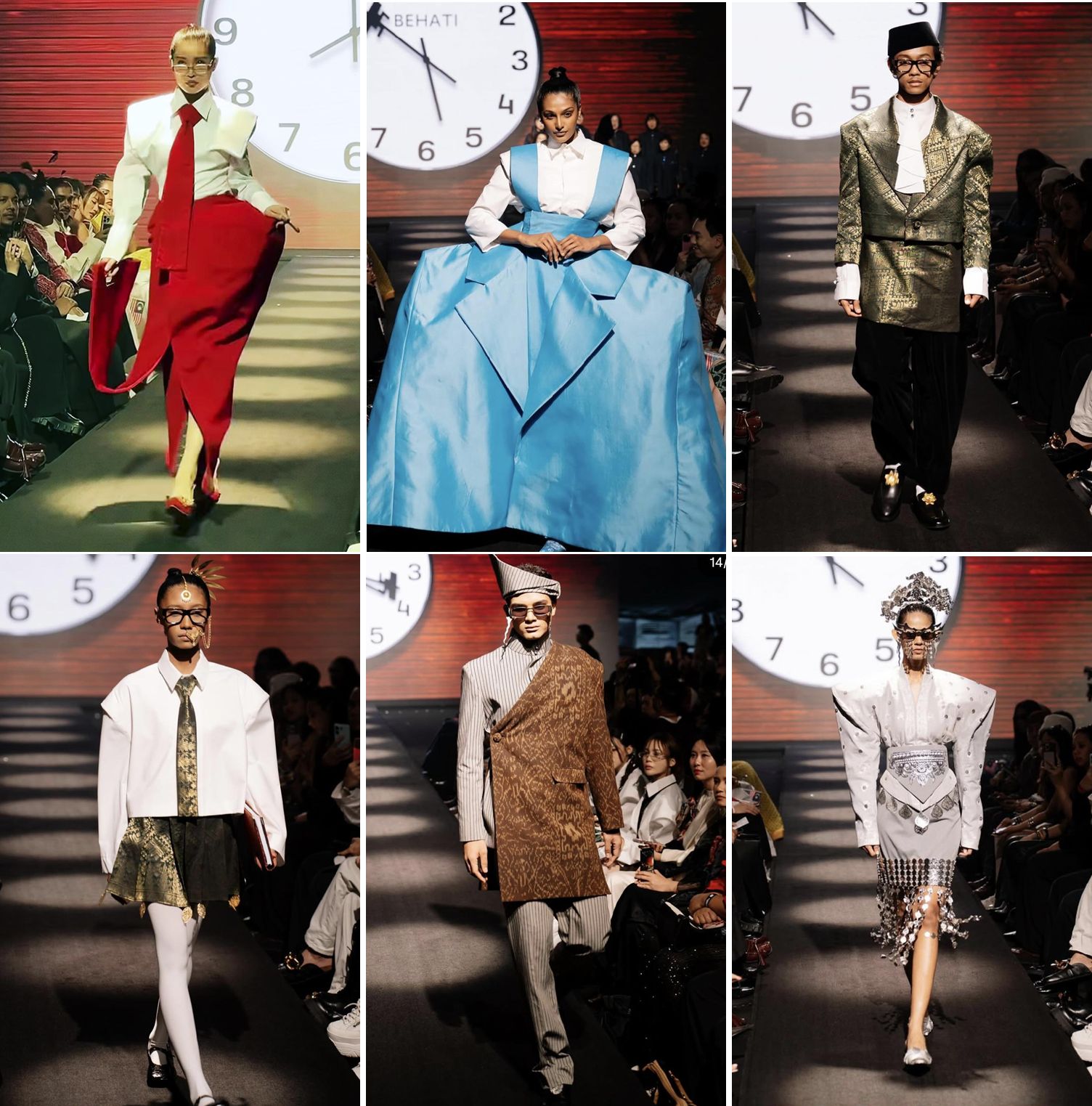
The Behati references to school wear essentially diminished the uniforms’ aesthetic appeal. The pelajars (students) who took to the runway appeared to have tossed on pieces to defy the uniformity expected in a sekolah (school). But rather than shortening (as girls are wont to do), Mr Tan has, in his typical fashion, inflated them: shirts up-sized with over-padded shoulders, ties stolen from Bozo the Clown that ended as totes, and pants rehashed from postmen’s duffle bags. One female student wore a blazer-as-paneer, more homage to Thom Browne than hormat (respect) of Malaysian dress. Even the teacher, Behati’s current muse, the informal model-turned-“celebrity entrepreneur” Amber Chia, was togged in a manner no school would approve: shirt with massive, jabbering shoulders, and a long skirt with a high slit in the front, opening up to there, and a pointy right hip, so protruberant that even Kim Kardashian would beg for a downsize. For all his admirable vigor, it is often hard to tell if Mr Tan is revitalising fashion or ridiculing it.
The lack of cultural heft in the uniforms was compensated in the rest of the collection. Mr Tan was probably delirious when he came up with a laundry list of what to reimagine, to impress with. Every traditional garment across ethnicities and indigenous tribes maid the list, all given his signature oversized treatment or wonky tailoring. He did not hold back with traditional fabrics either. Apart from batiks and songkets, there were the pua kumbu of the Ibans of Sarawak and, conversely, pyjama stripes of the posh bedrooms of Mont Kiara. He was happy to accessorise abundantly, from tanjaks (head wear) to suntings (head jewellery) to dokohs (neck wear). It seems that ethno-fluid Tan Kel Wen had put in extra hours in his exuberant styling not as deep respect to the baju tradisi (traditional clothes), but a performative act meant to impress or, worse, brag. This was not just a class on culture; this was a total field trip, but not quite to Merdeka Square. It was, jom, to the pasar malam.
Photos: behati/Instagram
 Style on the Dot