The French luxury conglomerate is looking for a buyer to take the American brand off their hands
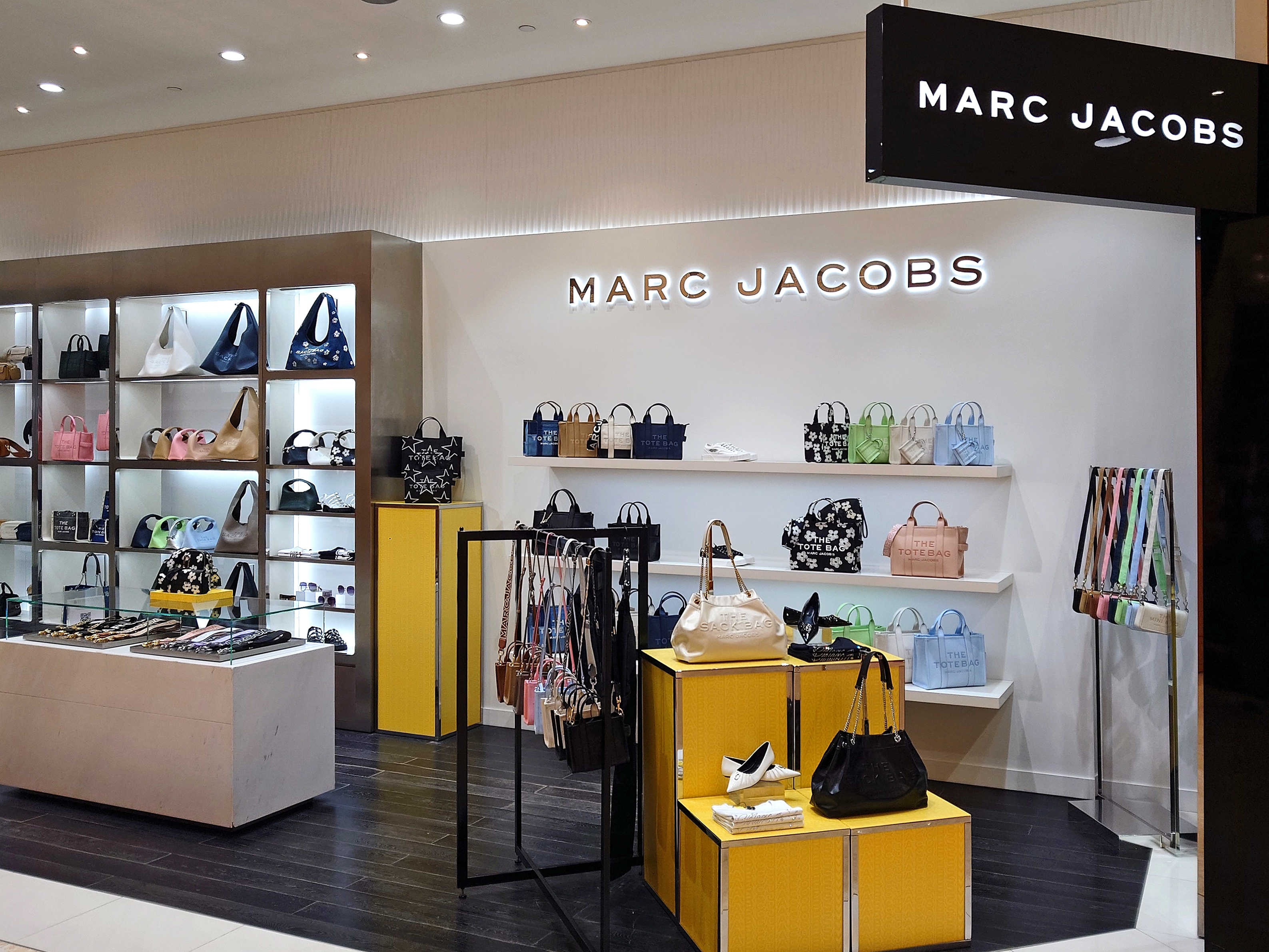
Marc Jacobs corner at Takashimaya Department Store
The rumour has been circulating for a while now: LVMH wishes to sell Marc Jacobs, whose namesake designer launched Louis Vuitton’s ready-to-wear line in 1998. According to Reuters, quoting sources, LVMH is in “talks” to “offload” the 41-year-old American brand. The label’s success in its heydays had led to LVMH hiring Mr Jacobs for LV and acquiring a majority stake in the company he co-founded in 1997. Although LVMH has reportedly received “interest from potential buyers” and desires to streamline its portfolio and focus on its high-performing brands, the decision to sell Marc Jacobs is widely seen as a reflection of the New York label’s financial performance and strategic fit within LVMH’s portfolio.
It has been said that Marc Jacobs was not profitable for a number of years. It reportedly lost tens of millions of dollars annually in the past, despite a high-profile, still-showing main line. While some reports suggest the brand has seen a recent upswing in certain areas of the business, particularly with the success of some of its handbag lines, its financial performance has not matched its artistic reputation. In the end, the brand’s overall financial history and its strategic alignment appear to be the primary driving factors behind LVMH’s decision to explore a sale. This mirrors the conglomerate’s move in September of last year, when it sold its controlling stake in Off-White to a brand management firm, just three years after first acquiring it. In both cases, LVMH’s move signaled a strategy of streamlining its portfolio to focus on core, high-performing luxury brands.

Ubiquitous is the brand’s The Tote Bag
A significant point of contention of the Marc Jacobs situation has been the discontinuation of the more affordable and younger Marc by Marc Jacobs line in 2015. Industry analysts and some critics believe this was a misstep, as the line was responsible for a large portion of the brand’s revenue. It was particularly popular in Japan, where it was considered a go-to for trend-conscious girls. The end of Marc by Marc Jacobs was intended to consolidate the brand’s image, but seems to have alienated a segment of its sizeable customer base. Aware that a cheaper line is crucial to Marc Jacob’s success, the company launched Heaven by Marc Jacobs in 2020. It did not quite fully replace the financial engine of its predecessor
A potential sale to a brand management firm, such as Authentic Brands Group or Bluestar Alliance, would mark a pragmatic, but perhaps disheartening end to Marc Jacobs’s tenure as a designer-led house. The main line’s recent aesthetic, defined by an increasingly over-the-top and, to many critics, an almost deliberately unwearable direction, has struggled to find commercial footing. LVMH operates on a clear strategy of maximizing profitability; it is almost certainly no longer willing to underwrite this artistic disconnect. This aesthetic confusion, coupled with a successful but culturally niche Heaven line and the brand’s commercially dominant accessories, has left the brand with a fractured and incoherent identity. Even Wizard of Oz could not save it. Ultimately, LVMH’s decision to offload the brand signals that, for them, the future of Marc Jacobs now lies not in its founder’s polarising artistic vision, but in the brand’s name recognition and commercial potential as a licensed entity.
File photos: Chin Boh Kay for SOTD
 Style on the Dot