Why U.S. price hikes would affect the next T-shirt and shorts you buy here
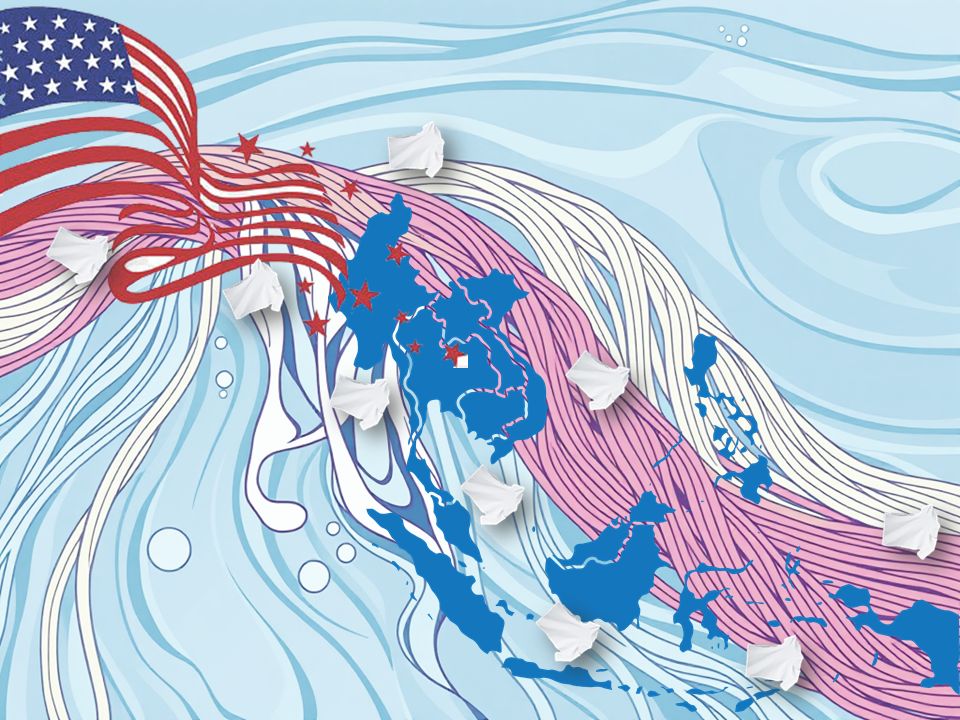
The news has been delivered unhemmed and unadorned. Inflation in the U.S. is rising. The Wall Street Journal shared, a short while ago, that “Inflation picks up to 2.7% as tariffs start to seep into prices”. But earlier, BOF warned with the headline “Higher Clothing Prices Are Officially Here”. According to U.S. Bureau of Labour Statistics, apparel prices rose 0.4 percent between May and June. Analysts in the U.S. found evidence in June to be “mixed” on how much tariffs affected prices, but there were “signs” that the duties are having an impact, according to CNBC. Many of us might only observe the rising cost of living on home turf, even as official figures from the Department of Statistics show overall inflation moderating. Indeed, some might even point to recent data for May 2025, which indicated a 3.3% year-on-year decline in clothing and footwear CPI and prices on our shores. We often hear people say: “That’s a problem for the U.S., not us. Popular brands like Uniqlo or our local favourites like Love, Bonito aren’t American.”
But prices are not expected to be unraised for long. We won’t continue to be lulled into believing that somehow, we will be sheltered, like our island is from typhoons. The swirling vortex of higher prices are expected to reach our island state and, no doubt, much of the region. Dismissing the U.S. tariff policies as an American problem overlooks the fundamental interconnectedness of our global economy, especially the immensely linked network of the fashion and manufacturing industries. The reality is, the tariffs driving up prices in America will send ripples through supply chains worldwide, inevitably creating ripples that reach our shores and hit our wallets, and potentially reversing in the near future those current dips we are enjoying. Those low prices are like hemlines—expect them to rise.
The reality is, the tariffs driving up prices in America will send ripples through supply chains worldwide, inevitably creating ripples that reach our shores and hit our wallets
There is negligible garment manufacturing in Singapore. But most of Southeast Asia and, by extension, China, is a critical manufacturing hub for the world and the cost of shifting supply chains due to U.S. tariffs is already keenly felt here and across the region. From Vietnam to Bangladesh, Indonesia to Cambodia, these nations are collectively a massive sewing room for a vast majority of the world’s clothing. American brands are heavily dependent on factories in these countries to produce their garments. According to a report by B2B portal Fibre2Fashion, in 2024, out of US$83.70 billion of apparel the U.S. imported, $61 billion was supplied to the States by Asian countries. Made-in-Asia, therefore, accounted for about 73% of total garments imported (the report does not distinguish American or non-American brands). This is not a button of a suit; this is the tailoring that makes the suit.
When the United States imposes tariffs on goods from countries like China, reciprocal or otherwise, U.S. companies are forced to find alternatives since they will unlikely reduce retail output. Where do they turn? Increasingly, to those factories right here in Southeast Asia. As The Straits Times reported in April, this “tariff rout” has “dealt a heavy blow to the region’s export-reliant economies” and risks “jeopardising their growing role as a low-cost alternative.” The reality for factories across Asia is multifaceted. It’s true that some factories, particularly those in countries heavily impacted by U.S. tariffs like China, are indeed suffering from reduced orders, leading to underutilised capacity. While certain Southeast Asian nations have seen a surge in orders as companies diversify their supply chains away from China, others, including Vietnam, Cambodia, Bangladesh, and Indonesia, are now facing significant new direct U.S. tariffs themselves, creating a new layer of cost and uncertainty for their exports.

This reshuffling creates a multifaceted scenario across Asia’s factory floors. While some Chinese manufacturers face the snip of reduced orders, leading to underutilized capacity, their counterparts in alternative Southeast or South Asian hubs often find themselves grappling with a different pressure. This sudden influx of demand strains existing capacity, pushes up the cost of skilled labor, and intensifies competition for factory space and raw materials. Factors like increased transportation costs and higher labor wages in these alternative regions are putting pressure on profit margins for fashion companies. Whether a factory is struggling with fewer orders in one region, or facing more expensive production in another, the overall result for brands is increased cost in their global pricing approach. These higher costs are ultimately difficult for retailers to absorb indefinitely without passing them on to consumers.
Fast Retailing, the parent company of one city’s and the region’s favourite brands, Uniqlo, issued a warning on pricing just last week. Its financial officer Takeshi Okazaki explicitly stated during its quarterly earnings conference that higher U.S. tariffs would start impacting its U.S. operation significantly from later this year. “It is unavoidable that we will be significantly affected from autumn and winter,” Mr Okazaki told Reuters. “It will be difficult to absorb all costs. Our approach will be to raise prices where possible and not where it isn’t possible.” Crucially, the report noted that “the majority of Uniqlo products sold in the U.S. are produced in Southeast Asia and South Asia”, directly linking the impact back to our region’s factories and, inevitably, the costs borne by all brands sourcing among our neighbours.
Whether a factory is struggling with fewer orders in one region, or facing more expensive production in another, the overall result for brands is increased cost
Tariffs tag on a layer of cost to an already complex global inflationary environment, and local businesses feel it, impacting overall retail prices. In addition, rising global energy prices, volatile shipping costs, and a worldwide increase in demand for raw materials are universal challenges. Furthermore, the imperative of building supply chain resilience and flexibility often necessitates moving production to more diverse, yet potentially higher-priced, locations—a cost, again, borne by brands. As our Ministry of Trade and Industry (MTI) noted in their Q2 2025 GDP release (July 14, 2025), there remains “significant uncertainty and downside risks in the global economy in the second half of 2025 given the lack of clarity over the tariff policies of the U.S..” The capriciousness of Donald Trump’s position on global trade is the invisible hand that keeps slapping forecasts hard.
Businesses here are, therefore, not isolated. The latest OCBC poll, published in The Straits Times on July 16, 2025, highlights that Singapore’s SMEs are bracing for a “subdued business outlook” due to “tariff-related uncertainties” and “cost pressures due to currency fluctuations, rising insurance, and freight charges caused by global conflicts.” That is euphemistic talk for a business future that is likely to be weak, challenging, or even deteriorating. Even if Singapore’s overall inflation forecast is moderating for 2025 (as per the June MAS Survey of Professional Forecasters), the difficult retail environment—evidenced by the recent 5.3% year-on-year decline in May 2025 retail sales for apparel & footwear—combined with these underlying pressures, means that any additional costs from tariffs or global supply chain shifts will be increasingly difficult for retailers to absorb without passing them on to consumers. Be prepared to pay more for your favourite T-shirts and shorts. The after-effects of fluctuating U.S. tariffs is not afterglow.
Illustration: Just So. Photo: Chin Boh Kay
 Style on the Dot