Dolce and Gabbana staged their latest Alta Moda presentation at the Forum Romanum. It was the usual gaudy spectacle for those content to buy into status, often wedded to wealth, in a place ironically the centre of day-to-day life in ancient Rome
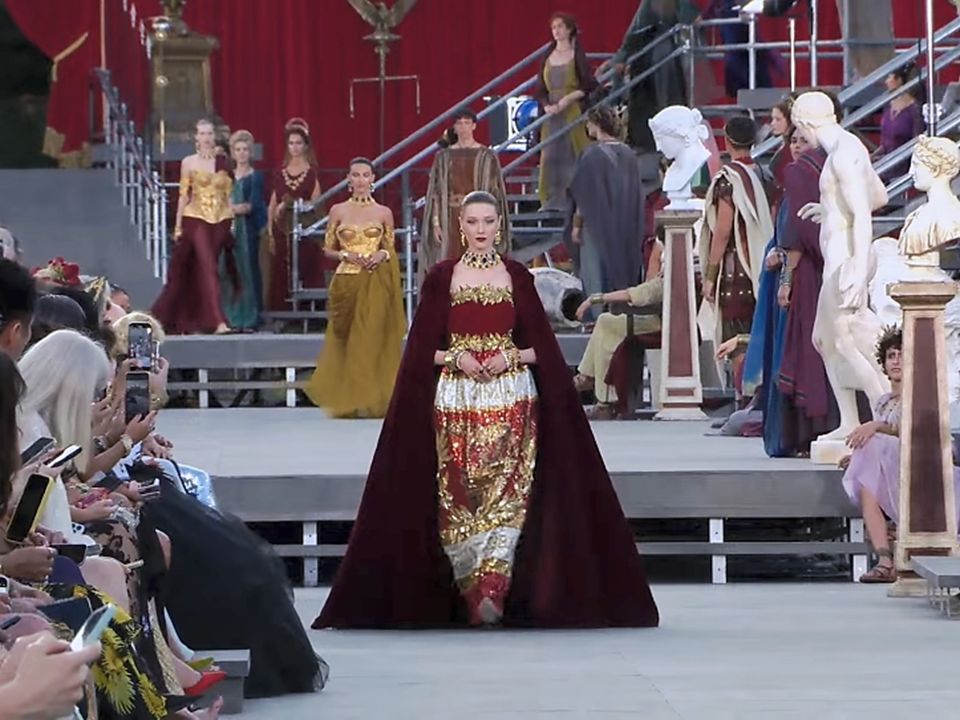
Dolce and Gabbana has been enjoying a terrific summer. Among the many events and activities the brand has created to maintain visibility, there is the Dal Cuore alle Mani: Dolce e Gabbana traveling exhibition that opened in Paris in January and is in Rome now. And perhaps the most visible, that “intimate” Venetian wedding, not enjoyed by the many locals trying to navigate the canals without dodging flotillas of celebrity water taxies and paparazzi boats. And now, the brand’s alta moda autumn/winter show in the capital city, right in the Roman Forum, a sprawling ruin, once a marketplace, that now attract millions of sightseers yearly. The transformation of the Forum into a runway immediately crumbles its historical importance and perceived authenticity. The ancients clearly built the complex with future fashion shows in mind.
But Domenico Dolce and Stefano Gabbana were careful to stage-manage the presentation as a pseudo mise-en-scene of ancient Romans going about their business in the heart of the old city and then watching the designing duo’s never-too-obvious exuberance on the runway, built on the via Sacre (sacred way in Italian). It felt like a movie studio in the midst of filming a budget period film. Actors with 21st century faces, dressed in togas, stood or sat along the grey catwalk and looked glumly at the models emerging in their meretricious couture as though it was a parade of the captives and spoils of war, and they were forced to watch it. This was not a Peter Brook production. Although the Arch of Constantine was not too far away, there was nothing victorious about the show. It looked sullen, a sharp contrast to the mostly over-ornamented clothes.
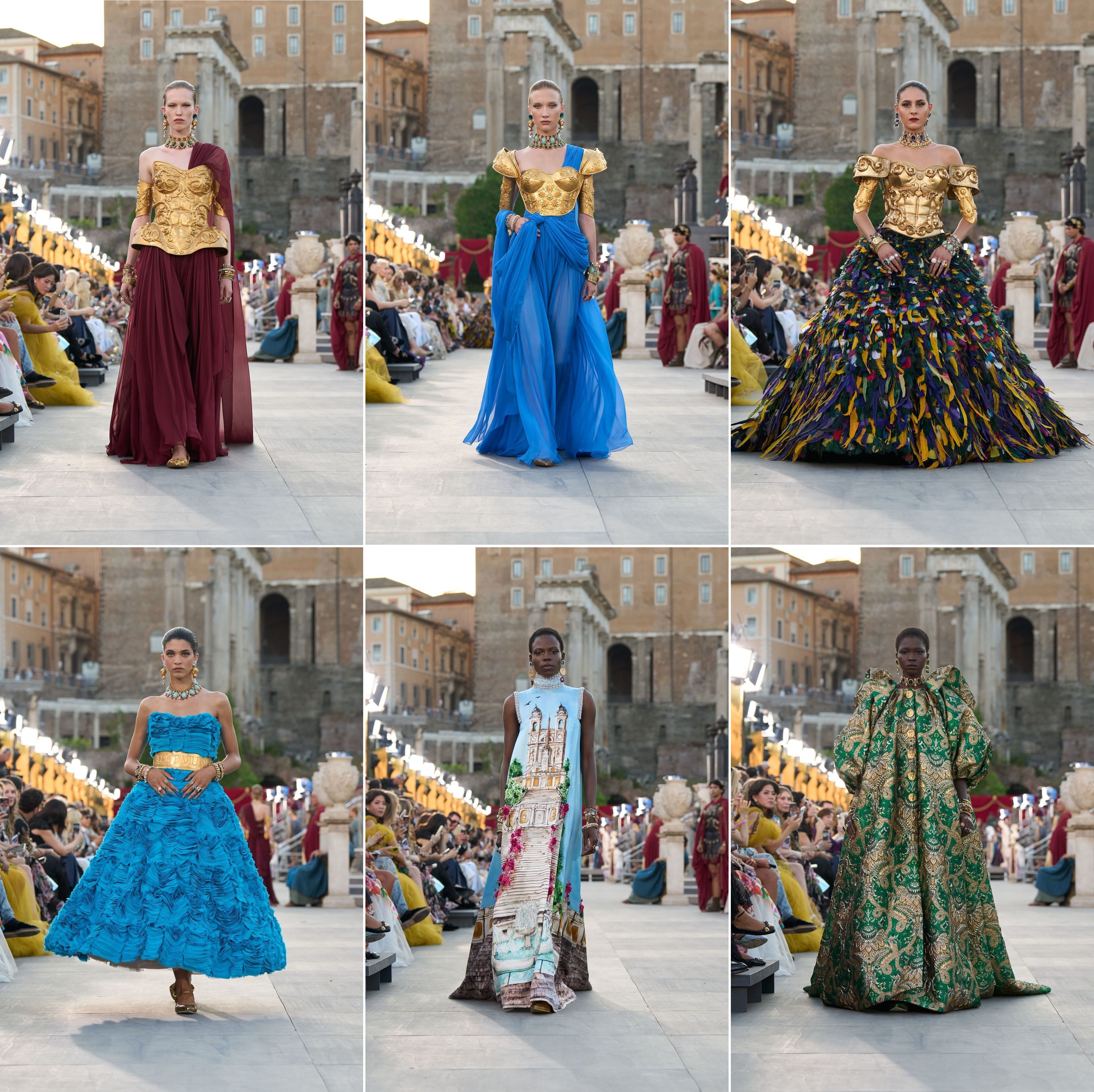
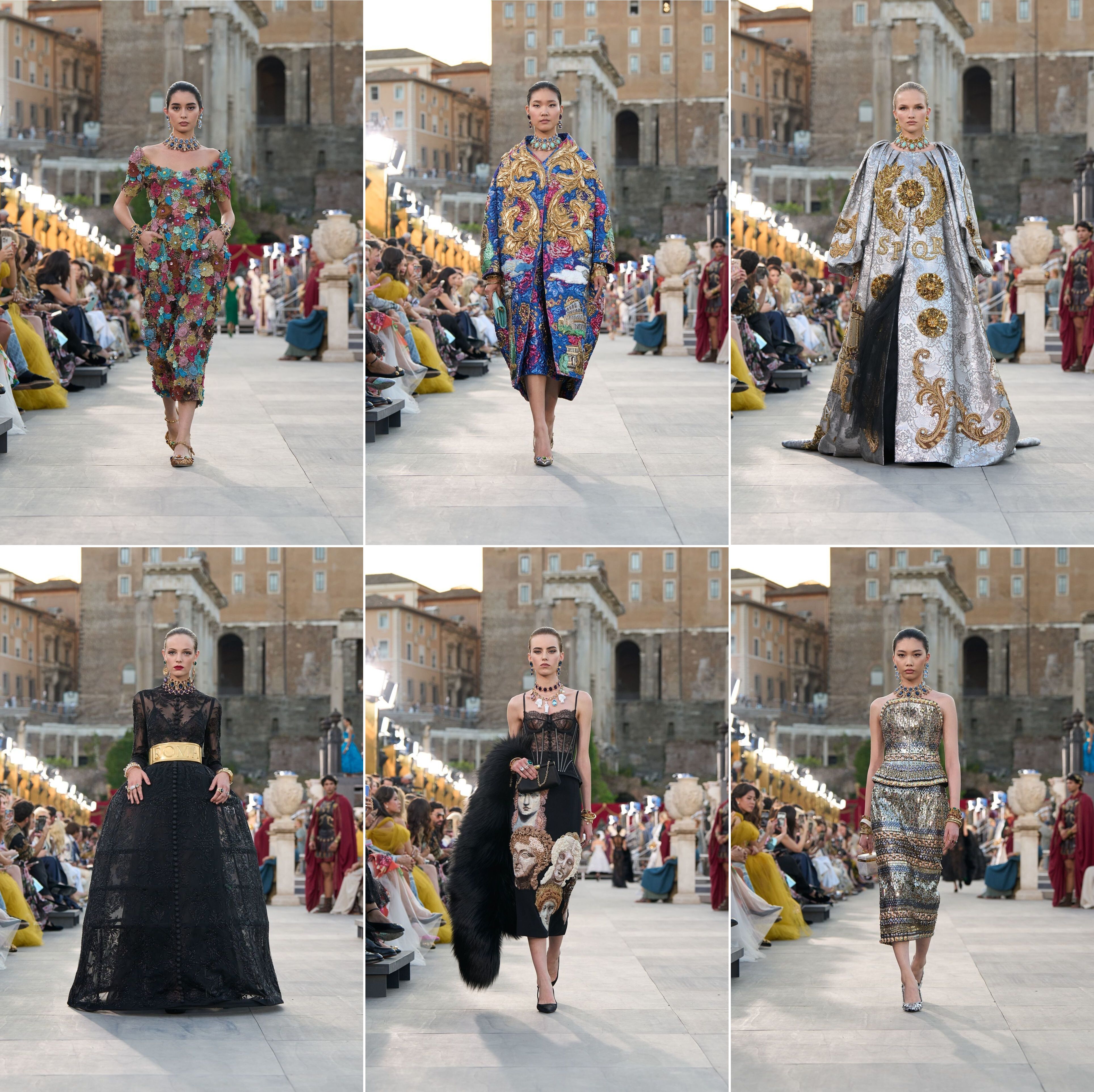
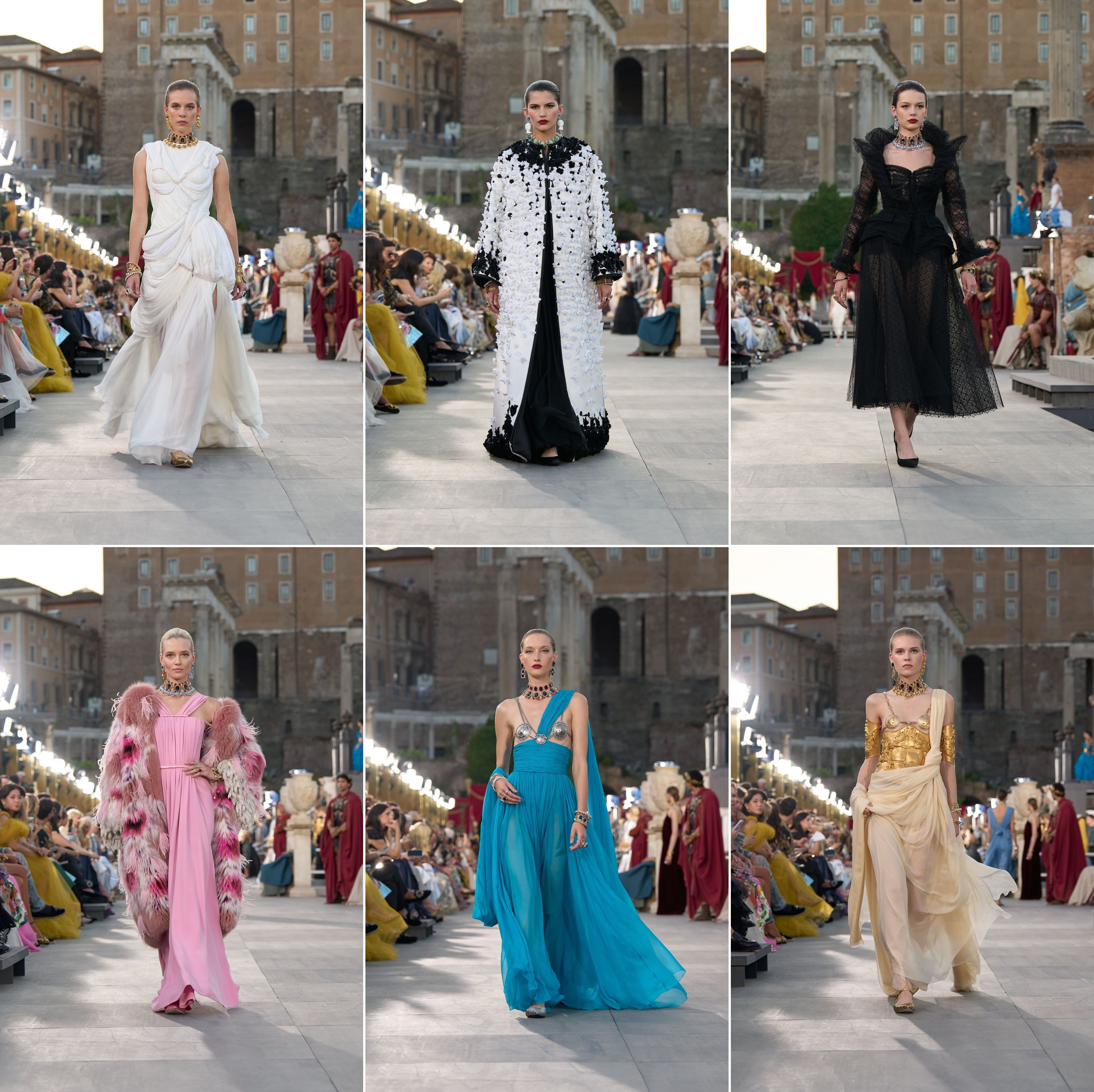
And what were these stoic, pretend ancient city folks forced to take in? Dolce & Gabbana have never made their alta moda line a paragon of subtlety. It has always been to show off what has been described as Italian creativity, as if to disprove that the people are not just good tailors. The opening gown, under a velvet cape, was a glittery affair, with the image of the she-wolf who suckled the city’s twin founders Romulus and Remus, all on a pedestal. Gold laurel leaves, once used as emperors’ crowns, now moved south as trims on the neckline and waistline. There could not have been a more obvious reference to Rome. As more models appeared, wearing bustiers-as-loricas (a general Roman term for armour or breastplate) and fluid, diaphanous skirts, it is doubtless an ode of ostentation.
The designs were, no doubt, a nod to the city’s historical classicism, but it aggressively wrestled with its ’50s and ’60s extravagance, still erroneously described as la dolce vita (the sweet life). In an introduction to the show, a voice-over described the event as a “fusion of fashion mastery and cinematic allure”. If the latter was reference to Federico Fellini’s 1960 film, La Dolce Vita, then the Dolce and Gabbana excess could be suggestion of unadulterated pleasure and luxury, which, in the movie, was a far more cynical, even hollow, reality. Through a series of detached encounters and parties, Mr Fellini exposed the superficiality and existential emptiness beneath the glittering surface—a veneer Dolce and Gabbana did not attempt to hide. That pre-show introduction spoke of the “tribute to Rome’s timeless grandeur”. There could be a nobler motive here: The designers could be spotlighting Roman high society and, by extension, high societies around the world, even the transplanted, such as that Venetian wedding. Ultimately, if the brand is accurate, they are mostly vapid, even inherently frivolous.
Photos: Dolce & Gabbana
 Style on the Dot