The tattered truth of a diplomatic pick

Barely had the Senate hearing for Anjali Sinha’s ambassadorship to Singapore concluded when President Trump unveiled his next controversial pick for a diplomatic post in Malaysia: Nick Adams. A former suburban Greek-Australian deputy mayor-turned-American conservative commentator, Mr Adams is known as an outspoken supporter of Mr Trump, delightfully appearing on conservative media outlets such as Fox News and serving as a fiery surrogate for MAGA’s main men’s 2024 presidential campaign. His persistent Australian accent, a curious auditory element for an ‘American’ ambassador to Malaysia, adds another layer to his unconventional public image. Mr Adams has written books, expectedly controversial, including Green Card Warrior (2016) and the conservatives’ favourite reading material Retaking America: Crushing Political Correctness (2017), a direct ideological extension of Mr Trump’s Make America Great Again. Essentially, the book provides a more detailed intellectual framework for many of the cultural and social grievances that fueled the MAGA movement. In Alpha Kings, published last year, the president referred to Mr Adams in the foreword as “one of my favourite authors and also one of my favourite speakers”.
The diplomatic nominee has no qualms about parading Mr Trump’s approval as his primary calling card. He prominently displays the title on his official website. The homepage presently blares: “President Trump’s Favourite Author. Presidential Appointee”. It’s a recurring theme on his social media pages, too—on X, Instagram, and Facebook. It has become a key part of his public persona and brand. In fact, Nick Adams’s rise to prominence in conservative circles directly correlates with Mr Trump’s endorsements. Leveraging this title clearly benefits him and his book sales. From a strategic standpoint, it’s an effective way to market himself and his published works to a specific audience, namely illiberal Trump-loving, white men. The president’s effusive praise and support indicate a direct, positive relationship, which in a political landscape where personal loyalty and endorsement from the top are paramount, being a “favorite” clearly puts a nominee in a privileged position.
The diplomatic nominee has no qualms about parading Mr Trump’s approval as his primary calling card. He prominently displays the title on his official website. The homepage presently blares: “President Trump’s Favourite Author. Presidential Appointee”
As crucial as being a presidential fave, Mr Adams’s sellability is his unashamed description of himself as an “Alpha Male” and then, in line with Mr Trump’s monarchical ambitions, “Alpha King”, as suggested in the book, whose cover features his name and photograph above the title. Although Alpha Kings is presented as a “roadmap” for young men to become “true alpha males”, and is filled with the author’s “world-class wisdom and wit”, it is highly infused with his own personal brand, warped ideology, and brazen self-portrayal. This cover design strategy implicitly states, “I am the alpha king, and this book will show you how to be one too.” It is not beyond the ken of any man—or woman—to see why he is so appealing to Mr Trump. Both are so utterly proud of their virility and the attraction it garners that they wear their pride on their sleeves. Both seem to thrive on the attention and fervent loyalty generated by this persona. For Mr Trump, it contributed to his political ascent and continued fervent base. For Mr Adams, it has elevated his platform, led to book sales, and now, a diplomatic nomination. The pride on their full-length sleeves is precisely about making this perceived virility a central, overt part of their public identity and appeal.
While Mr Adam’s self-confidence is one thing, proclaiming himself to be a “walking, talking masterpiece of masculinity” or having “testosterone levels spike when I enter a room” easily and rapidly crosses the line into offensive and insufferable boastfulness. It is conspicuously arrogant and self-aggrandising. Modesty and humility are foreign concepts to Mr. Adams. His social media is replete with proclamations (largely empty boasts) that would have embarrassed even his father. In one X post, he wrote, seemingly with glee: “I go to Hooters. I eat rare steaks. I lift extremely heavy weights. I read the Bible every night. I am pursued by copious amounts of women. I am wildly successful. I have the physique of a Greek God. I have an IQ over 180. I am extremely charismatic. They hate this.” To describe the supposedly many women going after him as “copious amounts” strongly suggests a particular way of viewing and treating women. But objectifying and quantifying are not good ways.
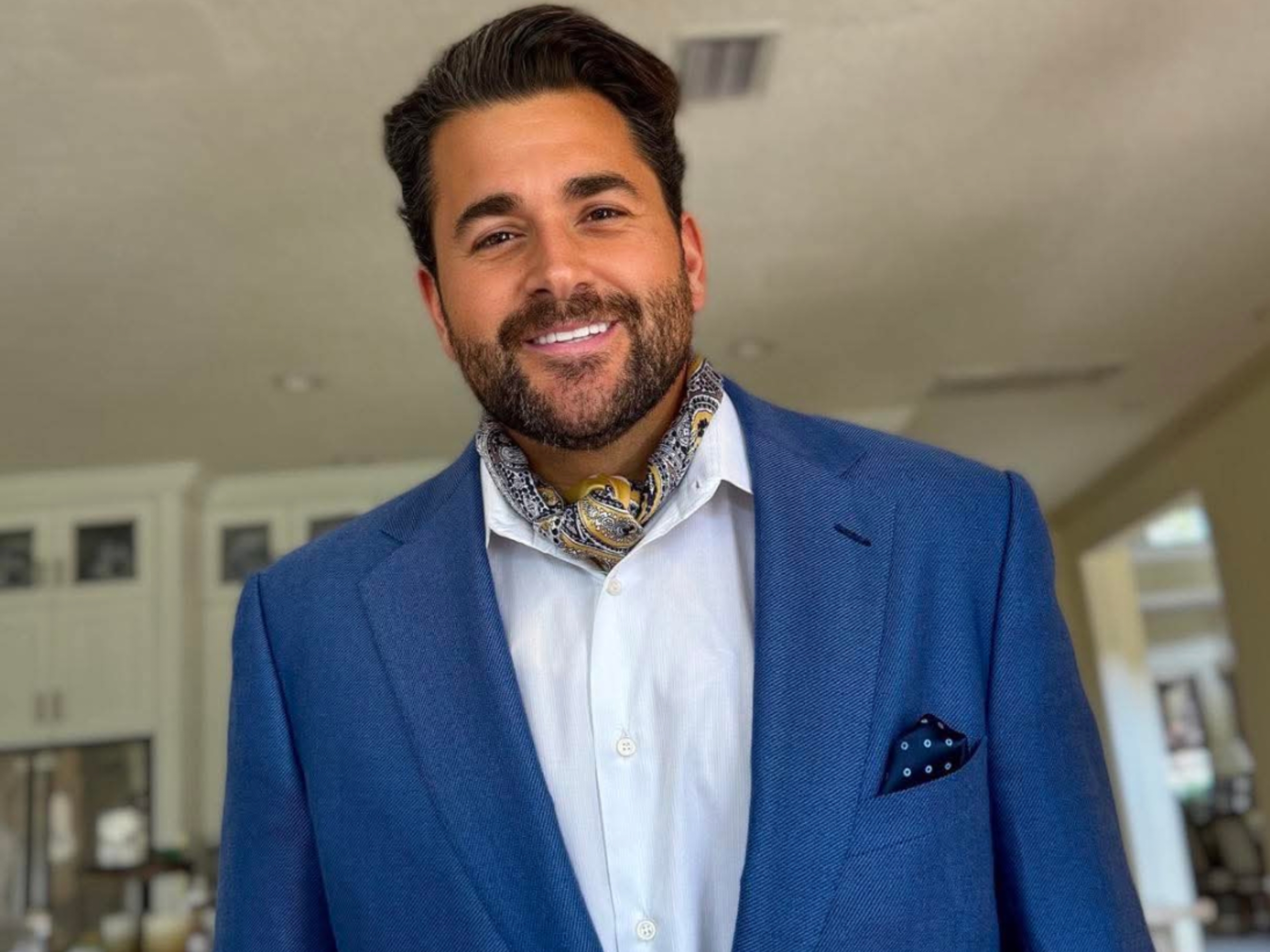
Nick Adams has built his brand around boldness—both in rhetoric and appearance. These past weeks, he shared photos of himself on Instagram curiously wearing a fancy scarf under his shirt collar, over which were the notched lapels of conservatively-cut blazers to accommodate his Australian “physique of a Greek God”. The neckwear was not a cravat nor a boyscout neckerchief. It appeared totally at odds with his abrasive persona. There was something fey about the soft touch. It was also questionable taste attempting continental flair. But the look veered into a kind of retro flamboyance that’s infrequently seen. Yet, Mr Adams was not playing Errol Flynn or Cary Grant. He could have been inspired by Quentin Crisp! The English raconteur’s scarves weren’t just accessories; they were declarations of self in a world that demanded conformity. He famously said, “Style is being yourself on purpose.” That ethos fits Mr Adams well. Although their politics and personas couldn’t be more different, both understood how to use visual identity as a statement, even if one employed it better than the other.
Then there is Mr Adams’s preference for unsubtle suits. There are the colours—often bright (Fanta grape and Siracha red!), as opposed to Mr Trump’s dour navy that the president’s supporters gravitate to as the chroma of allegiance. But perhaps more surprising is how much he enjoys wearing suits with windowpane checks, patterned to bellow. This is not the checks of the glen plaid; this was far more noticeable: sportscaster-fancy, rather than diplomat-sophisticated. It recalls Anjani Sinha’s just-as-loud pinstripes at the recent Senate hearing. Admittedly, Mr Adams’s self-styled alpha-male persona fits the blare of windowpane suits like wearable chauvinism. The assertive grid and visual punch (and high-contrast white lining!) mirror that same energy: crazy, confident, conspicuous, and calculated. That he would gravitate toward a pattern that says, “I’m here, and I’m not apologizing for it” is consistent with his Alpha Kings messaging. Visual boldness, of course, can either galvanize or repel.
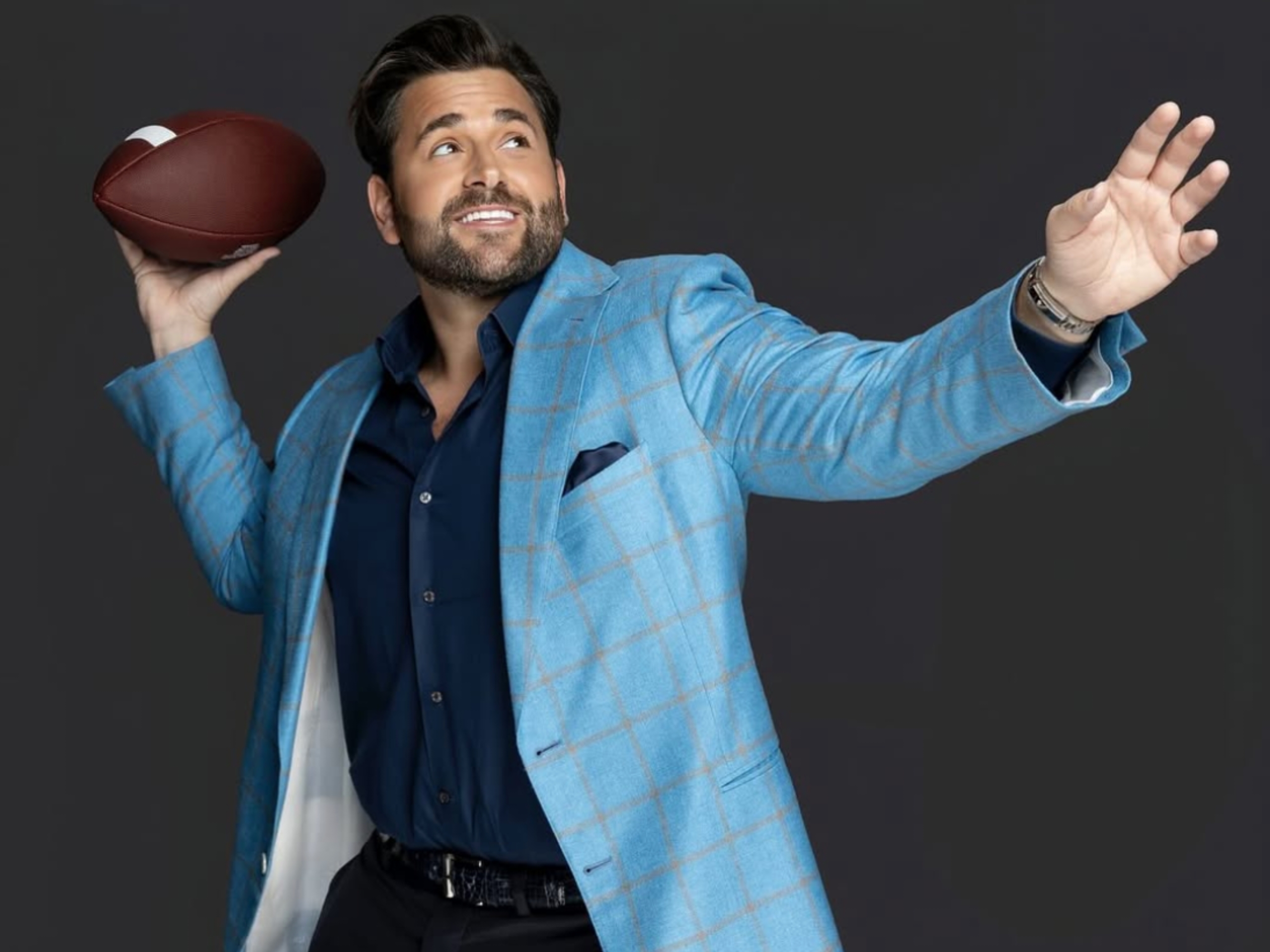
Sartorial subtlety is not necessarily a Republican trait. We have seen garishness among the “Mar-a-Largo women”. And now we are seeing it among the Alpha Kings. Even in their boy’s club uniformity, there are those for whom standing out means to glare. Even when the volume of personality is already turned all the way up, clothes can blast it further. In all likelihood, Mr Adams prefers using a megaphone than a microphone, ignoring how nuanced fashion add layers to public persona, and most definitely diplomatic guise. The loudness of a patterned suit, as Dr Santhi has shown, offers no hint of the depth beneath the bravado. Both he and Mr Adams are able to boast direct links to Mr Trump, but unhindered access is no guarantee of policy proficiency or the ability to relay the wishes of the administration. It is all visual, performative communication. But when everything is loud—the voice, the suits, the social media—the risk is that they start to feel like caricatures rather than multi-dimensional figures.
So much of Mr Adams, the potential envoy, stand in stark contrast to the traditional demeanor expected of a diplomat, which typically favours understated polish, discretion, humility, tact, and a focus on representing a nation rather than one’s own ego. Whether it is in Southeast Asia or anywhere else in greater Asia, the preferred tone has always been measured and carefully calibrated, not only for the audience of the ambassador’s home turf, but also for those of the host country. The emphasis must be on restraint that signals neutrality and professionalism, and on bridge-building and, as crucially, cultural sensitivity that can provide behind-scene influence, rather than loud public troll. Other than zero diplomatic experience, Mr Adams has not restrained himself from making Islamophobic comments. His suitability for diplomacy in Malaysia, a Muslim-majority nation that values modesty, respect, and nuanced communication is, unsurprisingly, questioned. If Nick Adams’s suits say anything, it is definitely not quiet diplomacy.
Photos: nickaone/Instagram
 Style on the Dot