The Diesel designer’s debut ‘Artisanal’ collection for Maison Margiela was a nod to the brand’s founder, with swaddles of his own subversive edge
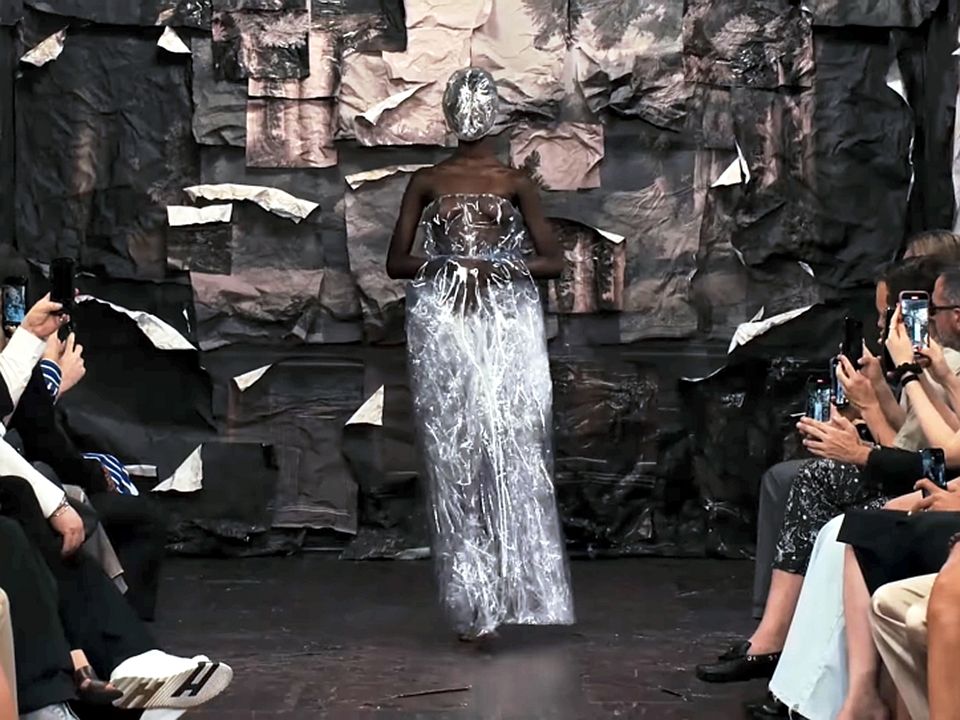
When Martin Margiela showed his first collection during the autumn/winter season of 1989, after founding his eponymous label a year earlier, deconstruction, with which he was closely associated, was not new. At the beginning of that decade, the Japanese, such as Rei Kawakubo and Yohji Yamamoto, had shown their collections in Paris, featuring clothes that were ‘deconstructed’, but the Asian newcomers were, more accurately, rejecting what they saw to be Western structural ideals. They broke that down by emphasising the body’s relationship to the garment; they were eagerly anti-form and anti-symmetry; and they played up the Japanese concept of negative spaces, where voids could be an element of design. Mr Margiela’s approach was different. He placed considerable emphasis on the garments’s construction, famously turning inside out, and questioning traditional finishes by leaving hems and seams unfinished. By now, deconstruction, whether from the Japanese or European perspective, has found itself in mainstream fashion. However clothes are deconstructed, they barely shock anymore. What once felt radically new and rebellious, particularly through designers like Martin Margiela, has now been absorbed into the mainstream fashion vocabulary.
Mr Margiela established the Artisanal collection in 2006. While the formal establishment of his version of haute couture seemed to be a confirmation of his flair and dexterity with what was then described as “found objects”, the practice of creating unique, handcrafted pieces from vintage and recovered materials was central to Martin Margiela’s approach since he founded the maison 17 years earlier. Artisanal allowed for more flexibility than traditional haute couture, although he did technically adhere to the strict rules of the couture. But at the same time, his idea of high fashion was in its spirit and the methodology, which looked towards a significant degree of conceptual and material flexibility. And it is in this that ‘Artisanal’ stood in stark contrast to the offerings of more traditional French couture house. When John Galliano took over the maison in 2014 and showed the Artisanal a year later, the deconstruction associated with Margiela was less obvious. Mr Galliano was more of a revisionist than a deconstructionist. He did not so much deconstruct garments to reveal their inner workings as revise and amplify, and transform historical silhouettes and techniques into fantastical, hyper-luxurious and emotionally-charged narratives.
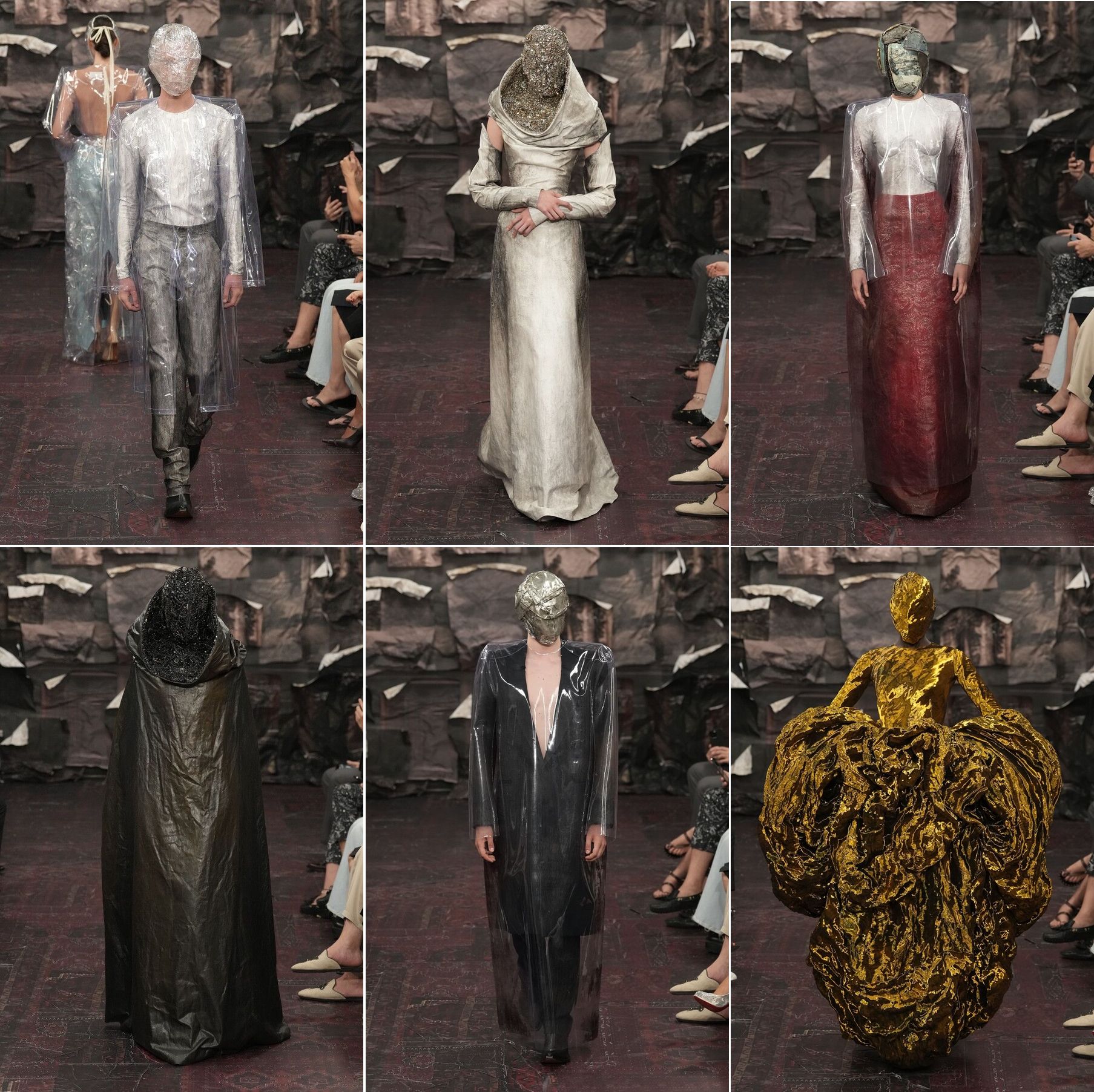
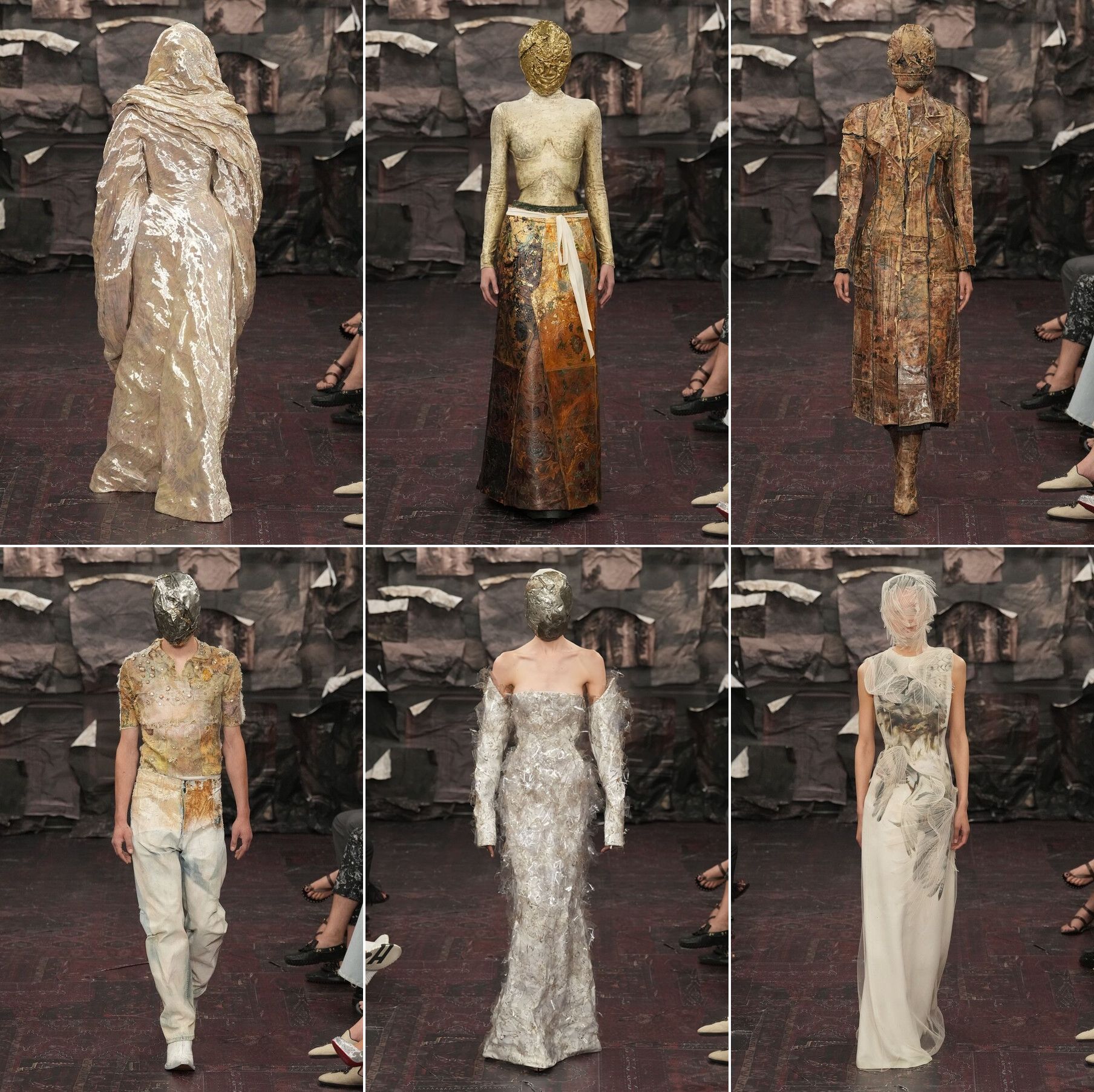

With Glenn Martens now in the picture, something totally new could be afoot at Maison Margiela. Mr Martens, who made his name at the now-closed Y/Project, is quite the deconstrustionist too, and his demonstrated a strong affinity to Mr Margiela’s transformation of the familiar and deconstruction with exposed construction. For his Artisanal debut, he did not shirk from the maison’s deconstructive language of its early years and their known daring upcycling and material experimentation. Much of the reconstructed garments are sourced from the Parisian thrift store chain Guérissol. He was also willing to incorporate Mr Galliano’s romantic revisionism, referencing Flemish art and scoring with Renaissance silhouettes. and putting out mastery of techniques quite to the fore. He did all these with his own intellectual playfulness, inviting viewers to explore the garments’ inherent paradoxes. On the surface, they looked mad. Who would want to go out with face totally obscured, even if a nod to Mr Margiela’s earlier shows? Or be cocooned in clear plastic that looked like book sleeves of the past now repurposed as wearable bags for other plastic bags, stored away to be reused and a veritable heat trap? But possibilities are not unalluring
Apart from the plastics, there are other intriguing fabrics, such as metallics that looked almost molten, sometimes a cascade. sometimes a swirl. Or the patchworked textiles, including leathers, that could pass off as peeling paint-overs in an ancient mountainside temple. There was even a pair of jeans, dubbed the “oldest pair of jeans”, reportedly found in a mining shaft, but appeared to be more in line with what Mr Martens has been doing at Diesel. Many of the dresses were rather constricted at the waist, suggesting the extreme corsetry synonymous with Mr Galliano, so too the regal bearing of the dresses, softly floral and subtly patina-ed. There was no shying away from colours either. The final dress was a chartreuse layered bodice that look like soft sedimentary rock, above a gently liquid gown. Mr Martens showed that at Maison Margiela deconstruction is not a monolithic concept. To him, there was only one way forward: transcending the conventional, even by Martin Margiela’s own standard.
Photos: Maison Margiela
 Style on the Dot