In a final stop of their traveling cafe through Malaysia, Dior gave Penangites a rasa of the maison’s seasonal Dioriviera
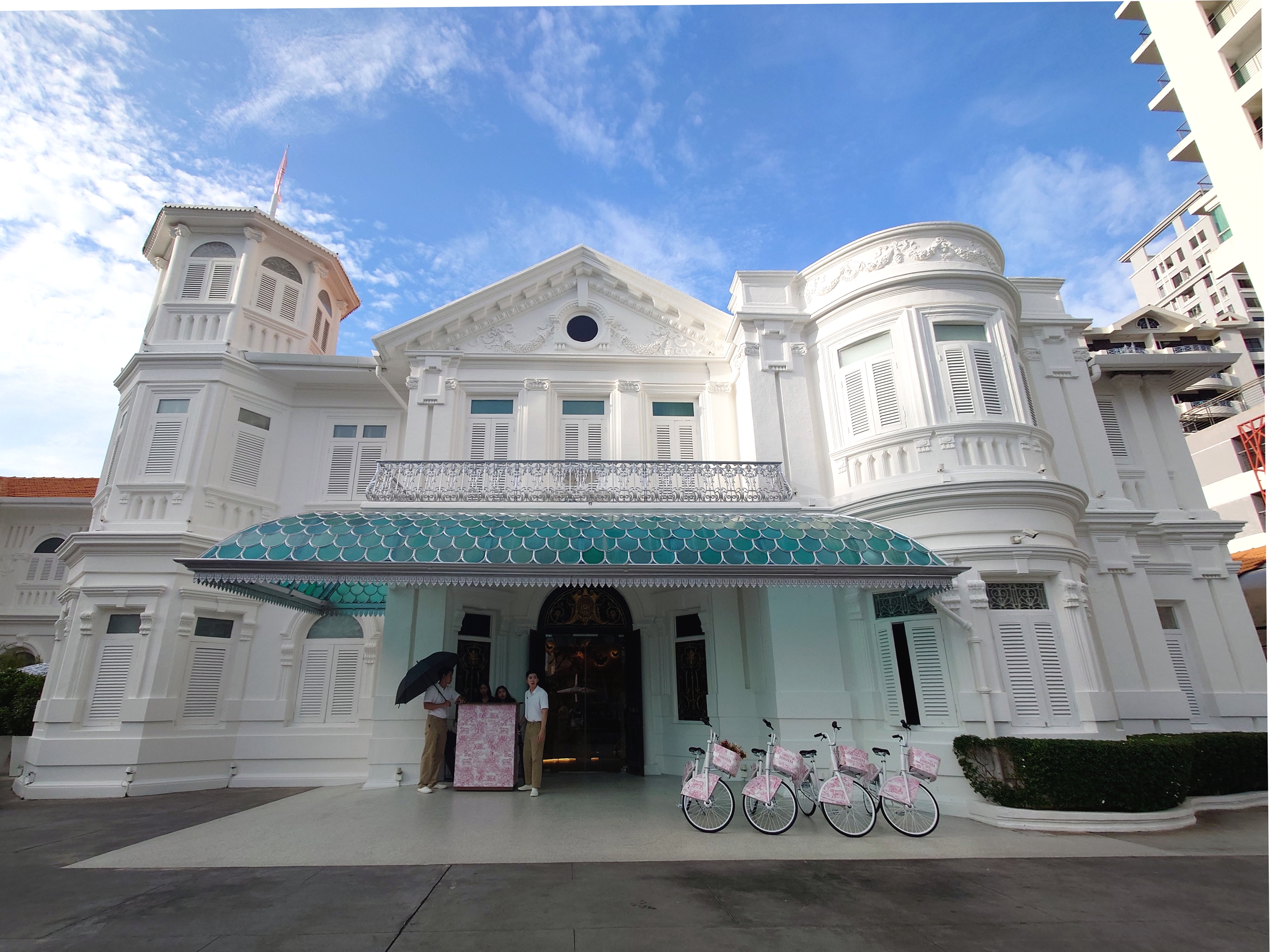
It is probably Penang’s most significant retail event: Dior has arrived on the island once admired as the Pearl of the Orient. There is still no true luxury store here (unless you count Michael Kors or Ralph Lauren), so Dior’s presence in the form of a Dioriviera pop-up is hailed as a victory for the sun-baked island. Grazia MY even gushed that the maison has put “Penang on the fashion map”. The event has even been listed among one of the “Things to Do in Penang this July”. The two-and-half-month Dioriviera is housed at the Macalister Mansion, a century-old, former colonial residence that was named after the island’s British Governor Colonel Norman Macalister, who was lost at sea in the 1810, when the island was named by Francis Light, best remembered for founding Penang, as Prince of Wales Isle. It’s now the French who is trying to make an impression.
Macalister Mansion is now a ‘heritage’ hotel. However, it is entirely closed as travel lodging for Dior to transform the whole property into a product-pushing post. That means even the narrow pool in front and the entire foreground are marked out by Dior/Dioriviera banner flags, pool floats and umbrellas, upholstery of deck chairs and patio seatings, all sporting the ubiquitous (and ardently copied) print, Toile de Jouy (French for ‘cloth from the two of Jouy’). In the restroom, bottles of Dioriviera hand wash and hand lotion are available for your use. This extensive branding, as well as other installations, such as the life-size rattan jungle animals—amid curiously desert vegetation—in various dioramas, is a deliberate tactic for the pop-up experience; this is Dior not just selling products; they’re hawking a lifestyle, a dream, and an aspirational identity. This is Dior Disney-fied.

When we alighted from our Grab car one unbearably hot Wednesday afternoon at the main porch of Macalister Mansion, a porter—attired in white polo shirt and khaki slacks—lunged forward with a huge black umbrella to shield us from the searing sun’s rays to the sheltered entrance, at which a young woman asked if we had a reservation. We asked her if one was needed to go into the retail space. She told us no, but a reservation was required if we planned to go to the café. We told her we had a reservation for that. She quickly checked our claim and then told us, “your table is not ready, but you can browse inside.” Desperate to escape the heat (which was 32°C that day, but according to Google weather, the Real Feel was 38!), we pushed the door to get in, but was told by a third person to wait, while a staffer was arranged to attend to us. Looked like we were back in colonial times.
The store is not your usual Dior boutique, with spaciousness that stood aloof from their customers. Once we entered after the front door was held ajar for us, we were in the foyer of the mansion, and abruptly thrown right into the immediate selling floor, which comprises the main display and the menagerie of the rattan animals in the rear, flanked by two racks of merchandise. The confines are designed to appeal to women, not only with the merchandise, but also the decor, a holiday-villa-in-Tanjung Bungah vibe, with back-lit butterflies, also in rattan, dotted on the walls with etchings of palm trees, all bathed in incandescent glow. We sensed that the prettiness is intended to underscore the commercially feminine clothes that could pass off as merchandise of Parkson department store, on a good day.

The guided introduction to the merchandise, enthusiastic as it was, ended quickly since there was nothing compelling to appreciate. Our SA, originally from a Kuala Lumpur store, was togged in a navy T-shirt and black trousers, surprisingly understated for the selling of Dior merchandise. He tried his very best to extol the beauty of those products unique to this pop-up. They were the final capsule of the former creative director Maria Grazia Chiuri. But the merchandise as a whole lacked a must-buy resonance. We noticed that many of the women, carrying their trophy Dior bags, were not particularly absorbed by Dioriviera aesthetics. It is not unreasonable to assume that they were not planning to commit good money to Dior until they are able to see what Jonathan Anderson would come up with in merely two months from now. We certainly were.
We returned to the front of the store. Our table at the café, we were told, was being readied for us. We had to wait, again. It was only ten minutes to the appointed time, but we would be shown to our table only at the exact time, one of the staffers explained. Our SA offered to check the situation for us. He came back and said, “very soon”. This one-time foyer was now packed with other guests who, seeking respite from the heat, had opted not to wait outside. They brought in with them the biting bouquet of having spent too much time in the sun. It was immediately discernible that the new arrivals were visitors from China and Taiwan. We remarked to our SA that it seemed Dioriviera was a tourist magnet. He said that at the start of the event, which was two weeks ago, “many locals came and they bought a lot.” It was boggling: why did he volunteer that last bit of information?

The café is in an outbuilding on the right. The same porter who had shielded us earlier with his massive umbrella escorted us to the café entrance, where we were handed over to a different crew. Again, we were told to wait. There was an ice cream kiosk by the side, we took a peek into the glass-top freezer, and took note of the flavour we would like to try. When we returned, we were told by a staffer that our table was ready and to go “right inside”. We could see that the main dining room was full. Someone behind motioned to us to move to the rear. We were surprised by the kedai kopi reception. We went further back and found a separate room with a pool table in the middle. There were three unoccupied tables that sat four each. After we were seated, we were told that our “table experience” was until an hour and half after our appointment.
We were handed the menu that came in five pink cards roughly A5 in size, and matched the Toile de Jouy napkin on a white side plate. They detailed offerings for beverages, desserts, juices and water, cocktails and mocktails, as well as mains. Before we could finish reading the third, the heat we had sensed upon entering was beginning to bother us. For reasons unclear, the air-conditioning was extremely weak. We knew we had to eat and go. We placed our order, beads of perspiration glistening as we spoke to the order taker. A server arrived ten minutes later with a glass of iced coffee. We sipped it and was taken aback by its average flavour. Given northern Malaysia’s impressive coffee culture, including Ipoh’s famous white coffee and Penang’s own hor kar sai (literally ‘tiger bites lion’ or a mix of black coffee with malted chocolate drink), Dioriviera Café’s sad, sad brew was just filtered out.
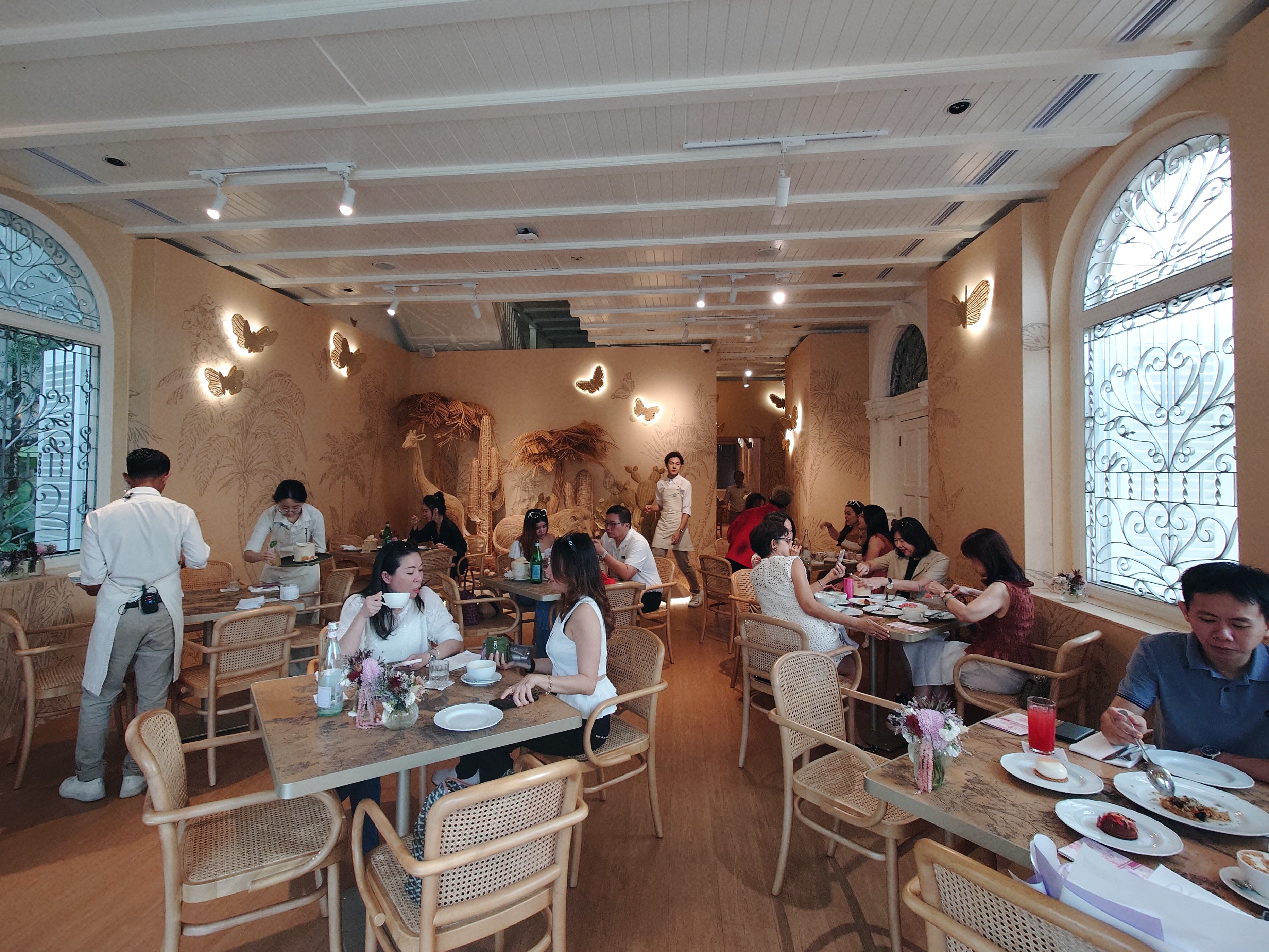
When the server returned with our pastry the size of half a golf ball that was redolent of the essence of regret, we asked her where the coffee beans were from. She looked at us blankly, so we repeated our question. She said, she did not know and would check. After a while, she returned to say, “we use Arabica.” We were floored by the groundbreaking insight. And where were the Arabica from? She said, “I’ll check again.” Another staffer strode confidently to us and asked what we liked to know about the beans. Where were they from? Which region? “Oh, which region, is it? Okay, I’ll check”. He came back with a sense of accomplishment: “The coffee bean’s from Ethiopia”. We tried the coffee again. Complexity was as absent as it had been in the Book tote.
Twenty five minutes after we were seated, the heat became too much to bear. We wondered if the high indoor temperature was deliberate so that we would not be seated to the last minute of the alloted 90-minute dining limit. We asked for the bill and it was brought to our table by an ebullient lass. She asked if we enjoyed our meal. We did not lie; we also expressed our shock at the debilitating heat. She told us, she too couldn’t deal with it. It was, in fact, so bad for her that she had to eventually cut her long hair short—to above her shoulders that we saw her with. We expressed our disbelief. And she smiled good-naturedly. She too understood the deep irony that this pop-up and café, touted as an immersive experience felt like a masterclass in enduring the heat. Outside the cafe, it was considerably cooler even with the sun still blazing. Now, the entire front garden of the Macalister Mansion was as busy as a fairground. Many people, dressed to the nines, were carrying their Lady Diors, their Saddle Bags, and their Book Totes. This was the social highlight of Penang and the state’s moment in the Dior spotlight.
Photos: Dan Lim for SOTD
 Style on the Dot