Marc Jacobs took another jaunt down the terrain of lumps and bumps
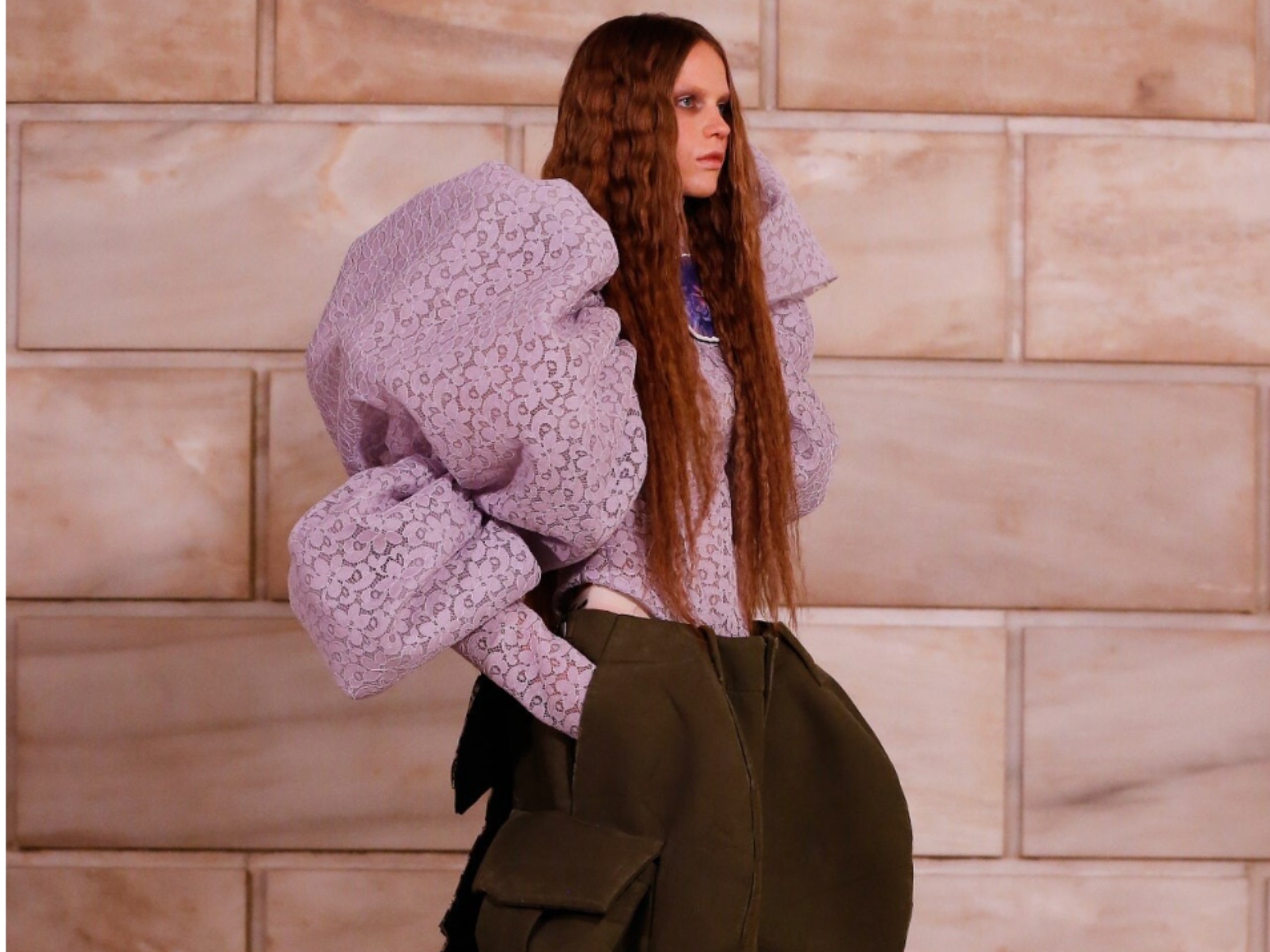
We’re always curious to know what a Marc Jacobs mood board looks like. His latest show, the autumn/winter 2025, is, as usual, staged later than anyone else, and over sooner than any other presentation. And just as usual, we saw the exaggerated, sculptural, and bulbous proportions. The overarching theme has been explored before—from the cocoon shoulders to distended upper bodies to balloon hips to inflated skirts and sleeves. Yet, this season, he pushed the boundaries further, with a model now sporting two sets of breasts, not to mention what would commonly be referred to as a ‘muffin top’ mid-section. Conventional beauty redefined? Or unconventional rehashed? What would Marc Jacobs do if there were no designers such as Rei Kawakubo, Georgina Godley, and Vivienne Westwood who came before him?
Perhaps the real difference is that none of those designers has given women an extra set of breasts (they will tell you that two is more than enough). Is this then transgression? Whatever convention it contravened, the multi-lobed bustline was likely conceived to be unsettling, given women’s own obsessions with their mammaries. It was not only pointing to a large, ungainly bust, pumped up with padding so globular that even a wonder bra would be powerless to outdo it, but was a deliberate exaggeration so that the lower set—a forlorn and flaccid lace bra—was a reminder of what they would have been if not for the augmented perky upper. We are in an era of fashion as social commentary, community as fashion. Is this then satire?
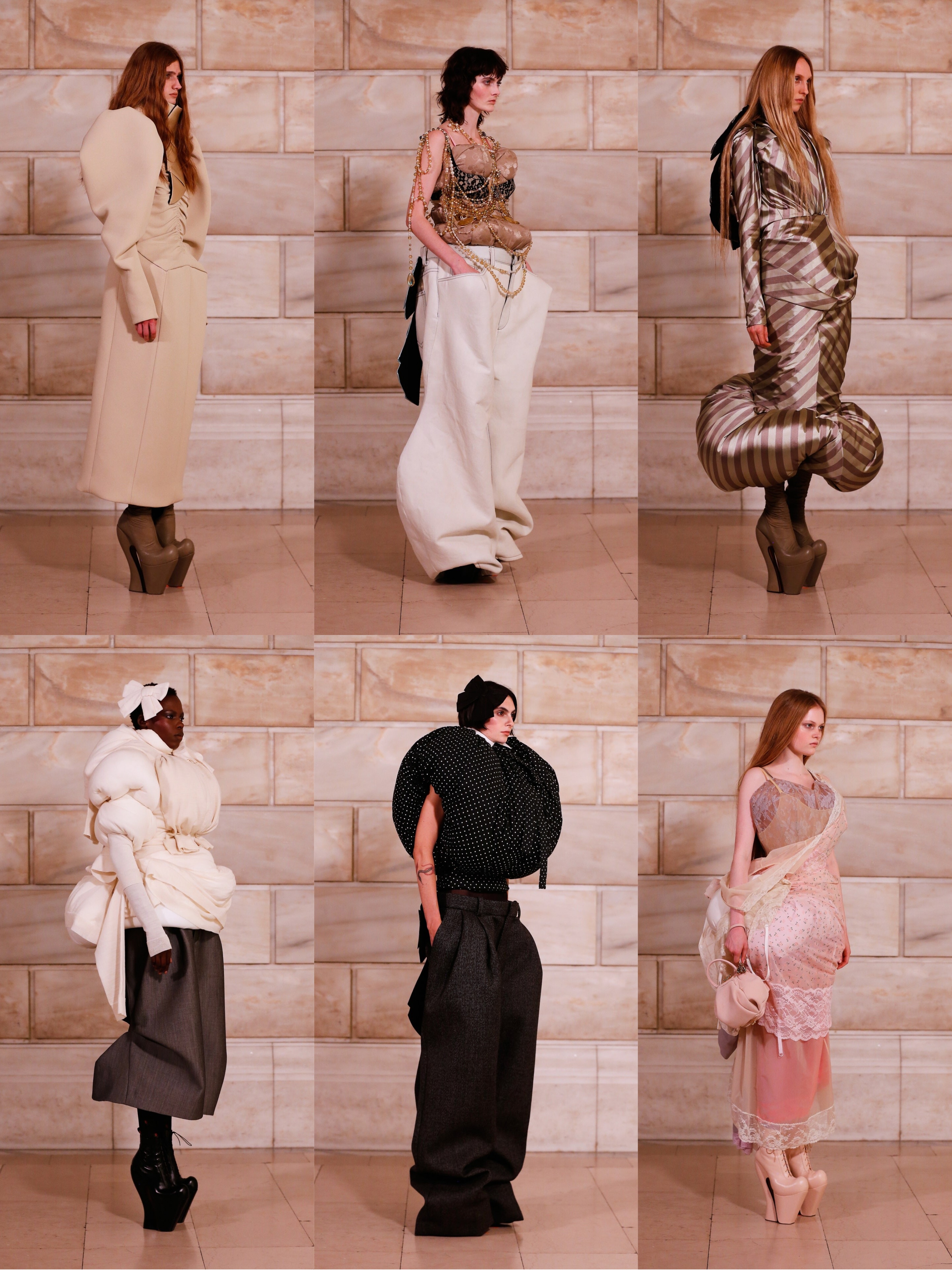

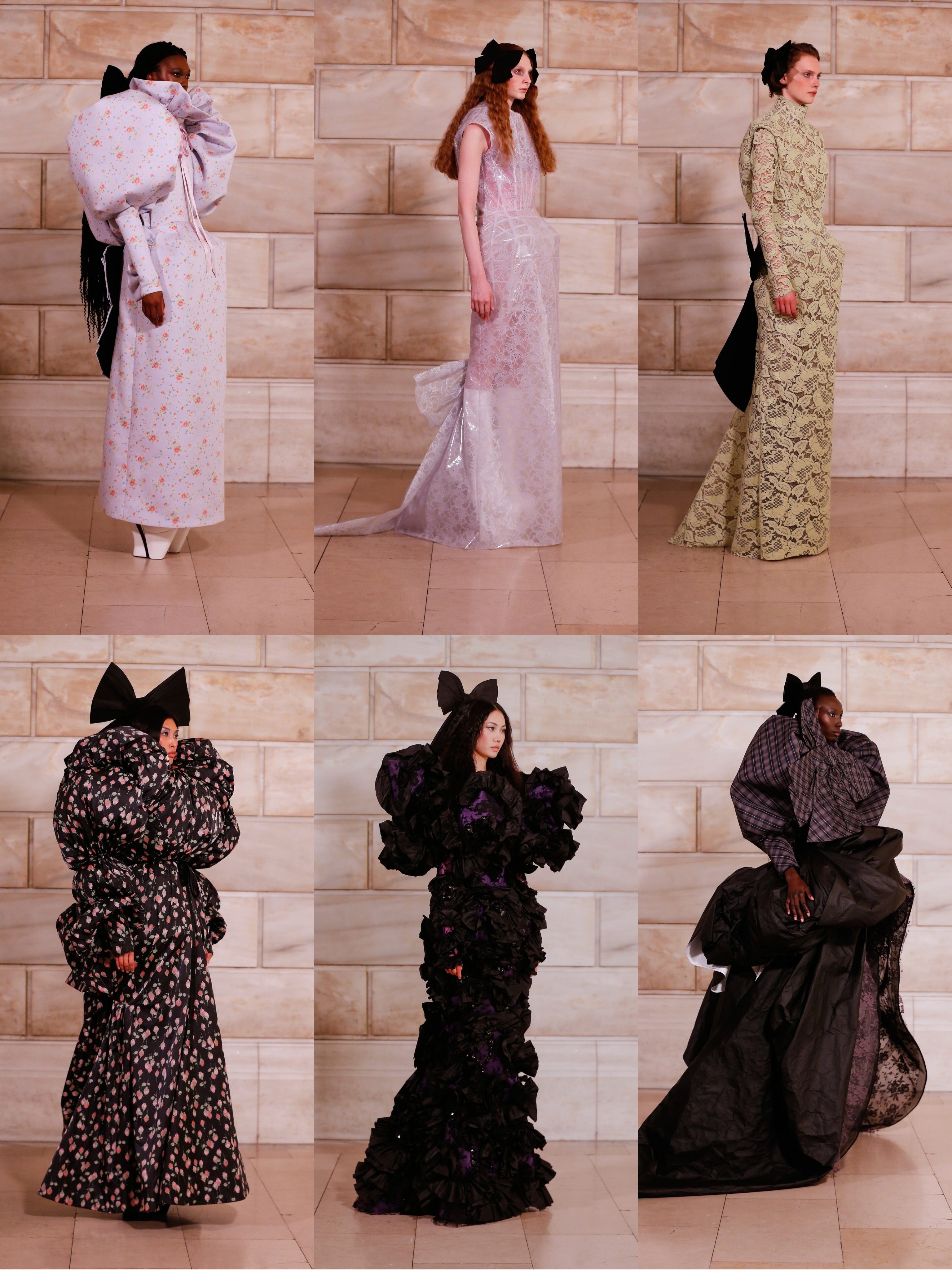
Mr Jacobs’s dabbling with ungainly or superfluous protrusions is a fairly recent love affair, even when he had flirted with volume during his tenure at Louis Vuitton. But what he was doing now came very much after Comme des Garçons’ “Body Meets Dress, Dress Meets Body” show (often dubbed the “Lumps and Bumps” collection) in 1997. Those CDG silhouettes became career-defining for Ms Kawakubo, so much so that they were featured at the Metropolitan Museum of Art exhibition, Art of the In-Between in 2015 that solely featured her ever more bulbous designs. But even her bumps inflated a tad late. In 1986, British designer Georgina Godley was celebrated for her dresses and coats that were strategically padded and protruded at unexpected places, inspired by African fertility dolls. Ms Godley’s Quasimodo audacity were often cited as the original “Lumps and Bumps” collection. These early protuberances marked a pivotal moment, truly kickstarting the reimagining of bodily forms as contemporary fashion pushed forward.
Built-in padding was also a feature in the work of the late Vivienne Westwood, as much as truncated crinolines were. But more than that, her designs resonated for their historical references seen through punk lenses. Mr Jacobs is also known for being a designer who is deeply aware of fashion history—currently Victorian-esque—and often draws from it. Like Ms Westwood, he re-contextualises the references and styles them to commensurate with his brand image, which seems to enjoy the meshing of cultural icons—this time, Scarlet O’Hara’s Mammy meets Anna Piaggi. Yet, the connection to the work of others is too obvious to dismiss. To be sure, he showed precise pattern-making and construction. The internal structures, the way the fabrics fell and held their volume, the balancing of these extreme proportions—these were all acts of technical accomplishments. Yet, this wasn’t Marc Jacobs stepping out of history’s shadow to truly define a distinctive, awe-inspiring, unborrowed silhouette.
Photos: Marc Jacobs
 Style on the Dot