India strikes back at Prada for cultural appropriation after the brand showed slip-on footwear on the runway with an uncanny resemblance to Kolhapuri chappal
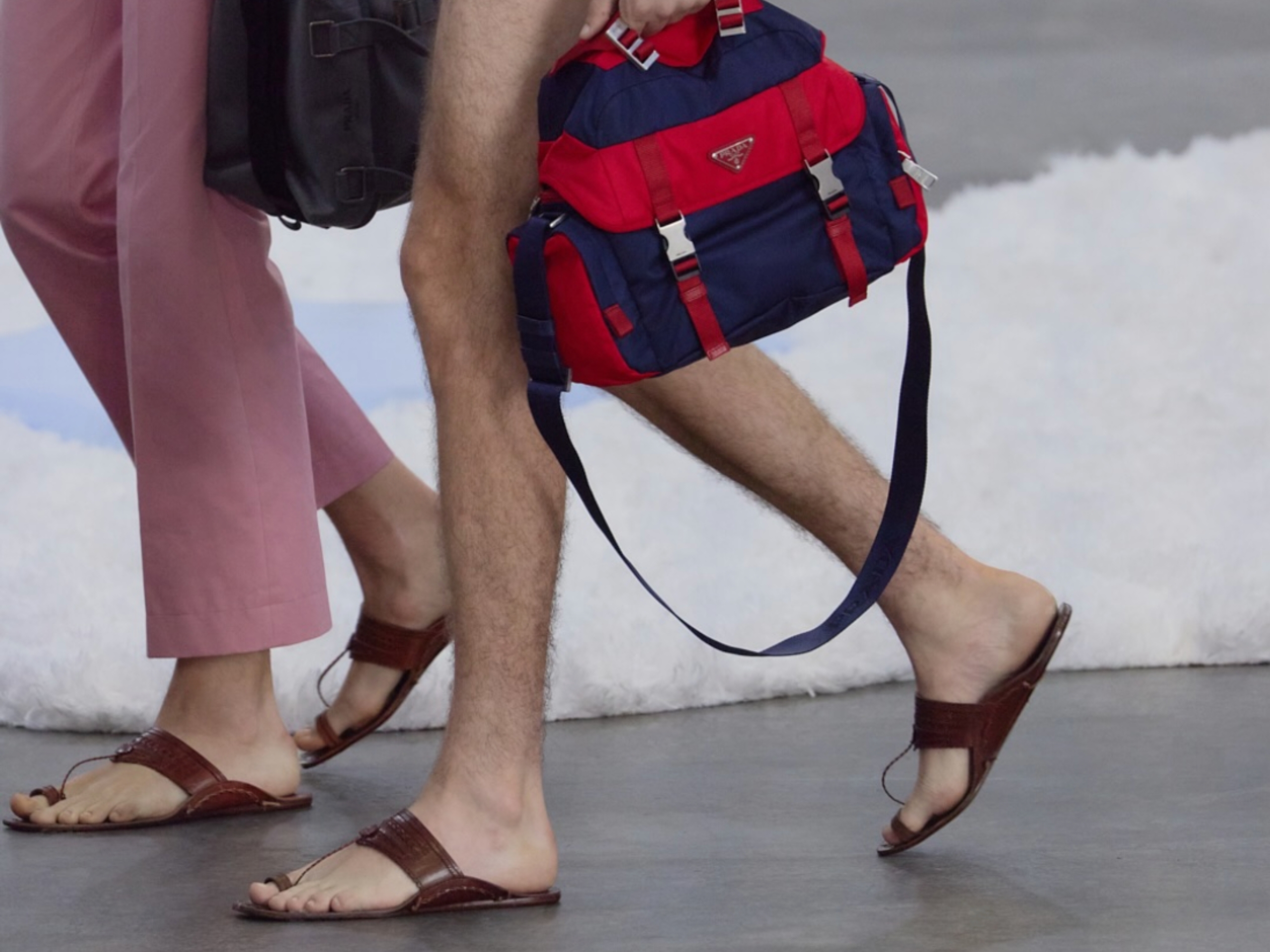
Prada’s chappal from the recent men’s spring/summer 2026 show in Milan. Photo: prada/Instagram
The term “cultural appropriation” has been in use since the mid-1940s, but it is in the 2010s that it was bandied about in the fashion sphere. Yet, more than a decade later, brands are still unable to acknowledge the source of their ‘inspirations’ until they are called out. From the 2012 Victoria’s Secret Fashion Show that saw Karlie Kloss wear a feathered headress in the ‘Navajo’ style to Isabel Marant’s 2015 blouses, similar to those worn in Mexico to the 2017 Marc Jacobs spring show where white models wore dreadlock wigs to Gucci’s “Indy Full Turban” a year later, and even as recently as in 2024, when Louis Vuitton was accused of featuring the typical Romanian blouse, the ie (pronounced “ee-yeh”). And now, Prada’s slippers that look uncannily like the Kolhapuri chappal of India.
Shown during the recent Milan Fashion Week, the Prada slippers bore a striking resemblance to the traditional Indian footwear. When we first saw them, we immediately said to ourselves, trouble is afoot (yes, pun intended). The Kolhapuri chappal is much more than just a pair of sandals; it is, to Indians, a testament to centuries of their craftsmanship, cultural heritage, and sustained livelihood for countless leather artisans. The chappal’s history is, like many Indian articles of fashion, rich; it is deeply rooted in the western Indian state of Maharashtra, specifically the city of Kolhapur, from which it derives its name. Not long after images of Prada’s dupes went viral in India, the outrage was palpable. In a da xiao ren (打小人 or beating the petty person) moment, India hit back at the Italian luxury giant.
The Kolhapuri chappal is much more than just a pair of sandals; it is, to Indians, a testament to centuries of their craftsmanship, cultural heritage, and sustained livelihood for countless artisans
The affront wasn’t expressed by a few fashion critics. It became a widespread conversation on social media, involving historians, cultural commentators, MPs, and the general public. Especially loud was the indignation of the local Kolhapuri artisans, who were furious that Prada disregarded an eight-century tradition that, to them, is synonymous with Kolhapur in Maharashtra. The Maharashtra Chamber of Commerce, Industry and Agriculture took a formal stance; its president Lalit Gandhi wrote to Prada to highlight the issue of intellectual property rights and cultural appropriation. The incident reignited discussions within India about the need for stronger international legal frameworks to protect traditional crafts and geographical indication-tagged (GI) products (such as Darjeeling tea or Basmati rice) from blatant appropriation by global brands.
Apart from the lack of attribution, the price discrepancy between what are available and those Prada puts out are so wide that it shocked scores of Indians, even those generally amenable to luxury prices. Although Prada has not announced their prices, India media reported that they would cost “over ₹1 lakh (or about S$1,500)”. This is staggering when compared to the less than ₹1,500 (or about S$22) typically charged for those made by Indian artisans, such as those found in Dilli Haat market in Delhi or by the respected maker Korakari. Kolhapuri chappals have a GI tag in India since 2019. This legally recognizes them as a traditional product from specific regions in Maharashtra and Karnataka. While direct GI infringement would be legally complex in international contexts, the pride in protecting the traditional craft was undeniably assaulted. When we said “petty”, it, therefore, denotes an imbalance of power. It is not clear why Prada had not anticipated such a predictable and forceful reaction.
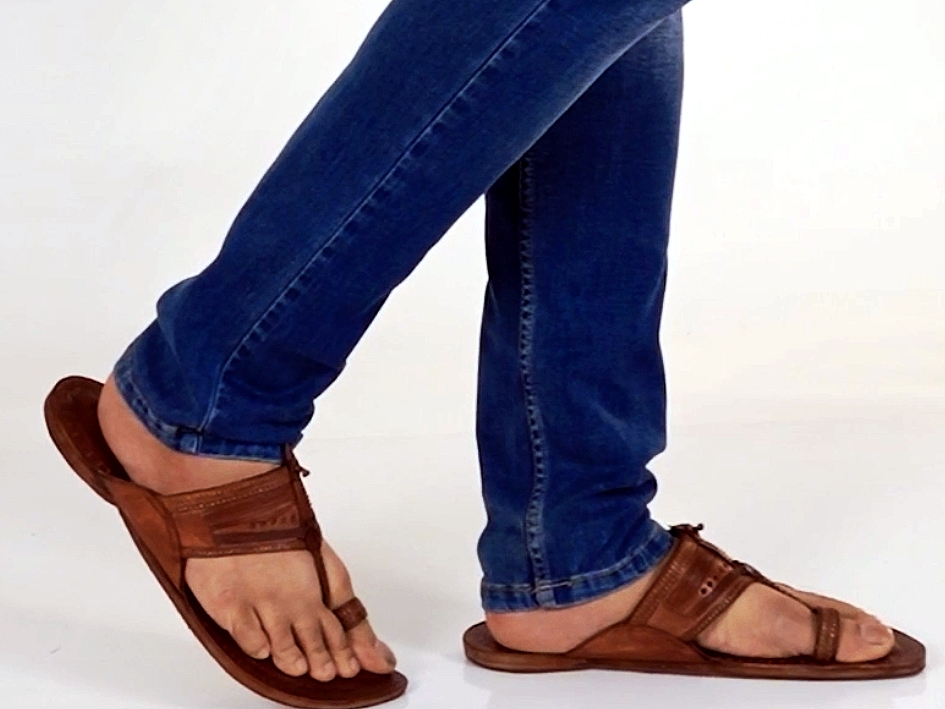
Traditional, handmade Kolhapuri chappal by Indian footwear brand Korakari. Photo: Korakari Traditional Footwear
But, according to Indian media, Prada did reply to Mr Ghandi. Lorenzo Bertelli, head of corporate social responsibility at Prada had written back, which the president of the Maharashtra Chamber took to mean that the Prada “design it had showcased had been inspired by traditional Indian handcrafted footwear”, as he told the Hindustan Times, adding that Prada “was ready to recognise the value of specialised craftspeople by meaningful exchange with local artists.” According to The Hindu, in Kolhapur, a member of the District Footwear Association asserted that “there are 20,000 artisans here in Kolhapur who make these chappals. All of us manufacturers have come together to condemn Prada. They have called it ‘leather chappals’. We have protested against it. They can’t do that. We have a GI tag.”
The chappals are not only popular in India, they are also worn in Pakistan and the Mauritius. Despite the outcry in the country of its birth, the chappals could be losing its popularity as everyday wear by the Indian diaspora. It is now hard to find them even in Indian neighbourhoods such as Little India in Singapore and Brickfield in Kuala Lumpur. Recently, we spent three hours hunting for a pair in Little India, but they did not show themselves. We spoke to a shoe seller in Tekka Market, where many shops sell traditional Indian dress, about the chappal’s curious rarity here. And she said, “no one asks for them anymore. Also, the leather ones are expensive. We only have these,” pointing a single style, clearly made of PU. But these are not Kolhapuri chappal, with the distinctive toe ring. These are just thonged slippers. Perhaps, Prada knew what they were doing—seizing the opportunity to make Kolhapuri chappal popular, if not trendy, again. The exotic, in fashion, always has its allure.
 Style on the Dot