The venue is Venice and the dress is by Dolce and Gabbana. But the attention-seeking is as American as can be
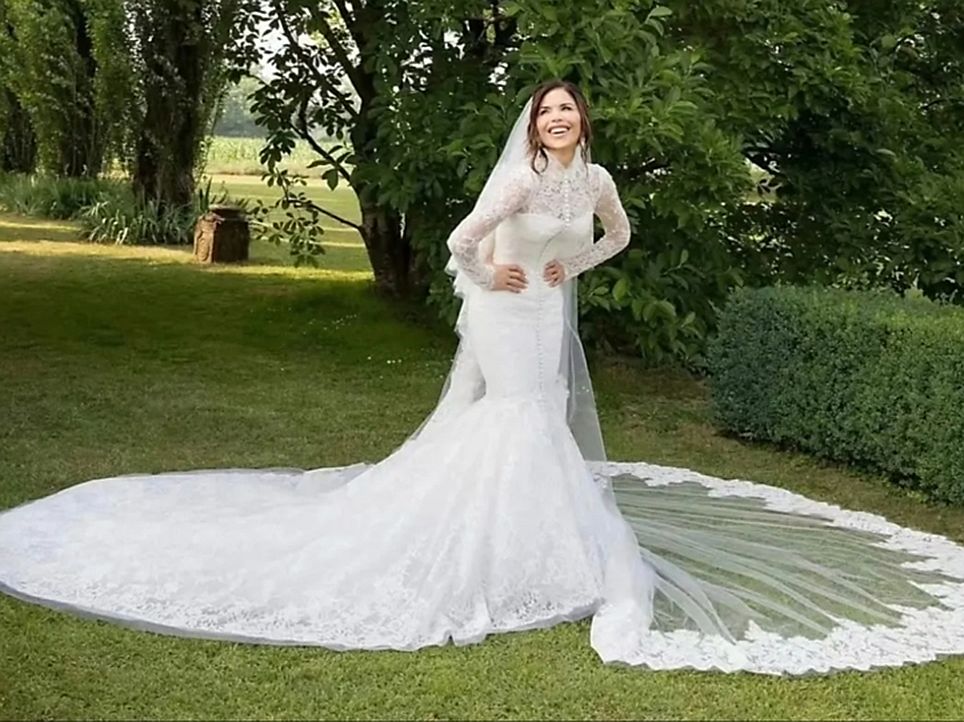
American bride Lauren Sanchez, wife of Jeff Bezos, in Dolce and Gabbana. Photo: laurensanchez/Instagram
As Gaza burns, Venice blings. Just yesterday, at least 40 Palestinians were killed by Israeli gunfire and shelling across the Gaza Strip. Eyewitnesses reported Israeli forces opening fire on civilians desperately waiting for food aid, according to Al Jazeera. But, 2,500 kilometres away, on the historic island of San Giorgio Maggiore island in the sestiere San Marco, a district in Venice, Jeff Bezos, only the world’s third richest man, married Lauren Sánchez, the former Fox Sports journalist. By now, you would have been aware of the scale of the wedding and the high-profile guests attending in their flashy finery. This was by no means a private affair; this was a showy event, staged for the world to see. The estimated US$40 million to US$56 million celebration was ostensibly for a wedding, but, as many have declared, it was also a “vulgar display” of wealth.
Most weddings are conducted to be more fairy-tale celebrations than mortal blowouts, but the Bezoses’ nuptial excess was an eye-watering figure that far surpasses the average wedding budget (the wedding of India’s Anant Ambani and Radhika Merchant last year notwithstanding). Expense is, of course, no an issue, nor the need to receive gifts. In fact, the couple had requested for donations instead, and to be made to the city of Venice. While the city undoubtedly attracts immense wealth and tourism, and has many wealthy residents, it faces significant, complex, and dire challenges, largely due to over-tourism and its unique fragility. But it not lacking in medicine or food or potable water, as Gaza is. According to CNN, “Venice expects to rake in over US$1.1 billion.” The context of the wedding’s opulence and the nature of Venice’s problems make the gesture seem incongruous, insufficient, or even self-serving, especially when compared to the humanitarian crisis that the Bezoses and their guests probably flew over in their private jets on the way to the wedding.

Lauren Sanchez on the digital cover of Vogue. Cover photo: vogue/Instagram
It is, ultimately, not so much how they spend their money, but the optics of their actions. And that includes a published visual of the bride on the June 2025 digital cover of Vogue, specifically showing off Ms Sánchez as a blushing bride in custom wedding gown by Dolce & Gabbana. The dress was oddly high-necked, a contradiction to Ms Sánchez’s usual open cleavage style. Still, it was corseted to emphasise her ample bosom and her slender waist. The mermaid-style gown, made of Italian lace and reportedly taking “over 900 hours to create” (but you can’t tell), also augmented her pronounced hips. According to Vogue, it was “inspired” by the wedding dress that Sophia Loren wore in the 1958 comedy Houseboat, designed by Edith Head.
The Vogue cover and attendant spread, rather than simply celebrating a union, further emphasised the immense cost of the attire that did not include those she wore for the three-day festivity or the groom’s. On top of the multi-million dollar wedding, the cost of the total wardrobe, all European couture (including one dress from Schiaparelli), came across as excessive and out of touch. Vogue was granted “exclusive” access to the wedding, allowing them to showcase the gown and provide details about the nuptials. According to the magazine, Ms Sánchez “started dreaming up her wedding dress a year and a half ago over dinner with Dominico Dolce”. Despite the the clear effort required, she had time to go to space.

The Bezoses’ and their 200-strong contingent’s display came amid Donald Trump’s “reciprocal” tariffs on imports—policies aimed at bolstering U.S. industries, including fashion (until Donald Trump announced that he did not want to make T-shirts and socks). The optics of American billionaires acquiring wildly expensive European couture, potentially sidestepping U.S. import levies by receiving the goods on foreign soil—or water, starkly contrasted with their nation’s protectionist rhetoric: America First. And is made even more egregious given the long-standing criticisms of immense wealth accumulated by figures like Jeff Bezos, particularly concerning Amazon’s labor practices and tax contributions. At St Mark’s square in Venice four days ago, protestors disapproving the Bezoses’ treatment of their city, unfurled a massive welcome poster on the piazza that read: “If you can rent Venice for your wedding, you can pay more tax.”
Vogue’s unbridled celebration of such nuptial luxury also trains a spotlight on the relationship itself, which began amid a tabloid scandal involving leaked, “intimate”, private messages and their respective divorces that continues to colour public perception. The Vogue cover, critics argue, feels like an attempt to legitimize or glamorise a relationship that began under what is considered to be sordid circumstances. That Vogue would grant such prominent coverage to a couple with a controversial public image, and immense wealth leads some to be convinced that the editorial was “bought”. Or, a reflection of the magazine prioritising access to wealth over other socially-aware considerations. This perception fuels the idea that money can buy anything, high-fashion legitimation, too. The cover, emerging just after Anna Wintour announced her stepping-down as editor-in-chief of American Vogue, also seemed to suggest a calculated distance from an event she would likely consider déclassé. “We don’t have a lot of traditions that we’re keeping,” Lauren Sánchez told Vogue. Just the new rich at their meritorious worst.
 Style on the Dot