The popularity of dad shoes may be on the wane, but the power of the “daddy” is on the rise
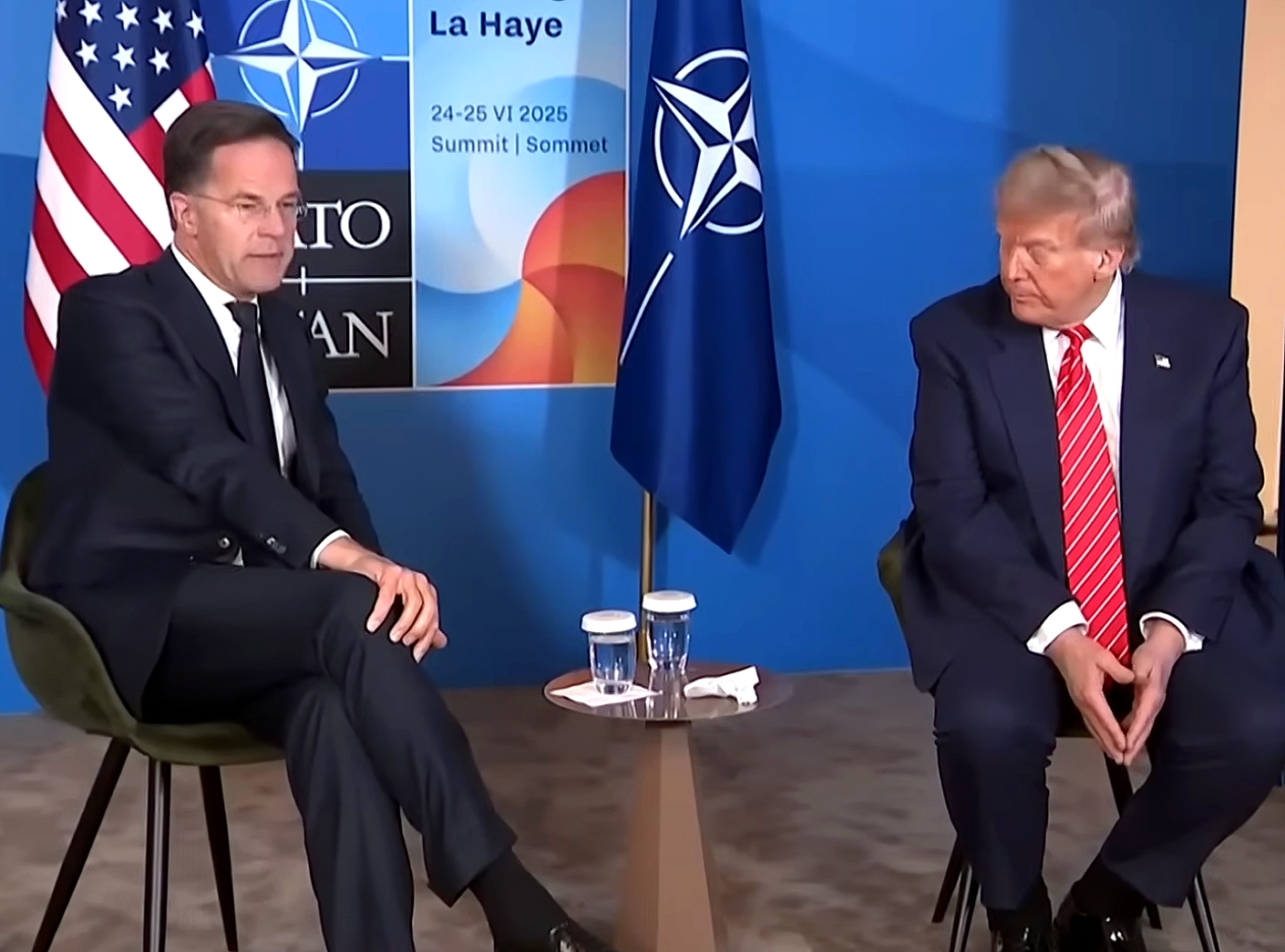
While dad shoes are no longer trending, “daddy” certainly is. At the NATO summit in The Hague yesterday, secretary general Mark Rutte referred to Donald Trump as “daddy” in response to his guest’s comparing the violent conflict between Iran and Israel to “two kids in a schoolyard”. Amused by the analogy, Mr Rutte quipped: “daddy has to sometimes use strong language to get [them to] stop”, giggling with delight to his rejoinder. Some American media outlets, such as Newsweek and People, saw this as lighthearted, even affectionate, but Mr Trump’s comment was dead serious. Earlier, on home turf, the famous peacemaker had said, “I am not happy with Israel; I am not happy with Iran either. We basically have two countries that have been fighting so long and so hard, that they don’t know what the fuck they’re doing.”
That brief banter sounded more like a joke both can share privately, rather that in the presence of the world’s media that quickly broadcasted the questionable exchange. Many observers found it far from funny, with some even saying that Mr Rutte was “pandering” to the U.S. president. When we first heard it, we were shocked, and thought it to be weird, even cringe-y. It was far from benign: A middle-aged guy calling a much older man “daddy” (Mr Rutte is 58 and Mr Trump just turned 79) is, frankly, creepy. While unlikely the intent in the flags-hoisted diplomatic setting, the term “daddy” also carries sexual connotations. Given Mr Trump’s sexual history, this further adds to the disturbing factor. “Daddy” has long been employed in various contexts, but in recent years, its use has become increasingly prevalent in sexual or submissive/dominant dynamics.
A middle-aged guy calling a much older man “daddy” (Mr Rutte is 58 and Mr Trump just turned 79) is creepy
Indeed, the word’s sudden thrust into the limelight is rather intriguing. We are at this moment thinking of the rise in popularity, and now the fading, of the “dad shoe”. Its aesthetic, characterized by chunky, oversized athletic sneakers focused on comfort and stability, has roots as far back as the 1980s. While these types of shoes were initially designed mainly for function (Nike’s Air Monarch in the early 2000s, to name one), their popularity with a dad demographic led to their distinct categorisation. It really gained traction as a deliberate style statement in the 2010s, specifically when Balenciaga launched the Triple S sneaker in September, 2017. While the shoes themselves have been around for decades, they were not considered the height of style until the trend of intentionally wearing them for their “ugly-chic”. Diplomatic word choice, as it turned out, is very much like fashion description: inappropriate can, for a time, become more appealing.
We are also reminded of Sylvia Plath’s 1962 poem Daddy. Ms Plath basically used the word to denote both the bond between parent and child, as well as the power imbalances evident in society at large. Two decades later, when Madonna sang Papa don’t Preach in 1986, and pleaded “daddy, daddy if you could only see…”, the word went beyond father/daughter dynamics. On the surface, the song is about about a teenage pregnancy and the young girl desiring advice from her judgmental father, but could it also refer to the Papa of Madonna’s catholic faith? Daddy is a fraught word, especially in today’s cultural landscape. Even outside of explicit sexual contexts, it suggests a power imbalance that extends beyond typical familial roles into something more suggestive, even aggressive. Mark Rutte should know better.
Mr Rutte’s comment undermined the seriousness of Nato, which is three years older than Donald Trump. In his use of the word that suggested paternal power, Mr Rutte sounded overly deferential. He even seemed submissive to the U.S. president, with the potential of sending a signal of weakness, possibly a lack of independent standing for European allies, which, in Europe, is currently a sensitive issue. The stakes are too high for language that is easily construed as trivialising and misrepresenting the nature of the alliance and its important work. NATO deserves better.
Screen shot: astv/YouTube
 Style on the Dot