According to CEO Delphine Arnault, days before Jonathan Anderson reveals his first Dior Men’s collection, “quality is key”
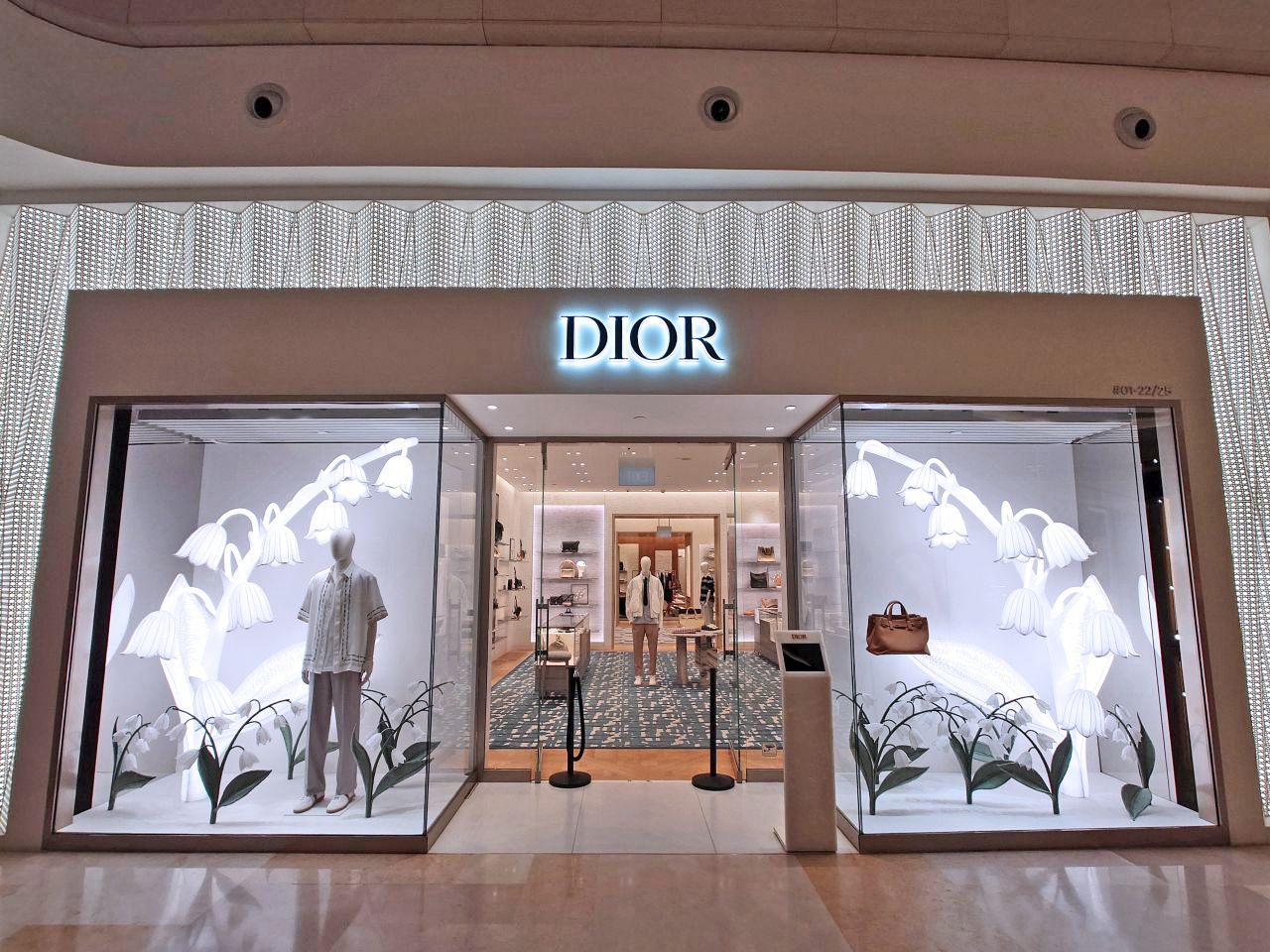
Dior men’s store at ION Orchard
One afternoon, just a week before Jonathan Anderson will show his first Dior collection in Paris this Friday, the men’s store at ION Orchard was very quiet. While walking straight into the boutique was not always possible in the past, it was unimpeded this day. There was no shopper inside. The SAs were surprisingly affable. None asked: “do you need any help”, as if at a pharmacy. All of them merely said hello, with a smile. It was easy to just browse. There was no pressure to buy something. The clothes, hung at the rear of the store, were available for full scrutiny. This was Kim Jones’s final collection and, as it has long appeared, the aesthetic, the silhouettes, and the styling were still very ‘uncle’, with the emphasis on the Dior branding. Dior’s menswear may look okay on the runway, but in the stores, the difference is like frozen and fresh peas.
Last month, at the Dior Gold House in Bangkok, the small men’s section, sited next to Café Dior, was equally welcoming. The assigned SA was very keen to promote the last Kim Jones collection. But when gently prompted about customers potentially pausing purchases in anticipation of Mr. Anderson’s much-talked-about debut, he readily agreed, confiding, “I think he will be good. Many customers think so, too.’” At that close-up with the clothes, it was evident that they might flatter a very young body, but on an older frame—more likely to be a Dior customer—they could prove unforgivably aging. A silk camp shirt in cream with a floral border running down both sides of the placket, the hem of the shirt and the sleeves could have been something found in a CK department store, next to a rack of Montagut polos.

An in-store display, featuring pieces from Kim Jones’s final collection
In an interview with the Financial Times, just published online, Dior’s CEO Delphine Arnault told the paper that she is turning “a new chapter”. She added, “I’m interested to see what is going to come up . . . in a way that’s very elevated, very qualitative,” likely pointing to a directional shift. “The next five years,” she also stated, “is going to be all about quality in the materials and the manufacturing. Quality is key.” While that is a common sentiment in business, it is hard not to wonder if Ms Arnault suggested that quality was not as paramount before, even if her intention was merely to emphasise a renewed, intensified focus. Or, was she saying that the brand under its previous creative directors was not the epitome of quality? It is, of course, also possible that she was addressing the scandal involving Dior’s Italian subsidiary being placed under court-appointed administration due to exploitative working conditions in its supply chain, despite the products’ staggering profit margins.
Her reference to the term “elevated” is another point of interest. Almost every brand, from fast fashion to high luxury, is trying to “elevate” something—whether it’s their image, their sustainability efforts (look at Chanel), their customer experience, or their product offering. In marketing and brand building, the word choice is considered trite and increasingly seen as puffery. Sure, Ms Arnault’s hope her new hire’s vision is purposeful, undoubtedly influenced by the slowdown of the luxury business and their supply chain challenges. But elevation is a given and in itself may not be enough. Maria Grazia Chiuri tried elevating the T-shirt by turning a basic garment into a political statement that did not go very far after the initial rush wore as thin as her see-through skirts. Ultimately, “elevation” for Dior is not just adding street-style or sportif influences. It is covering the entire breadth of design strength and operational ethos to satisfy the expectations of a more conscious, connected and discerning global customer. They have much more they can do and, clearly, must do.
Photos: Chin Boh Kay
 Style on the Dot