A usual, Prada was seriously unserious, mixing no-nonsense clothes with frolicsome pieces, even when they say they tried to project peace and “something nice”

When the first model came out, we were taken aback. Was he wearing bloomers? More would emerge later, but they were not quite the puffed-up shorts that schoolgirls used to wear as part of their PE kit. Still, these were undeniably puffy, rather brief shorts, reminiscent of granny panties yet crafted from traditional men’s pant fabrics like cotton twill, providing just enough body for that voluminous shape. And those utility pockets—were they the final, masculine counterpoint? It would not be outrageous that Miuccia Prada and Raf Simons wanted the guys in the loose-fitting underwear (well, Mrs Prada did put guys in Y-fronts!). It was not a new trend for them; rather, it’s a recurrent element of their joint aesthetic, reflecting their unceasing fascination with form, function, and how clothes can be perceived, mixed, and worn. Perhaps, it even communicated an anti-war image.
The spring/summer 2026 collection was broadly described as a “Change of Tone”. Backstage, Miuccia Prada was reported to have said, “We wanted the opposite of the aggression, power and nastiness that runs the world now. So we try to make a little contribution with something genuine, nice.” It isn’t niceness that you’d find in a typical fellow’s wardrobe, not even he who is generally pleasing. It is one that brings a smile to the face for its profound cheekiness. The Prada show, staged on home turf at the hanger-like Deposito of the Fondazione Prada in Milan. But rather than those curious sets of the past, including the scaffoldings of the last season, the massive hall was left unadorned, with natural light streaming through the windows. On the floor, there were carpeted cutouts of flowers that recalled Marrimeko’s flat Unikko blooms. Was this Prada’s own Field of Flowers in times of conflict?
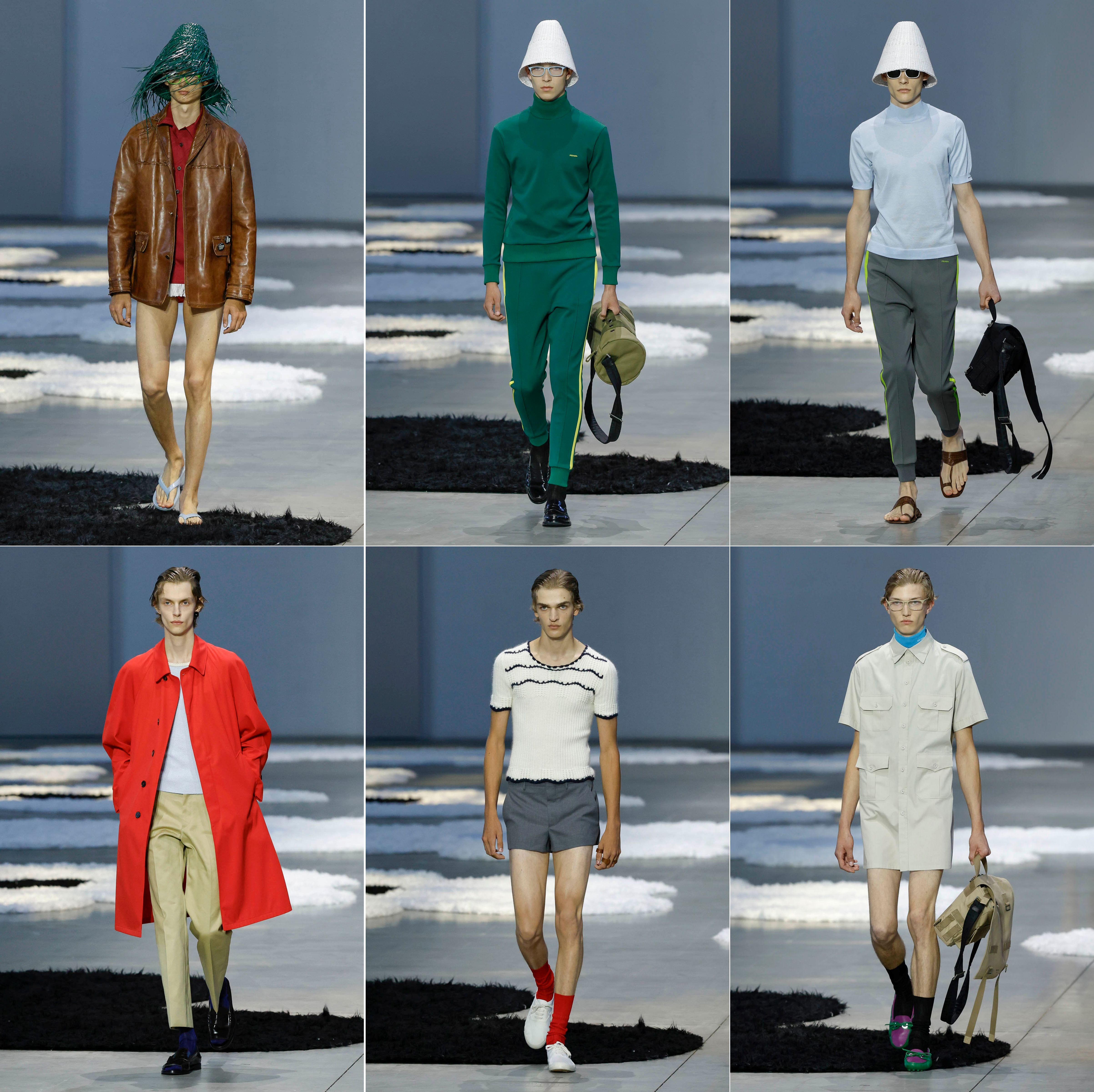


The presentation took place several hours after America bombed Iran. It made “the opposite of the aggression, power and nastiness that runs the world now” feels incredibly timely. There was also a somewhat relaxed attitude to dressing (no power suits, for example), which could have discouraged the haste to escalate a conflict, social or geopolitical. Those track wear that suggested school meet than the Olympics, three-quarter sleeve jackets that were a nod to Japanese proportions for men, turtleneck pullovers Steve Job would have loved, and safari shirts now in tunic length exemplify Prada’s mastery of nuanced tailoring, unexpected fabric pairings, and clever layering, all pulled off convincingly. Prada’s individual pieces do not ever lean towards the fussy. It’s about taking something seemingly simple and infusing it with an unmistakable sense of refinement and intellectual rigor that only they can achieve.
While the designers aimed for a sense of ease and alacrity, the collection seems to have divided opinions. Those negative, but inane, reactions do not deserve to be repeated here. Prada’s “Change of Tone” is a smart strategic move, especially given how uncertain the future could be. The collection’s wearable and versatile pieces will appeal to a broader luxury market while still maintaining the brand’s distinct identity. There signatures are, no doubt, still evident (including Raf Simone’s kooky colour sense) and they demonstrate an enduring philosophy of design, detail, and intellectual curiosity that is rare in an era of strident commercial priorities among many luxury brands. That Prada was willing to continue the larger conversation about the calm and the contentious, the masculine and the challenges to that, and the authentic and the doubtful, in a world of constant gloomy information was in itself admirable.
Screen shot (top) prada/YouTube. Photos: Prada
 Style on the Dot