There is no room ahead for such duds
When the departure of Maria Grazia Chiuri from Dior was announced four days ago, Delphine Arnaud, chairman and CEO of the maison, said via a statement that Ms Chiuri, “since her arrival at Dior, has accomplished tremendous work with an inspiring feminist perspective and exceptional creativity, all imbued with the spirit of Monsieur Dior, which allowed her to design highly desirable collections.” It is not known if Ms Chiuri’s leaving is her own decision, but despite her capability, Dior did not keep her. It is a common observation in the corporate world of fashion that glowing public statements upon someone’s departure, especially a creative director’s, often do not tell the whole story. While the official statements from Dior and Ms Chiuri were full of praise and gratitude, the fact that she is indeed leaving, despite the acknowledged success, is definitely telling.
To us, it was a matter of time and necessity. For a while now, we have pointed to Ms Chiuri’s creative stagnation. Even highly successful designers can stick to repetition over a long tenure, as if every latter collection must be a greatest hits assemblage. There has been much discussions on the commercial success of Ms Chiuri’s Dior, but there has been little about her creative flair. Of course, the fashion world rarely operates on pure meritocracy alone. For a massive brand such as Dior, strategy, timing, and perception play huge roles. While profitable, Ms Chiuri’s collections might eventually be seen by the leadership as needing to be re-sparked or even re-directed to maintain brand desirability and luxury status, rather than just commercial output. This is even more exigent at Dior, given the “challenging” retail conditions the brand faces. LVMH’s fashion and leather goods division, which includes Dior, saw “organic sales drop 5%” year-on-year in the first quarter of 2025, according to many reports.
While the official statements from Dior and Ms Chiuri were full of praise and gratitude, the fact that she is indeed leaving, despite the acknowledged success, is definitely telling
Whether to call it meritocracy or something else, Ms Chiuri was hired based on her “track record”—as it has been called—at Valentino and what Dior, and LVMH, believed was her “merit” to lead the maison. But at Valentino, she was part of a design duo. It could not be ascertained how good she was until Valentino was left to the sole creative directorship of Pierpaolo Piccioli, who deftly pushed the brand to even more palpable flourish, receiving widespread critical acclaim for his romanticism, vibrant colors, and voluminous silhouettes, particularly his couture. Dior’s bet was that her individual contribution at Valentino was significant enough to translate into solo leadership at Dior. Regrettably, however commercially successful her tenure was, it did not achieve the same level of unanimous critical adoration or the soaring artistic heights that Valentino did under Mr Piccioli, alone.
Towards the latter part of her tenure, we found her collections, particularly the couture, to be somewhat repetitive in their aesthetical leaning and thematic drag. And there was increasingly less a distinction between the couture and the prêt-à-porter. The “MCG-ness” began to feel predictable, especially those flowing, “ethereal” gowns; classical Greco-Roman draping; and the just-dull color palette, especially her love for griseous tones! Consistency can, of course, be a strength, but hers tipped into annoying repetition from collection to collection. And her focus on feminism! While it was somewhat impactful initially, it became tiring and, dare we say, vacuous. The initial relevant discourse on the runway was, as the years went on, less nuanced, and clearly performative. Frequently, they did nothing to the actual clothing. It was hard not to see it as feminist-washing, a superficial engagement with complex socio-political movements.

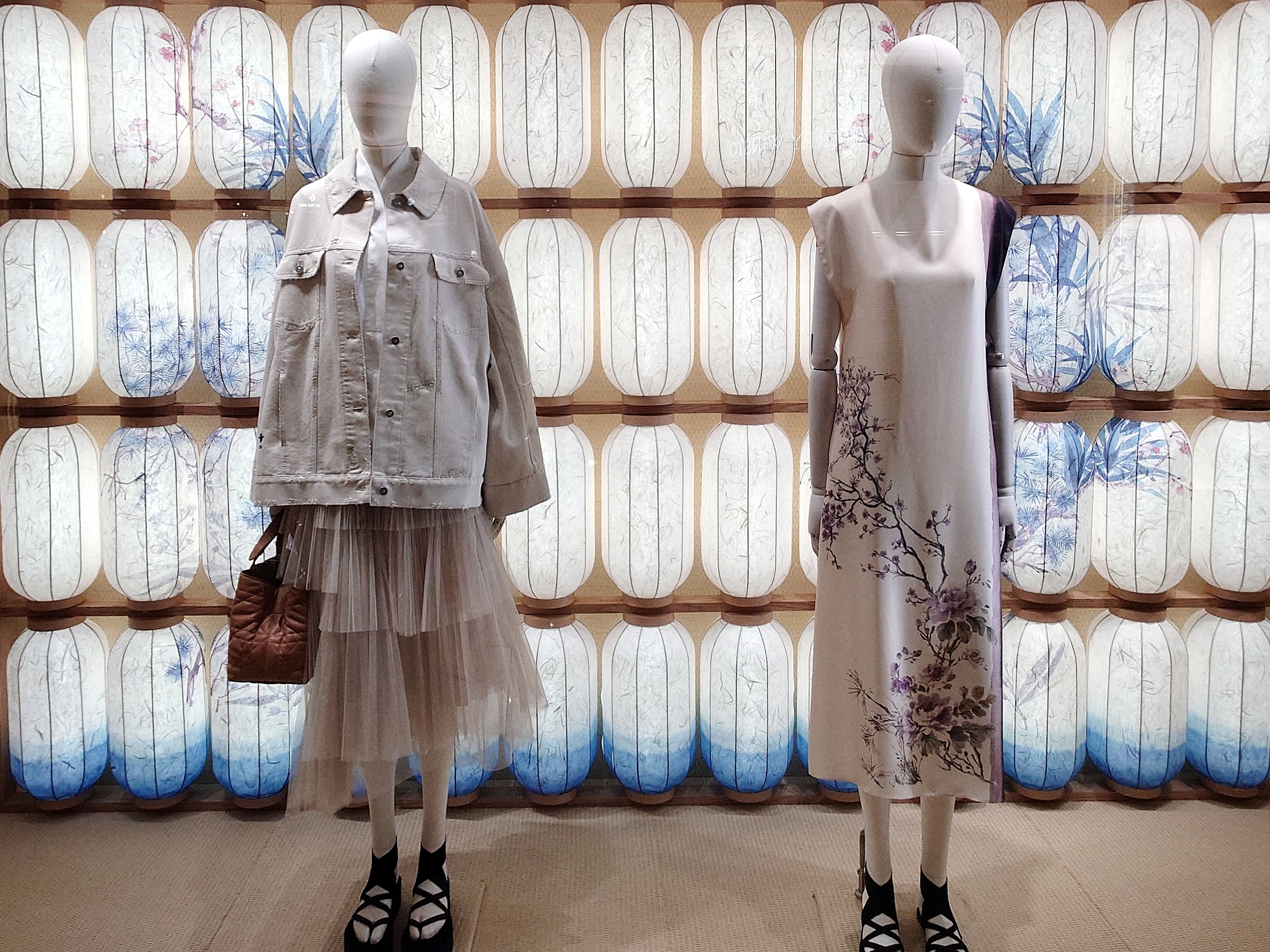
In fact, the problem with her designs is not just on the runway, it is off, too. Looking at the clothes in store windows, there is very little pull. On the racks, they are puzzlingly ho-hum. At a recent visit to a Dior store, we thought we had stepped into And Other Stories. The first set of clothes that greeted us were lightweight cotton muslin sundresses in variations of the Toilet de Jouy prints that Ms Chiuri made famous by applying on the overexposed and overrated Book tote. It was the same blandness on the other racks. One tank-dress with oriental floral print could have been from OG! The lack of distinctive appeal on display suggests a disconnect between the brand’s luxury positioning and the perceived reality of the garments in a retail environment. The true extent of Ms Chiuri’s individual creative prowess was clearly not evident at Dior in the way Mr Piccioli’s was at Valentino.
Till the end of Maria Grazia Chiuri’s tenure, one tired point kept coming up: “She made history as the first woman to lead Dior since its founding in 1947.” In her announcement of Ms Chiuri’s departure, Delphine Arnaud made sure to underscore that the designer was “the first woman to lead the creation of women’s collections” at Dior. From a strategic and public relations perspective, it was an easily digestible narrative, offering a clear, persuasive angle about Dior’s evolution and commitment to contemporary values. As Ms Chiuri pressed on, and particularly as criticisms regarding the repetitiveness of her collections began to mount, the constant reiteration of her “first woman” status, as well as the “woman designing for women” spiel started to feel like a crutch, a deflection. If the designs themselves weren’t impressive, highlighting her gender appeared to lean on an external achievement, rather than internal creative dynamism. When the designs did not spark, being the “first woman” at Dior became her last talking point.
Images show the current windows of Dior stores on our island. Photos: Chin Boh Kay
 Style on the Dot