Now, they want to be known simply as DORS. And they have refurbished the original space to reflect the punchy new name. But is anything really changed?
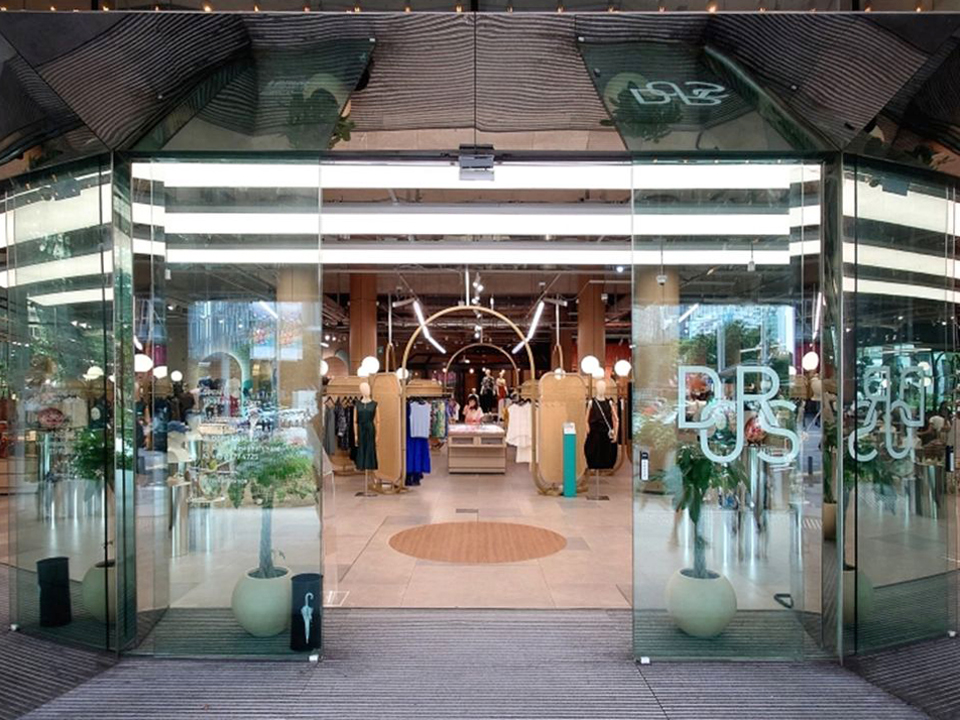
The mostly unchanged entrance of the new DORS
After six years in a neat little corner of Orchard Road and Grange Road, Design Orchard decided to go for a significant name change. Well, actually, to use the acronym of it full and ungainly Design Orchard Retail Space, DORS. The need to do away with the 7-syllable moniker is understandable. No one calls them by that anyway. DORS, those in the know told us, is shorter and snappier. And, as necessity dictates, cooler. We get it: In a fast-paced world, shorter names often have more impact. One also assumes that DORS conveys a more modern, streamlined, and, perhaps, even tech-savvy vibe. However, Design Orchard (and it’s clever Chinese name 设计。乌[shejiwu], playing on the wu of wujie [Orchard], which sounds like house) clearly communicated what the place was about and its location. DORS doesn’t immediately reveal its purpose or what it offers.
Interestingly, the root ‘dors’ in Latin means ‘back’ (as in dorsal fin or dorsum). While not directly related to the retail space, as much as what could be discerned, we find this an odd association. Surely, the emphasis of the store is not repositioned to the rear! During a recent visit, we chose to start at the front. Name aside, is what’s behind DORS changed too? To go with the new name, the store closed in April for a refurbishment. It reopened last Tuesday (a grand event is scheduled for July), but it was hard to tell if anything was truly made anew. The changes were subtle, aimed more at refreshing the overall feel and optimizing the space, rather than a dramatic overhaul. Which may also explain why there was never a reference to ‘renovation’. But when we looked carefully, we noticed improved lighting, new display racks and shelvings, and cabinets.
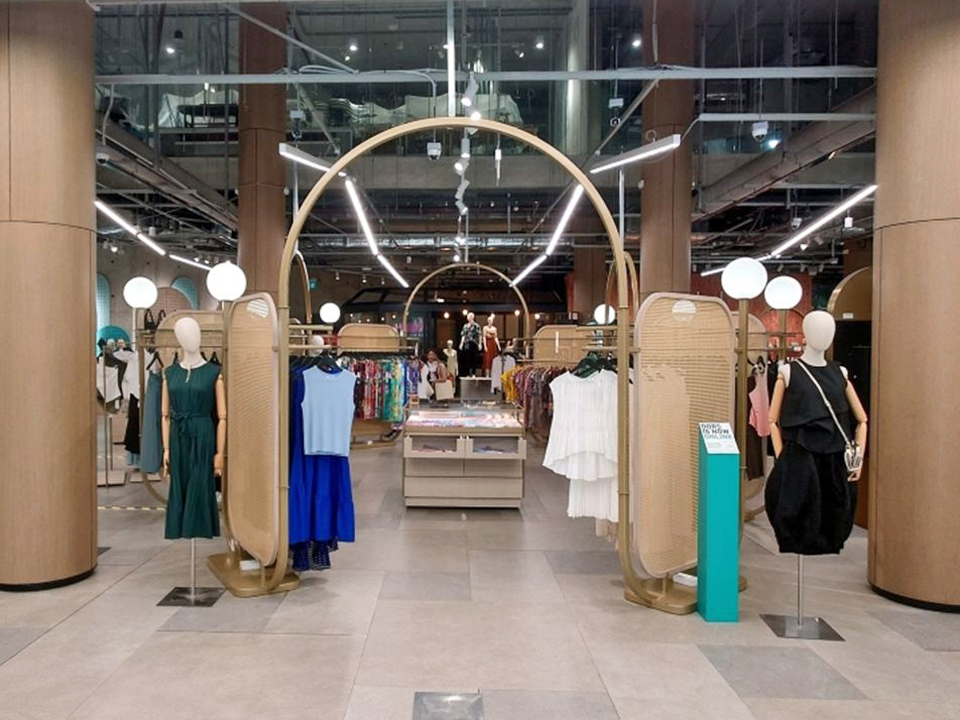
Facing the entrance, the old ‘runway’ now a space of no particular emphasis
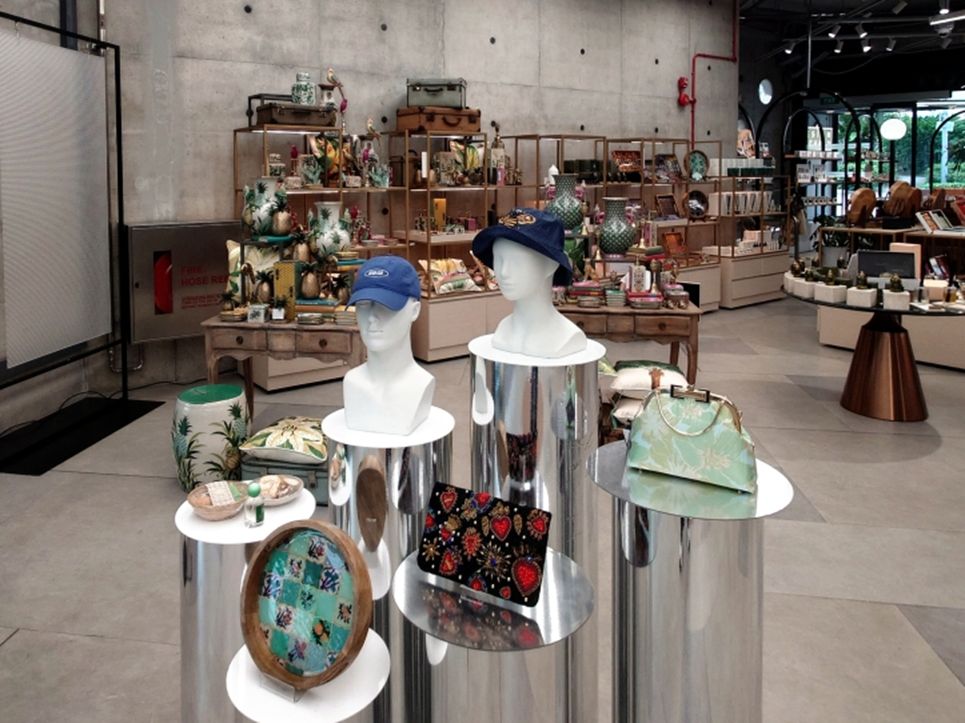
Despite what appeared to be a tighter edit, the store still has the making of a tourist gift store
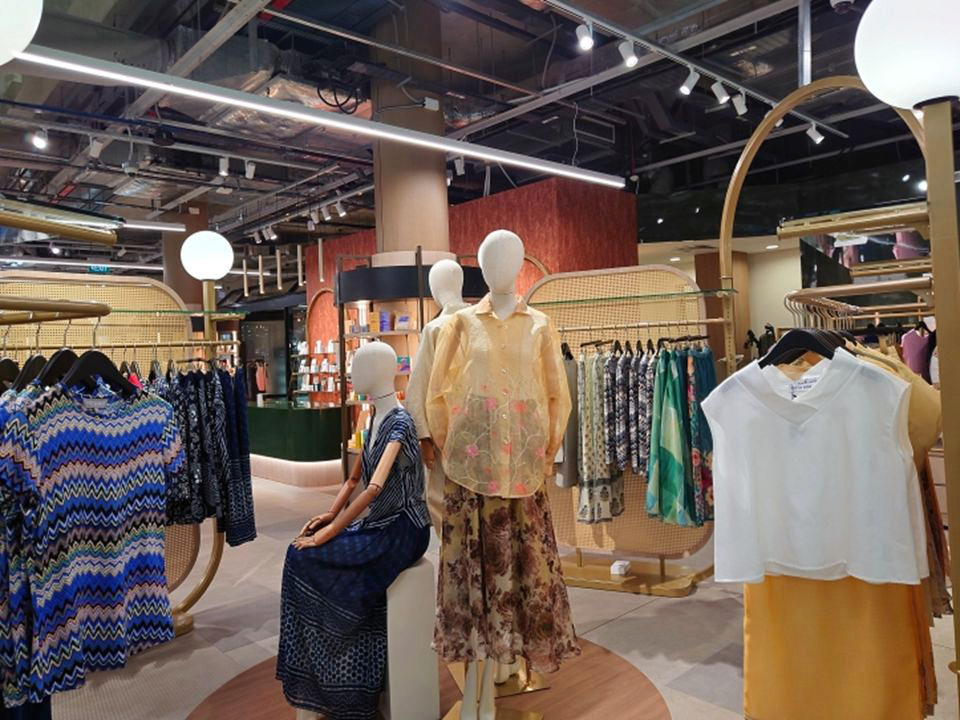
Sometimes the new is in how the existing space is utilized, or how more intuitive pathways for shoppers or distinct zones for different brands is created. It is unmistakable that DORS now offers better layout and traffic flow. Although it retained its earlier non-grid arrangement, the space is surprisingly less constricted. And there is an attempt at more judicious zoning so that the store looks less frenetic than it was before. Yet, the overall impression still leans somewhat towards a bazaar approach. A common challenge in retail design, particularly for multi-brand spaces like DORS, is achieving visual cohesion. While zones might be more discernible, the presentation style vary from one brand to another or even within a single zone, creating a rather disjointed impression. And, in particular, the tenacious disparity in design aesthetic.
A store that purports to showcase Singaporean designs ultimately must be stocked with merchandise that can truly train the spotlight on design heft. Yet, we sensed that DORS has yet to cast a true curatorial eye on what they offer. The store still looks very much a tourist gift shop that, for some reason, they cannot shake off. A crucial challenge for DORS (and, indeed, for any retail space aiming to champion local design) is the tension between catering to foreign visitors and Singaporean shoppers. But what is overriding here is the souvenir mentality in a great part of the merchandising. It is a very common pitfall for venues that cater to both locals and tourists, especially in a city like Singapore, a major travel destination. But it can be done. We have seen it in the Collab Store in Kuala Lumpur and the deliriously fun Absolute Siam Store in Bangkok.
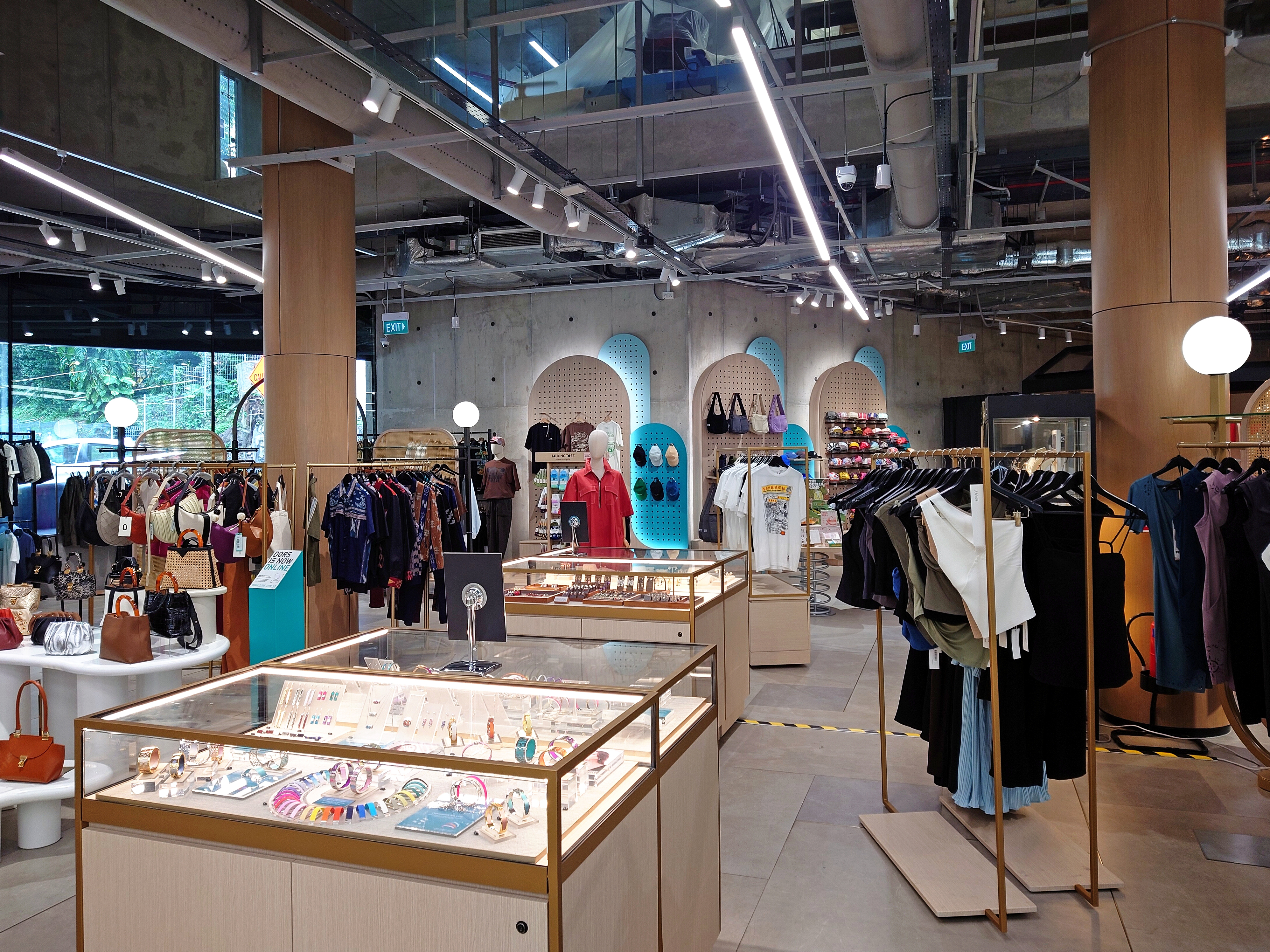
A good part of DORS still looked and felt like Design Orchard
Veteran designer Peter Kor his own circular corner
The core issue (and a long-standing one) is a lack of stringent curatorial vision. If the goal is to spotlight design, then every item (tall order, we know) should ideally contribute to that narrative, rather than simply being products conceived (very few items are made here) in Singapore or brands registered here. Perhaps, DORS, the name change, took into account that Design Orchard did not make sense if what the store offered was not able to reflect that. DORS, for instance, is compelled to continue stocking clothes made of batik (now categorised as Everyday Heritage) that are not distinguished by a vestige of quality, as if someone just amassed them from Kuta Beach and plonked them here to sell to civil servants who need ‘formal’ wear to community events. It is not clear how generic merchandise, particularly in culturally-rooted categories like batik, is able to augment DORS reputation as the must-visit, modern Singaporean store.
We don’t know the real reason for the name change other than DORS’s desire to sound ‘cool’, as many reacting to the new moniker seem to concur. But, concurrently, we were reminded that Design Orchard is not scrapped. It refers to the entire building (which includes the incubation spaces and a public rooftop), managed by Singapore Fashion Council. DORS specifically points to the retail space itself, which is what most consumers interact with. But it is not immediately clear if the distinction would help put DORS in better standing. Walking through the unchanged, unalluring main entrance, it quickly appeared to us: How is DORS really positioning itself with this new identity? As we ventured further, we noted that the “refresh” seems to have updated much, but its unwavering commitment to clothes that announce proudly, “I went to Bali once.”
Photos: Chin Boh Kay
 Style on the Dot