This past week in Singapore, an extended Halloween-came-early celebration arrived with Lady Gaga
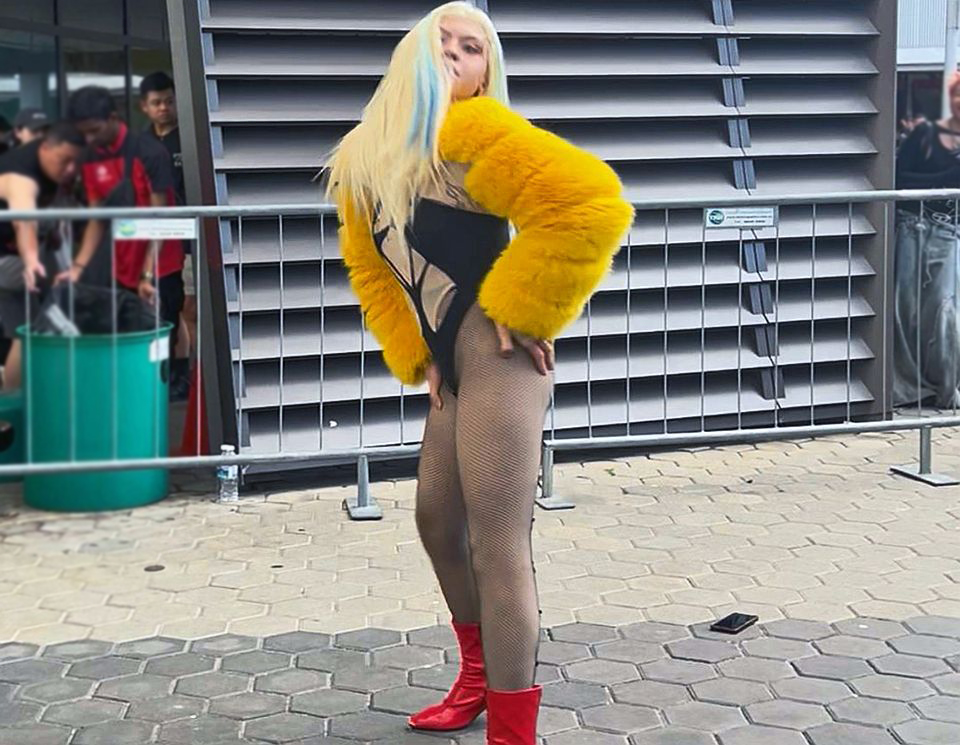
A costumed concert-goer beginning their performance before the show. Photo: 摄色师
Back in March, when it was announced that Lady Gaga would be staging her Mayhem concert here, 13 years after her last, The Chromatica Ball, it was expected to be the costume havoc, short of a mayday call away. But it was wilder than anything anyone had ever seen on this scorching island. It was not enough that the attendees made the scene, they were the scene. At the Taylor Swift concert last year, we saw that concert-goers were not just passive spectators; they were active participants in the overall spectacle, whether they were from Kaoshiung, Kuching, or Katmandu. But this time, it was more than just fan fashion for a concert, it was a plethora of costumes that befitted a convention of drag acts.
By that, we do not describe the show-goers in derogative terms. In the context of a Gaga show, it is a compliment, a positive association. Drag culture is deeply intertwined with Lady Gaga’s persona and artistry, her fan base, and her message of self-expression. She has openly acknowledged the influence of drag culture on her own artistry and stage appearances. In season 9 of RuPaul’s Drag Race, Lady Gaga made a surprise guest appearance, saying to the contestants, “I have always admired the craftsmanship that goes into what you all do. Drag has for me been an opportunity to leave myself, when I didn’t want to be me, and I felt so completely out of place when I was in high school. Drag has just been part of my life for the longest time.”
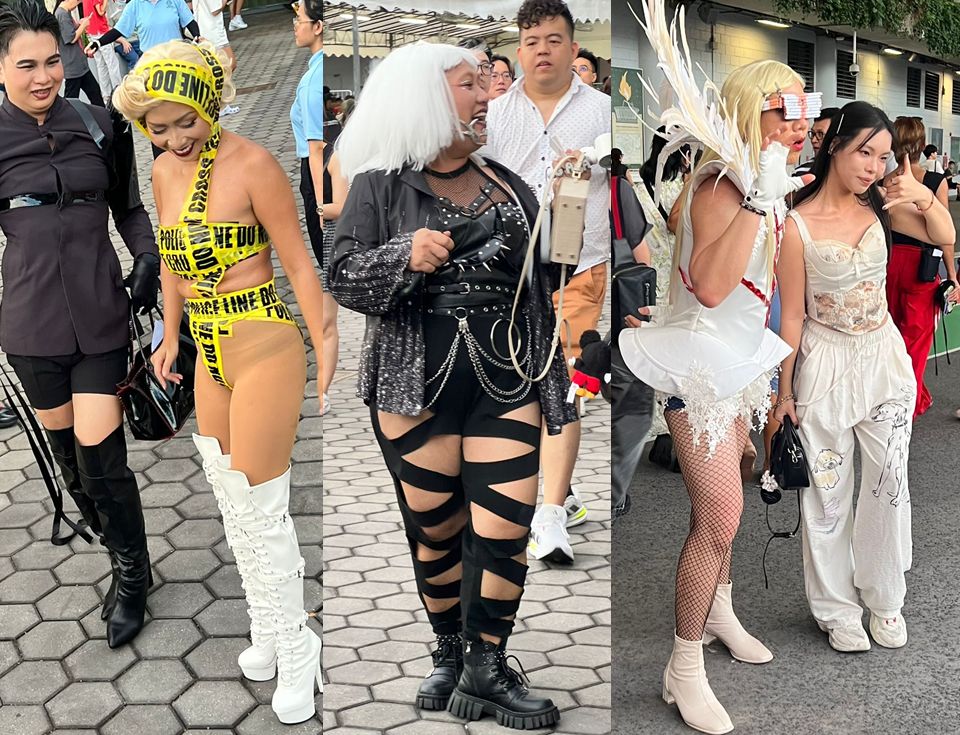
Attendees and their over-the-top costumes, delighting other concert-goers. Photo 摄色师
While she doesn’t call herself a drag act, she recognizes the drag element in her use of wigs, makeup, and costumes. This mutual appreciation fosters a strong connection with the drag community, who sees her as an ally and an artist who embodies similar principles of theatricality and transformation. Many drag queens are ardent Little Monsters (the name of her fans) and actively participate in the concert experience by dressing up to the hilt. A fan mistaken for or compared to a drag queen at a Lady Gaga concert is often a sign that they’ve successfully embodied the spirit of the event: bold, theatrical, and necessarily fabulous. Her fans contribute to the visual feast and the electric energy unprompted, in a way few other artists’ fan bases do.
A Taylor Swift concert maybe one of them, but in less dramatic ways. Hers emphasise collective identity through shared homage, drawing gleeful inspiration directly from Ms Swift’s album aesthetics that promoted almost-traditional femininity (as well as girlishness, as seen in those ubiquitous friendship bands). In doing so, they create a cohesive, almost indiscriminate sea of “Era” looks. Lady Gaga’s fans, in contrast, play up individuality through extreme expression. They draw inspiration from club culture and performance art; they frequently reject conventional beauty standards, even what constitutes clothes. The exaggerated costumes fans wear at a Lady Gaga concert are not accidents or flaws; they are a deliberate and essential artistic choice that empowers and engages the audience alike. As one fashion designer told us, “it was as if it was the most natural thing.”
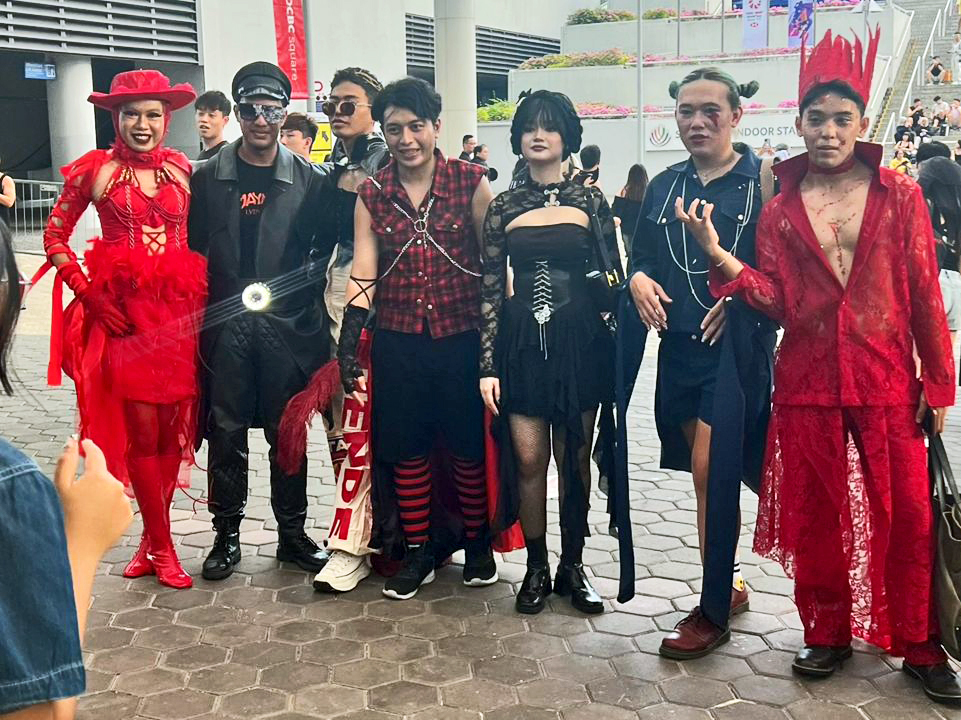
Expressing power by numbers. Photo: 摄色师
At the last of the four-gig Mayhem concert on Saturday night, there was no abated drag fervour in the costumes we saw. From City Hall MRT station, we were treated to a preview of what was to come outside the concert venue, the National Stadium. Many were traveling on public transport in full makeup and complete costumes. They did go to the venue to change into their Mayhem marvelousness, as is usually the case when attending drag parties. There were witches of wherever, there were nymphs of Sungei Buloh, and there were impersonations of Kumar on a bad day. It was hard to imagine that there could be this much costuming in one evening. But we saw less the dramatic response to societal repression than gender-bending exaggeration that allowed artistic exploration no longer, as it was before, underground.
One attendee told us after the show that what he saw was a “Halloween circus”. We thought it was a rather apt description, too. Circus aesthetics often involve grand spectacles, over-the-top costumes, daring acts, and a sense of fantastical wonder, even touches of grotesqueness. Lady Gaga incorporated much of them in her concert, while some show-goers added to the freak show allure, which leans into the singer’s visual themes of being an outsider or what she terms with relish, a ‘monster’. They celebrate what society deems unconventional. Additionally, Halloween embodies a playful darkness—a mix of spooky and celebratory. And a circus (or carnival atmosphere) is one of revelry, freedom, and breaking from everyday norms. The sum of the event—concert and revellers— resonates with the idea of a circus where unique individuals are quite literally on display. The show was as much on stage, and off.
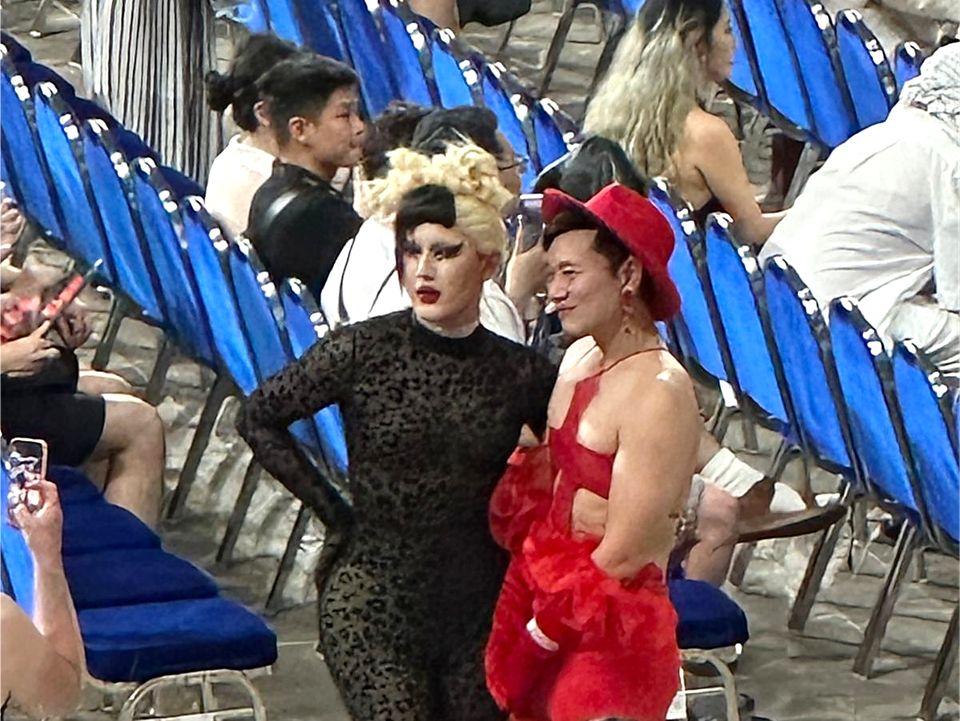
Decked out attendees made the seating areas a veritable runway. Photo: Ivy Kay
The large turnout of a drag audience (including Filipino Lady Gaga impersonator Lady Gagita at the second gig) and gay people, reflects a nuanced and evolving social landscape in our city-state. For those attending the concert in drag, it was participating in the artistic and celebratory atmosphere of the event, rather than a direct challenge to everyday social norms. While we cannot say this with certainty, it looked to us to be a significant shift in social attitudes, as well as the increasing visibility of the LGBTQ+ community in this part of the world. However, while progress is being made, the journey towards full equality and widespread societal acceptance is ongoing. On social media, we still see nasty and derogatory comments under those posts that celebrate the unfettered expression of dress.
A core theme in much of Lady Gaga’s work, particularly her Born This Way era, is the celebration of individuality, acceptance, and ‘otherness’. She actively champions marginalized communities, including the LGBTQ+ community, and encourages her fans to embrace who they are without fear of judgment. In light of Donald Trump’s rhetoric and policies concerning LGBTQ+ rights in the United States, Lady Gaga’s concert in Singapore, with the costumes of drag queens and the expressiveness of gay people, and message of tolerance, carried a profound and poignant significance. Mayhem was a sanctuary in contrast to the Trump administration’s predilection for language that demeans or erases LGBTQ+ identities; it was even a counter-narrative, if you will.
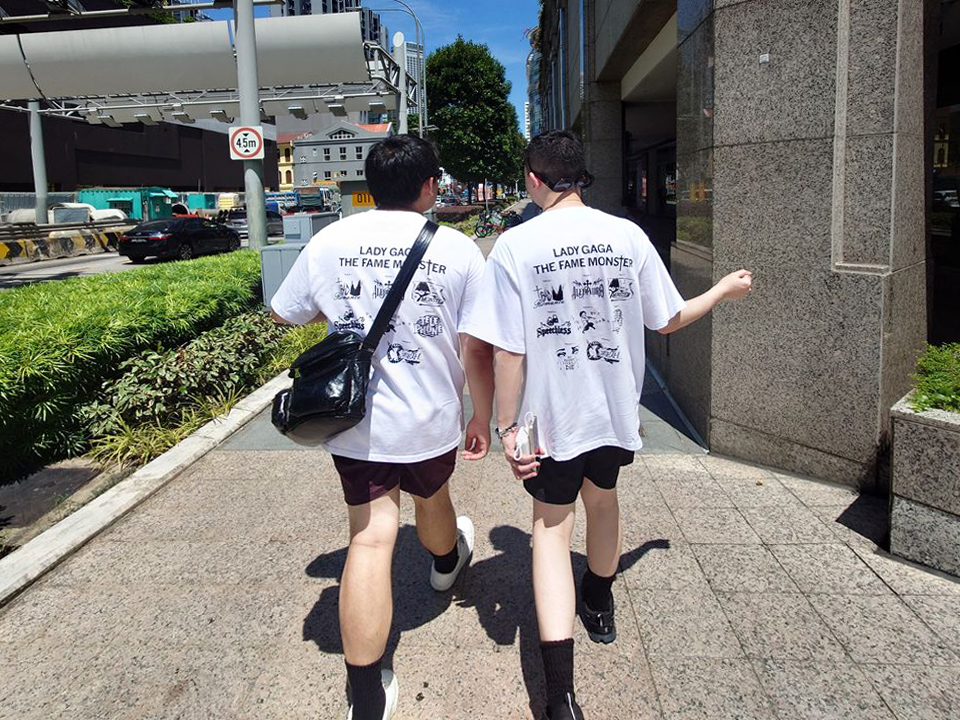
For the less daring, there were concert merchandise for twinning. Photo: Zhao Xiangji
There is something to be said about the creativity and dedication of the Little Monsters. Their costumes, whether sleekly elaborate or clearly DIY (and many are not perfect), weren’t just outfits or just about trends (most were not); they were statements of identity, homage to Lady Gaga, and expressions of the uninhibited self. Even latex and leather were not put aside by the costume enthusiasts, despite the punishing heat of the day (Real Feel on the weather app on our phone showed 35°C). Fans felt empowered to “go all out”—one attendee last Saturday was heard saying—with their costumes because they knew they would be met with cheers, compliments, and a sense of shared community. Many, in fact, went to the National Stadium early so that they could strut their stuff, mutually admire, and be photographed. When much time (some claimed two months) and effort were spent on the looks, they had to be displayed.
Ironically, it was the National Stadium where pushing fashion boundaries and bending gender norms were not just tolerated, but celebrated. For what is essentially Singapore’s sporting hub and typically associated with mainstream events (yes, the Taylor Swift concert was) to be transformed into a vibrant site of queer expression and fashion experimentation was a powerful subversion of traditional norms. That the concert was allowed to proceed in a prominent, state-owned venue suggested—we dare say—a degree of official tolerance or at least a pragmatic acceptance of diverse cultural expressions. The strong LGBTQ+ presence was not just from Singapore, but very significantly from across the broader Southeast Asian region and even further afield in East Asia, including China and South Korea. It was heartwarming that Singapore, which, despite its own conservative elements, offered a relatively liberal and safe environment for the Little Monsters.
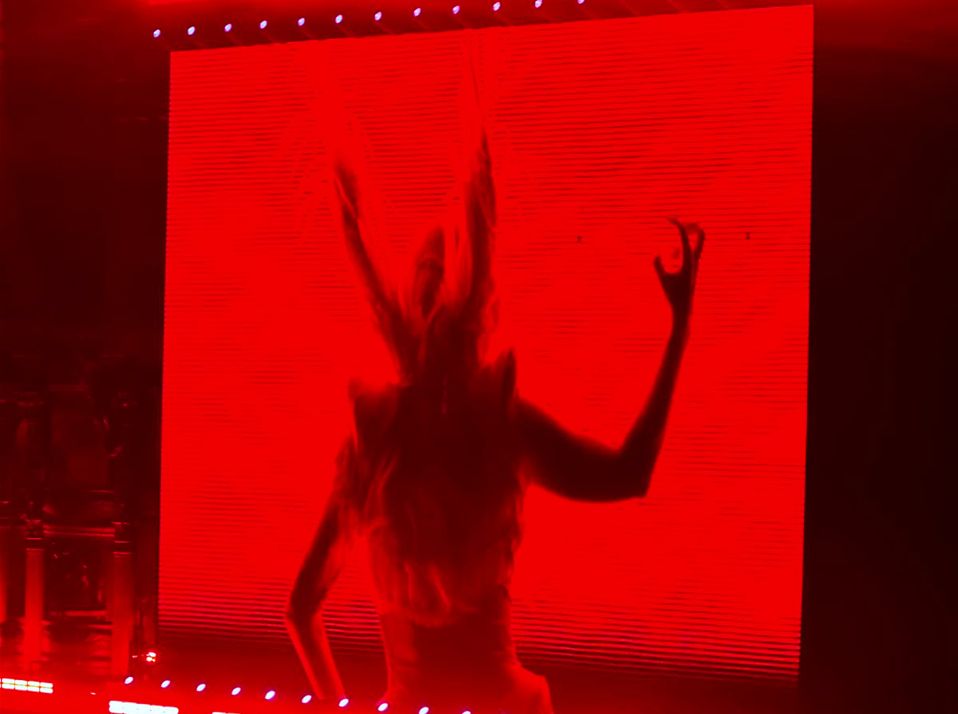
Projection of Lady Gaga’s concert final segment. Photo: Ivy Kay
As the show progressed, fans weren’t just watching the performance on stage; they were part of the show. The audience itself became a visual spectacle (sometimes to the annoyance of other attendees), mirroring Lady Gaga’s own dedication to outlandish fashion and performance art (cavorting in a sandbox!). The level of immersion was almost what one might see in evangelical church! And Lady Gaga, the charismatic “Mistress of Mayhem”, up there in her massive ‘gown’, commanded the stage and inspired intense devotion as she opened with Bloody Mary, singing: “Like Jesus said/I’m gonna dance, dance, dance… I won’t crucify the things you do.” A powerful affirmation of unconditional acceptance. Around us, fans were singing/screaming along and knowing every word (we have to admit we did not). The almost spiritual devotion that many fans have for her and her message was unmistakable.
The Mayhem effect on the island’s fashion folks was not seen only at the National Stadium and on public transport to the venue. Throughout the week of her four performances, we saw many, if not in full concert regalia, dressed in the concert T-shirts (including items of the past), making sure those around them knew who dominated their social calendar. Malls from Tampines to Orchard Road to Jurong East were blasting the tracks of the album which lent its name to the concert. There was also what’s called the “concert glow”. We sensed it in MRT trains. Even if not in full costume, attendees often carried a certain aura of excitement and shared experience, making them identifiable to each other. It was not just about a few hours at an Abacadabra of a show; it was about a sustained expression of identity. It offered a snapshot of a more diverse and accepting side of Singapore we do not always see.
 Style on the Dot