They may have found the right guy in Pierpaolo Piccioli

Clockwise from top left: Rosie Huntington-Whitely (photo: WireImage), Naomi Ackie (photo: Getty Images), Barbara Palvin (photo: Getty Images), and Alexa Chung (photo: FilmMagic)
At the on-going Cannes Film Festival, Balenciaga gowns were seen on at least a dozen celebrities on the Croisette. The premieres of films Nouvelle Vague and Die, My Love witnessed five stars and celebs strutting the red carpet in the brand’s couture-flavoured pudding of glamour. None wore anything controversial (probably because of the Festival’s new rules against nudity and excessively long trains) or positively strange. Four of them were clad in gowns that were easy and convenient to describe as evocative of “old Hollywood glamour”. Simply put, nothing to challenge the eye. The Hungarian model Barbara Palvin wore such a high-school dance of a dress—totally relieved of the pressure of an electric iron—that we missed it as a number from Balenciaga.
Even at the Kering-sponsored Women in Motion Awards, the usually reliable Nicole Kidman—a Balenciaga brand ambassador, no less—arrived in a red, body-skimming, lace dress that could have been from the currently rudderless Gucci or Alessandro Michele’s vintage-y Valentino. Around her, there was a remarkable surfeit of what could be immediately sensed as the conventional or the sagaciousness of the safe. As the Cannes red carpets coincided with the final months leading up to Demna Gvaslia’s last couture show for Balenciaga, we were expecting a final, defiant flourish. But the gowns at Cannes seemed to be a deliberate foreshadowing, or even a “soft launch” of the aesthetic direction Kering likely envisions for Balenciaga, especially now that the brand is in the hands of Pierpaolo Piccioli.
As the Cannes red carpets coincided with the final months leading up to Demna Gvaslia’s last couture show for Balenciaga, we were expecting a final, defiant flourish. But…
The women’s strangely decorous Balenciaga looks strongly suggest to us that Kering’s strategic shift for the brand is not going to be a gradual evolution, but a more immediate and decisive pivot. The new Cannes rules might provide a convenient external reason, but the choice to present looks that are so overtly safe for a brand known for its edge seems to indicate an internal directive. The absence of the said defiance on the Cannes red carpet, despite the brand’s history of the past ten years and the very nature of Mr Gvasalia’s clear vision, speaks volumes that were absent in the clothes at Cannes. To be sure, Mr Gvasalia has conceived Balenciaga couture (and it was he who revived the high fashion ateliers of the maison) with the technical rigours of what the house represented, but always with his daring touches. Regrettably, we saw scant of them at the film fest.
It is already widely said that Mr Piccioli’s appointment is to return Balenciaga to its “classic roots” or a more universally appealing and commercially stable vision of luxury. The thing is, Kering tried that with Gucci when they hired Sabato de Sarno. His tenure then was described as a “creative correction”, but he was asked to leave just two years later. What other corrective measures will be offered now that Mr Gvasalia is taking over the creative direction duties? Or will be expected of Mr Piccioli? We’re not saying Mr Piccioli is not an extraordinary designer—far from it, but will he be able to successfully transition the brand’s identity without losing its distinctiveness or, especially, relevance in today’s complex fashion landscape. Alexander Wang brought Balenciaga many notches down with his barely disguised “downtown cool” and it still haunts us, especially after Nicolas Ghesquière’s influential and impactful 15-year reign prior.
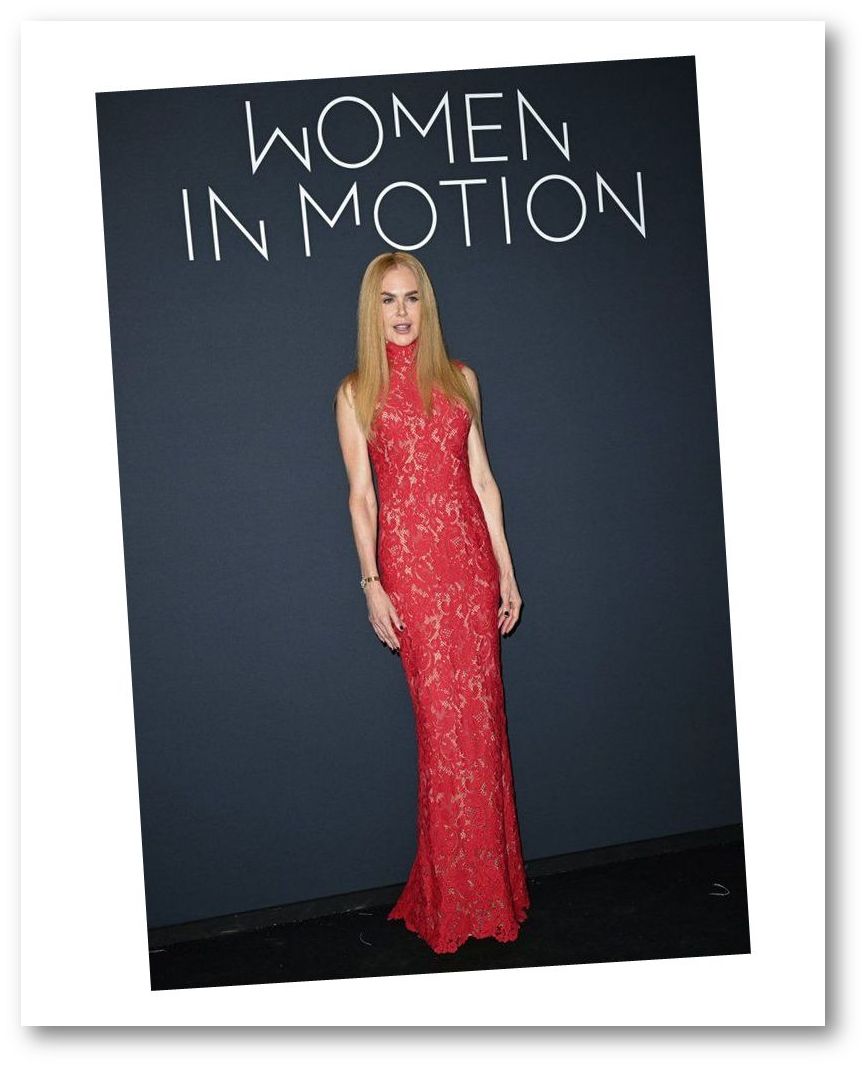
Nicole Kidman at the Women in Motion Awards. Photo: Getty Images
There is no denying that the appointment of Pierpaolo Piccioli as Balenciaga’s new creative director marks a significant shift for the house, especially coming after Mr Gvasalia’s irrefutably transformative tenure. Many members of the media have delighted over the primary plus that the hire went to someone with “couture roots”. He can thus move the brand away from Mr Gvasalia’s streetwear-heavy (to the extent that it was absorbed into Kanye West’s world) and ironic aesthetic of the present. Balenciaga is, after all, a couture house, we have been reminded. But, we recall that Matthieu Blazy, now at Chanel, did not cut his teeth at a couture atelier. Neither did Raf Simons when he was hired to helm Dior’s couture business. Kering’s choice is obviously a strategic shift: Mr Piccioli’s appointment could be part of the group’s desire to inject high-fashion gravitas into its heritage brands, perhaps aiming for a more balanced portfolio across its houses.
Or does Balenciaga’s pop-culture standing under Mr Gvasalia’s watch need reversing? We are, of course, sensing the satiation of the oversized silhouettes, the ridiculously up-sized sneakers, and the many meme-able accessories, all admittedly blurring fashion and commentary. They brought a significant commercial success and a specific kind of cool to the brand, but they could have, by now, overstayed their long welcome. Mr Piccioli’s approach, while bold, is a different kind of rebellion, one rooted in “romantic” beauty and technical discipline. And he is capable of steering Balenciaga closer to its founder’s sculptural and architectural mastery (rather than Mr Gvasalia’s more exaggerated interpretation). The challenge confronting Pierpaolo Piccioli isn’t necessarily in his style, but in how that style will transform—or clash with—the very distinct identity Balenciaga has cultivated, both historically and, most definitely, recently.
 Style on the Dot