Chinese brands can take on their Western counterparts easily and offer better merchandise. One of them is technical wear label Benlai

In the wake of Donald Trump’s outrageous tariff war, one label frequently mentioned on Chinese social media is Lululemon. Although, a Canadian brand headquartered in Vancouver, it is incorporated in Delaware, United States, which perhaps confused Chinese social media users who thought that Lululemon is American. They were among the many American brands that Chinese influencers tried to ‘expose’ as products that are made in Chinese factories. One of them claimed that her production facility produced Lululemon leggings for US$5 to US$6 (about S$6.50 to S$7.80, even though the brand sells them in the U.S. for more than US$100 (about S$130). “The material and craftsmanship are basically the same,” she emphasised.
Challenging that claim, a Lululemon spokesperson told the American media last month that the brand manufactures “only about 3 percent” of their finished garments in mainland China. He added that only authentic products are available to buy at “Lululemon stores, official websites and authorised partners”, according to Bloomberg. Regardless, many Americans were miffed that “same quality” merchandise (the influencers do not say what they sell at the single-digit price are from Lululemon) can be bought directly from Chinese sellers at a section of the price. While many of them looked at the Lululemon dupes with desire, they are unaware that, in fact, Chinese brands offering athleisure products are giving the Canadian brand a run for their money.
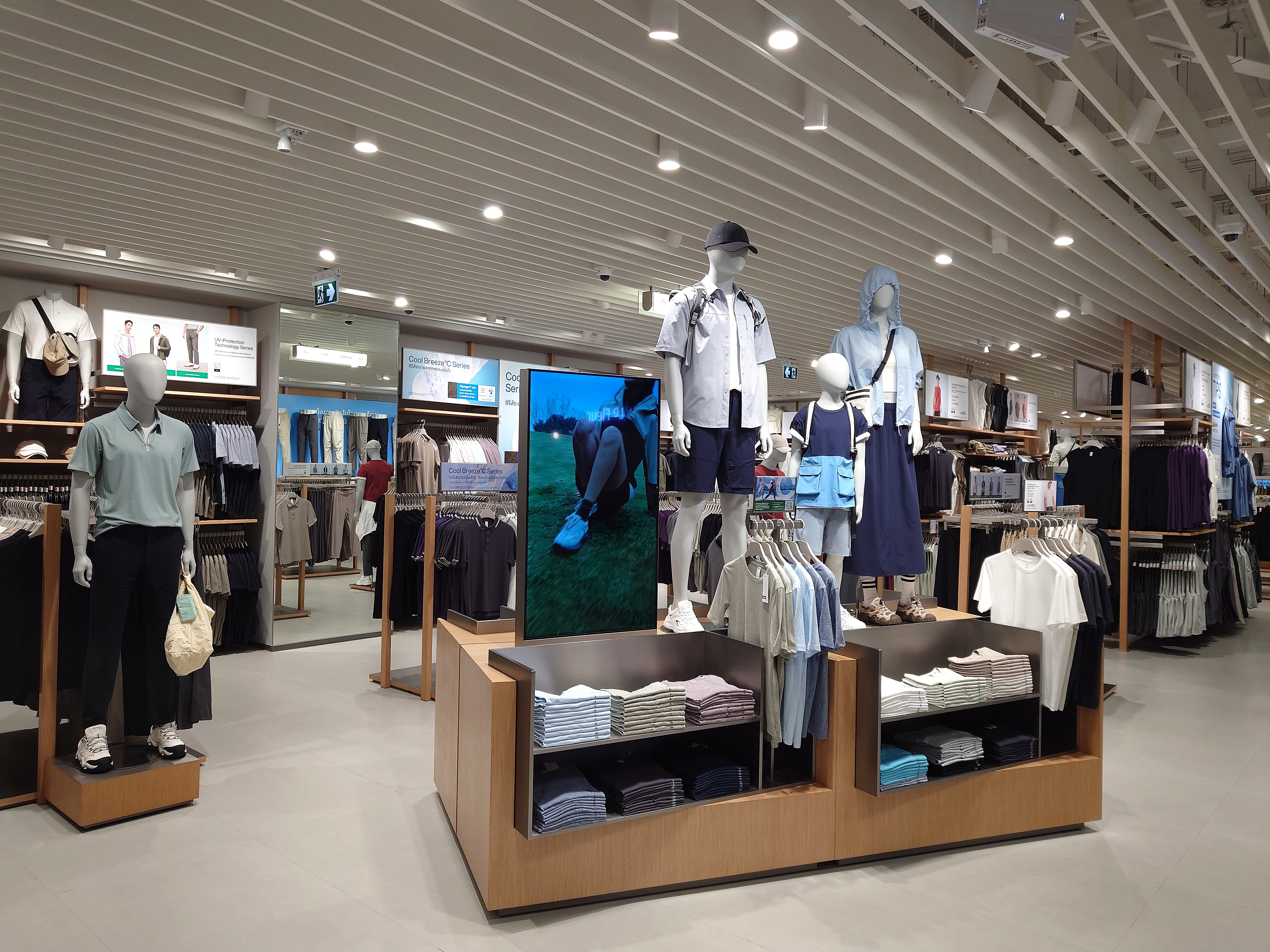
One of them coming out strong is Benlai (本来, not, probably to most Americans, Ben Lai!), a brand with a sports bent, but is totally unlike anything sold by Nike or Adidas. It isvvaguely akin to Lululemon and other similar labels, such as Vuori and Gap’s Athleta, but is aesthetically closer to Japanese names such as And Wander, CMF, Goldwin, and Snow Peak, or even Italian brand Roa. Although their yoga pants have been spotlighted, Benlai is, to be clear, not like Alo. To put it simply, Benlai could be considered the Uniqlo of technical wear, with more flair. And the prices are as pocket friendly, even if slightly higher. First encounter with the brand elicits the common reaction: the Chinese can make such technically-advanced garments? But those American brands that have been producing in China already knew that.
Benlai (meaning ‘originally’ or ‘at first’) was launched in 2022 by the Chinese conglomerate FMG (Fashion Moment Group), which is behind the fast-growing fashion label Urban Revivo—recently introduced in New York, their first American store. FMG was founded in Guangzhou in 2006 through its first fully-merchandised brand Urban Revivo. UR, as it is also known, opened its first overseas store in Singapore 2016 (at Raffles City), but when it came to debuting the group’s second label Benlai, they choose Southeast Asia’s third most populated city, Bangkok. Benlai in Bangkok is a 1,286 sqm space that opened last December in the Thai capital’s newest mall, One Bangkok (built on what was formerly the Lumpini Night Market), that features not one, but four retail precincts. Benlai is situated in the block of accessible brands called Parade.

As of late August 2024, Benlai had 16 stores in major Chinese cities, including Beijing, Chengdu, and home Guangzhou. FMG chairman and CEO Leo Li told the Thai media that the company has set a target to expand to more than 200 branches worldwide—including SEA—within the next 5 years. There is no mention yet that Singapore will welcome a Benlai store soon. Despite its clearly Chinese-sounding name (as opposed to, say, Urban Revivo) and a curious green box-logo that is somewhat reminiscent of Benetton, Benlai, in terms of interior, is a cross between Lululemon and Japan’s Uniqlo, but with far less crammed layout than either of them. The store is zoned into areas for men, women, and kids.
But what is more alluring is the merchandise. Benlai sets itself apart by being one of the first stores with garments made almost entirely of technical fabrics, featuring “performance technology”, including UV protection and quick-dry functionality, and “sustainable fabrics”, mostly modals (some cool to the touch, some a tad too dry), all manner of synthetic blends, as well as those that are wrinkle-free or “Tri-Proof” (“Waterproof+Stain-proof+Oil-Resistant”). The fascinating fabrics aside, there are the details, including angular joints, unusual seam work, and graphic panelling, and finishing, such as fusable tapes for hems (which dispenses with sewing), heat-bonding tape for pockets. Most garments are handled with a technical hand, even something as basic or innocuous as tank tops.
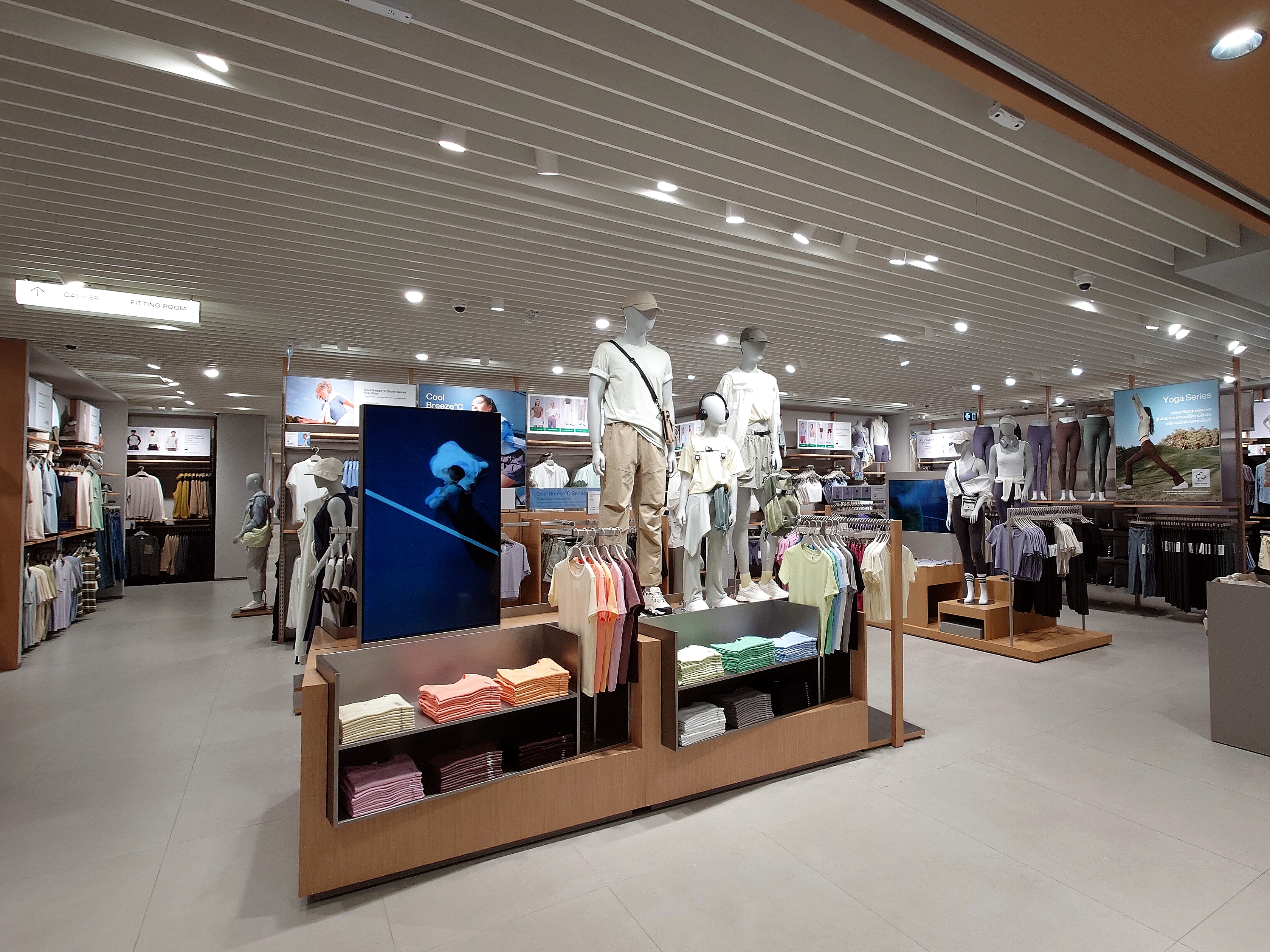
The increasing appeal of technical casual wear stems from a confluence of factors that cater to the demands of modern life. Consumers prefer clothes made from fabrics that require little care, but are built with enhanced functionality. Technical fabrics, mostly synthetic, offer properties like water resistance, breathability, durability, and moisture-wicking, making them suitable for various activities, from commuting and working to light outdoor pursuits. This eliminates the need for separate wardrobes for different situations. The trend coincides with the casualisation of workplace dress codes, particularly in the tech and creative industries. There is also no denying the influence of streetwear when it comes to apparel for those seeking versatile clothing that can transition effortlessly from the office to social settings, even travel.
Technical casual wear, such as what Benlai proposes, appeals to individuals moving fluidly with the shift towards clothing that can keep up with the demands of a dynamic lifestyle while offering a contemporary aesthetic. We are, however, not referring specifically to outdoor clothes (or Gorpcore), rather what The North Face (Japan), produced by Goldwin, calls “Urban Exploration”. At Benlai, the clothes are specifically for city life. Benlai has embraced China’s ongoing developments in textile technology that has led to the creation of fabrics with superior performance characteristics and unique textures, without sacrificing city-sleek vibes.
On top of that, Benlai, too, have adopted articulated design techniques so that the garments may be put together with pre-shaped knees or elbows and unusual seam placements (away from high-friction areas to minimize chafing and increase comfort) that follow the natural curvature of the body to improve fit and mobility. There is really a lot to see within a garment and yet, a shirt remains a shirt, a skirt is exactly that. Benlai has touted it dedication to “simplicity”, but that there is more to the construction of their garments that the eye can immediately discern. It is a deliberate and often innovative process that prioritizes functionality, durability, and comfort. A visit to Benlai is often a deeply fascinating affair.
Photos: Jagkrit Suwanmethanon
 Style on the Dot