Anna Wintour’s star-studded annual event is the most important on New York’s social calendar. And this year, it could carry the most vivid political overtone in the Met Gala’s long history
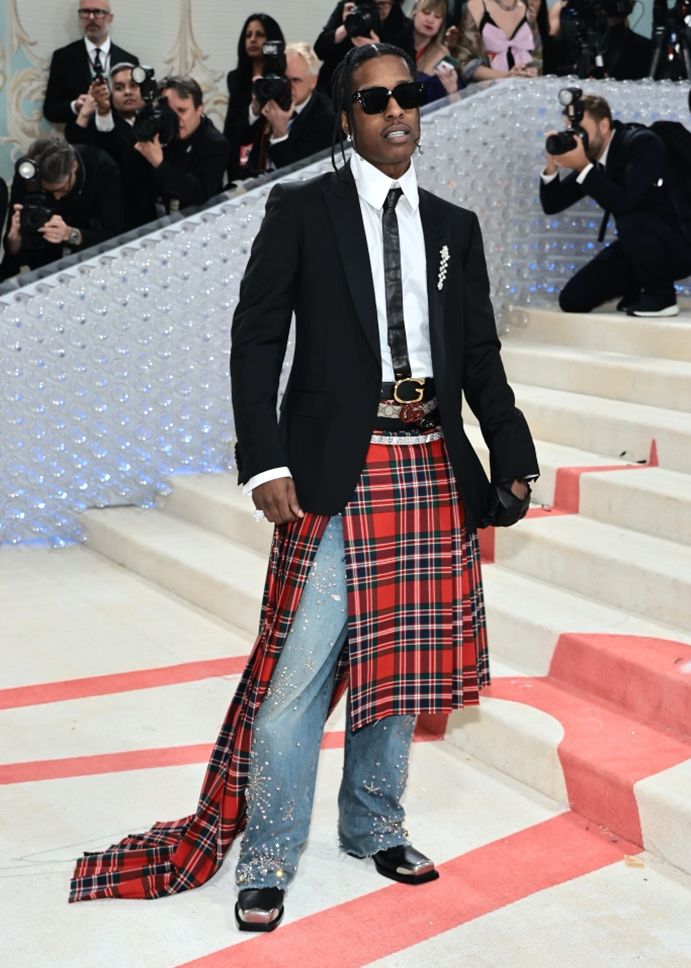
A$AP Rocky at the Met Gala 2023, celebrating Karl Lagerfeld: A Line Of Beauty. Photo: Getty Images
It is hard to see anything associated with Vogue to be political. A fashion magazine is still to many people a frivolous publication. But Vogue under Anna Wintour’s watch is not that magazine. On the surface, fashion magazines’ focus on clothing and trends might appear to frivol away time and other resources, but the Condé Nast title under Ms Wintour’s decades-long watch has transcended that perception. This year, the Met Gala—very much a Vogue soiree—seems to posit that the magazine has more to say than just fashion. Superfine: Tailoring Black Style, to be unveiled a week from now, takes on even greater political significance within the context of the Trump administration’s rhetoric and policies. According to the Metropolitan Museum of Art, the upcoming exhibition will be the Costume Institute’s first exhibition devoted to menswear in more than 20 years. And that would be Ms Wintour saluting men’s fashion for the first time, too.
But this is not going to be just any menswear exhibition. It trains the spotlight on something very specific—the aesthetic adopted by Black men. And it won’t just be a fashion statement; this is socio-political commentary through the lens of fashion. In view of Donald Trump’s pro-White rhetoric and—noticeably during this term—his anti-DEI (Diversity, Equity, and Inclusion) stance, Superfine: Tailoring Black Style will come with significant political weight in the fashion discourse that is the Costume Institute’s big-budget event. Even when the exhibition is not revealed and there are no sneak-peeks yet, it is not immoderate to assume that it will be a potent, if not virile, statement about the importance and relevance of Black culture, the power of inclusive representation, and the political dimensions inherent in fashion and self-expression. The timeliness—and potential intention—is fascinating considering Ms Wintour’s belated response to the lack of diversity at Vogue.
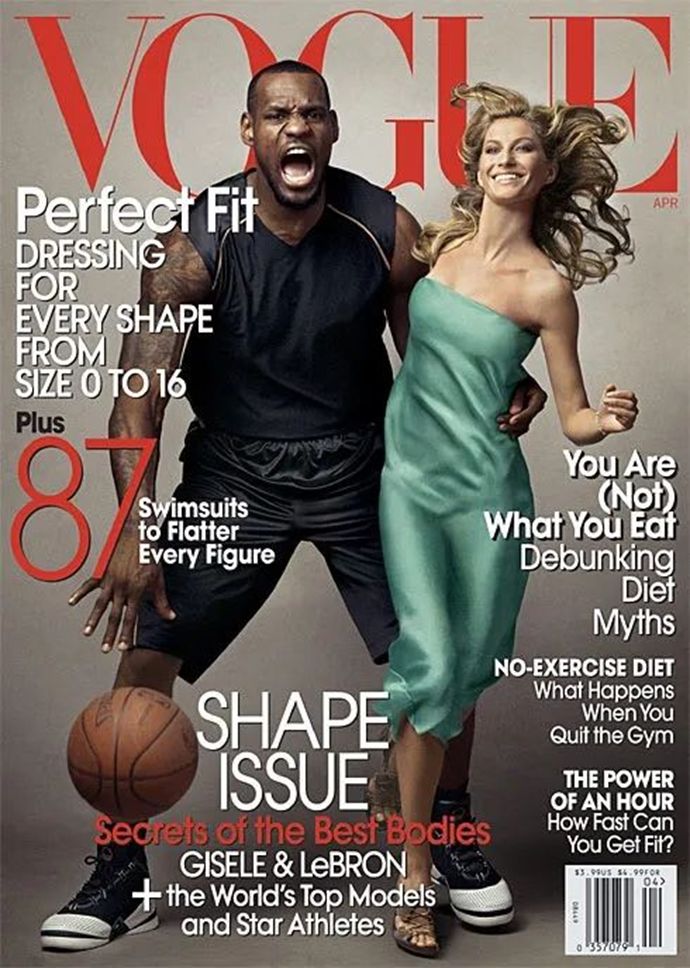
The first black man on a Vogue cover: Lebron James (with Gisele Bündchen), April 2008. Photo: Vogue
In 2020, the year of the COVID pandemic, Ms Wintour sent out an internal memo that acknowledged the magazine’s slow response to the hiring of more people of colour. Even with the admission of shortcomings, many observers at the time felt that, while it was a step made, it was way overdue. The timing of Superfine: Tailoring Black Style is, therefore, significant since it seems to be a call for action at a time when issues of racial justice and representation (particularly for Black people) is paramount. Sure, Ms Wintour has since hired people of colour, such as picking Chioma Nnadi as editorial director of British Vogue. But that was not a high-profile event and it did not dramatically shift the narrative of giving Black creatives visible platforms. By dedicating the Costume Institute’s prestigious spring exhibition to Black style and artistry, Vogue and The Met are making a statement about Black contribution to American fashion that the public can see and, hopefully, applaud approvingly.
The success of this exhibition in addressing past criticisms will depend on its depth and the involvement of Black creatives in its curation and presentation (the “guest-curator” this year is Monica L Miller, who authored Slaves to Fashion: Black Dandyism and the Styling of Black Diasporic Identity, which reportedly inspired the exhibition), and the voices it amplifies. If well executed, it may be seen as inching towards greater inclusivity. If perceived as performative, it could face further scrutiny and backlash. Some might, of course, see this as glamour-infused attempt at “woke-washing”—a superficial gesture to appear progressive sans addressing head on systemic issues within Vogue or even the Met. It is also possible that Ms Wintour and her team have a deep desire to explore the history and cultural significance of Black men’s style, given the cultural pressures that the editor might be under to right past wrongs.
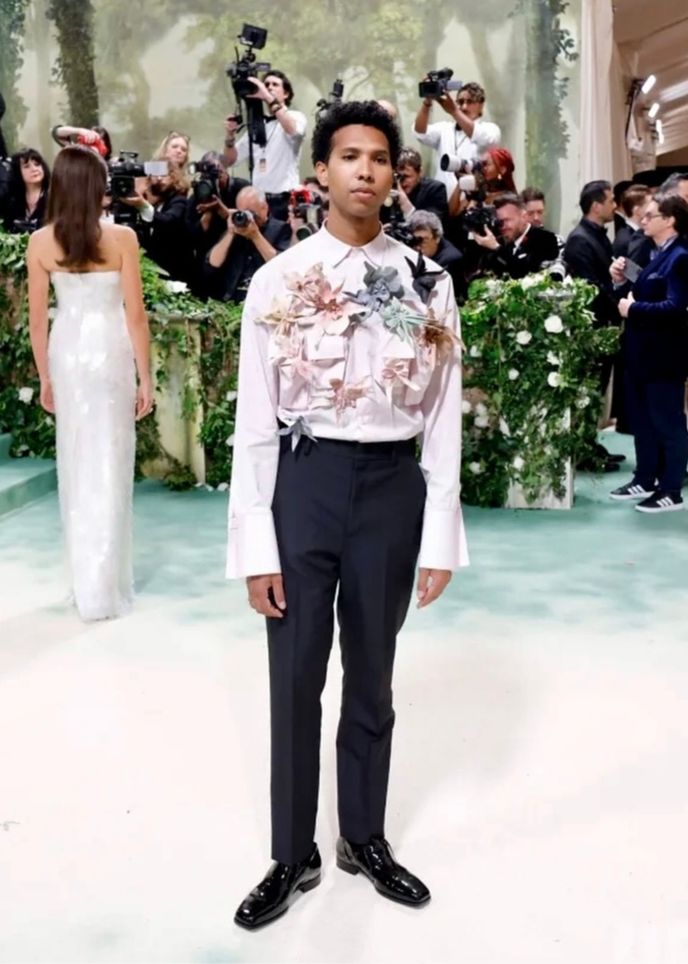
The first Black photographer to shoot a Vogue cover, Tyler Mitchell, at the Met Gala 2024. Photo: tylermitchell/Instagram
Although this could be the most political fashion exhibition overseen by Ms Wintour, it is not the only one with a political message, even if others were less overt. Heavenly Bodies: Fashion and the Catholic Imagination of 2018 (possibly more timely now) was a message on cultural appropriation and the role of religion in contemporary society. Camp: Notes on Fashion the following year celebrated artifice, exaggeration, and subversion, which can be viewed as criticism of societal norms and expectations. Even attendees, too, do not shy away from making a political statement. At 2021’s In America: A Lexicon of Fashion, Democrat Alexandria Ocasio-Cortez wore a white dress with red text that read “Tax the Rich” in the back, sparking disdain across the political divide. She was called out for pointing to the rich while happily enjoying their glamorous company. The Met Gala that year charged $35,000 a ticket, or $200,000 to $300,000 a table, according to The New York Times.
Anna Wintour is herself quite a political creature. She has openly supported presidential candidates such as Barack Obama, Hilary Clinton, Joe Biden and Kamala Harris, and raised money for them, even when fashion magazines are generally apolitical. Last year, she even staged a fundraiser during Paris Fashion Week to back the re-election campaign of Joe Biden. It is possible that Donald Trump may have something to gripe about her well-attended Met Gala, given his past grievances with Vogue. He was particularly miffed with Ms Wintour for not featuring Melania Trump on the cover of Vogue during her time (and the present) as first lady. Michelle Obama, by contrast, appeared on the magazine’s front page thrice! Given his predilection for criticising and targeting individuals and organizations he perceives as adversarial, Donald Trump might act against Vogue for its perceived political bias and support for his political opponents. That’d be another show altogether.
 Style on the Dot