A small exhibition to mark 20 years of the SG magazine Icon shows our celebrity culture’s lack of presence

Icon once meant exactly that: an image. Or a likeness, a representation. The term was primarily used to describe religious art. In Byzantine times, for example, the madonna was often a religious depiction of the Virgin Mary. But these days, an icon can come to mean an actual living being, even those not deified or destined for sainthood, or something other than a person (a building, for example). And the adjective iconic—meaning resembling an icon—is now the choice of fashion types to describe a person of some accomplishment or fame, or regarded as a symbol of an era or a culture. The use is, no doubt, accelerated by the Internet or social media, on which anything and everything can be an icon.
Local Chinese-language magazine Icon (风华, fenghua) has, from its inception in 2005 used its masthead to crown the stars and celebrities they admire and those who have been placed on their covers or within the pages. As far as anyone can remember, the monthly adopted the broadened modern meaning of the four-letter word, even when its Chinese title generally means ‘style and talent’, as in the common expression 风采才华 (fengcai caihua), which, to be fair, they tried to capture in the images of their moneyed subjects. But however compelling the photographs are, it is hard to say if these individuals, dramatically styled, have truly attained the status of an icon or if they are one because the magazine deemed them to be.

The ten dresses worn to the social calendar of the year, the Icon Ball
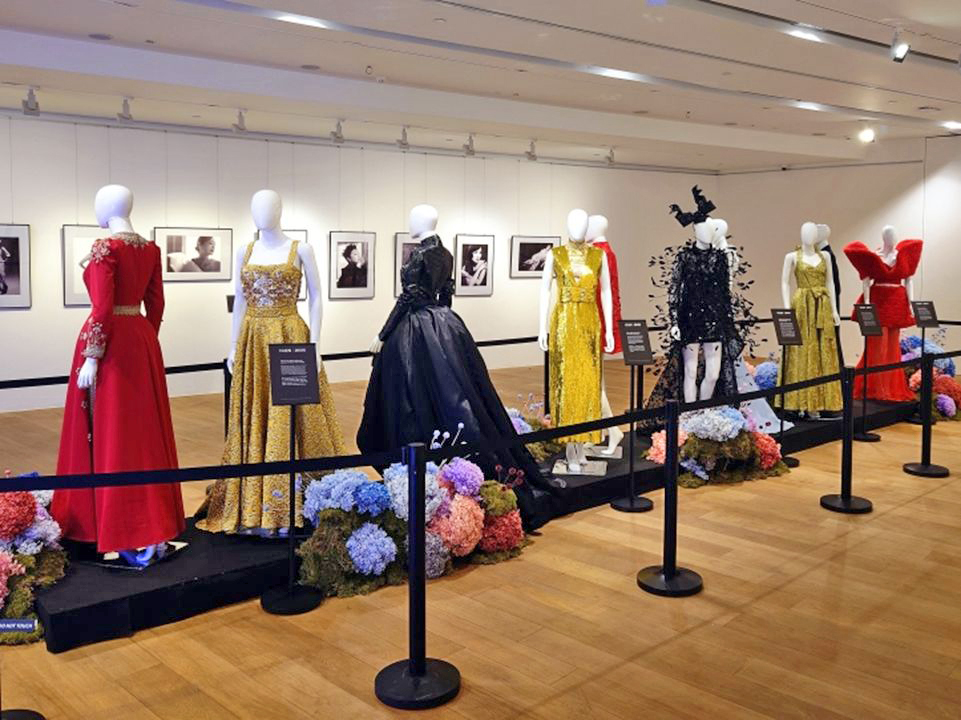
The clothes are strangely placed atop a low runway decorated by colourful fake flowers
Readers of Icon can now view the subjects of the magazine’s adoration in an exhibition to mark their 20th year: Iconic Couture: The Art of Timeless Elegance. While essentially walls of photographs, featuring the magazine’s cover shots and other editorial snaps, it is also a small static display of “haute couture and bespoke evening gowns, masterpieces of artistry from the world’s iconic design houses (note the use of ‘iconic’)”. These were worn by celebrity-attendees of the annual Icon Ball. It is not stated if the pieces are on loan to Icon, but we assume they are. All the dresses featured perhaps reflect the aesthetical preference of those the magazine considers “stylish and famous personalities in Singapore”: waisted, with full skirts, and, in sum, ideally glittery—the very embodiment of glamour in a hotel-ballroom fete.
The operative word here is “timeless”, which essentially means clothes not restricted to a particular era or style. They do not point to the future or a realm less visited. There are ten dresses on display and among them only two could be considered couture in the European tradition. To be sure, the gowns are not all classified as haute couture and the exhibition description does say that included in the gathering are those garments that are “bespoke”, which does not necessarily mean they were put through the rigours of established metiers. The two that were hail from maison Dior (by Maria Grazia Chiuri) and casa Fendi (by Kim Jones). The rest are custom orders and off-the-rack purchases from Prada (two dresses), Yves Saint Laurent (by Tom Ford), Guo Pei, Valentino, Christian Siriano, Gucci (Alessandro Michele), and our own Frederick Lee, the sole Singaporean designer represented.

Possibly the most popular dress in the exhibition, a black, feathered piece (left) by our most popular dressmaker Frederick Lee

Framed photographs of images that have appeared in Icon
While the exhibits are described as “iconic couture”, it is hard to discern which among the gowns epitomises an era, or our culture, or gala-night dressing. They are evening wear, for sure, but beyond the length of the dresses and their considerable cost, what truly stands out is hard to make out. One exhibit shows two different labels in one look: a Prada dress, over which a Gucci gown is worn (not “draped”, as the description curiously states), a rather unusual styling choice as Icon Ball attendees rarely mix and match. At the time we were there, among the handful of visitors, everyone stopped in front of Mr Lee’s feathered 前短后长(qianduan houchang or short front, long back) dress and photographed it. It has to be said that, despite its suspicious inspiration, the dress stands out, and more so than any other displays.
Although Iconic Couture: The Art of Timeless Elegance is staged at the ION Art Gallery, it is ultimately a mall event and, regrettably, it shows. The garment and photo exhibition, with curious abundance of fake flowers, reflects how little we are able to boast compelling high fashion consumption, even among Icon’s wealthy supporters and regular ball attendees. The magazine’s curated fashion stars barely hinted at admirable style. First edited by the veteran journalist Elsie Yah, Icon was not, at its birth, homage to the highly haute until the current editorial head Sylvester Ng, a long-time staffer at what has been touted as “the oldest Chinese luxury fashion magazine in Singapore”, pushed for an image that was more swanky. Yet, in its 20th year, what Icon presents through the exhibition does not live up to its name. Or suggest that, while it has come this far, it has noticeably gone the distance.
Iconic Couture: The Art of Timeless Elegance is on at the ION Art Gallery until 20 April 2025. Admission is free. Photos: Chin Boh Kay
 Style on the Dot