When Glenn Martens’s Diesel is good, it’s very good
This should have been a Chanel collection. Or perhaps what the French house desperately needs. But this, instead, was a Diesel collection. And Glenn Martens—the former Y/Project designer confirmed to take over John Galliano at Margiela (while still keeping his job at Diesel)—showed that there is more than just denim at a brand so much associated with the fabric of jeans. There could also be bouclé too, beautifully crafted bouclé, sometimes devoréd, sometimes even decorticated, all sharply tailored, some paired with denim, some not, in a playful collection that does not take itself too seriously, even if the execution is dead serious. The collection leaned on a side not often seen in Diesel: immaculately tailored, intriguingly textiled, and beautifully textured. One sensed that the direction of Diesel, already quite different from 2020 when Mr Martens took over, was now poised to scale a different trajectory.
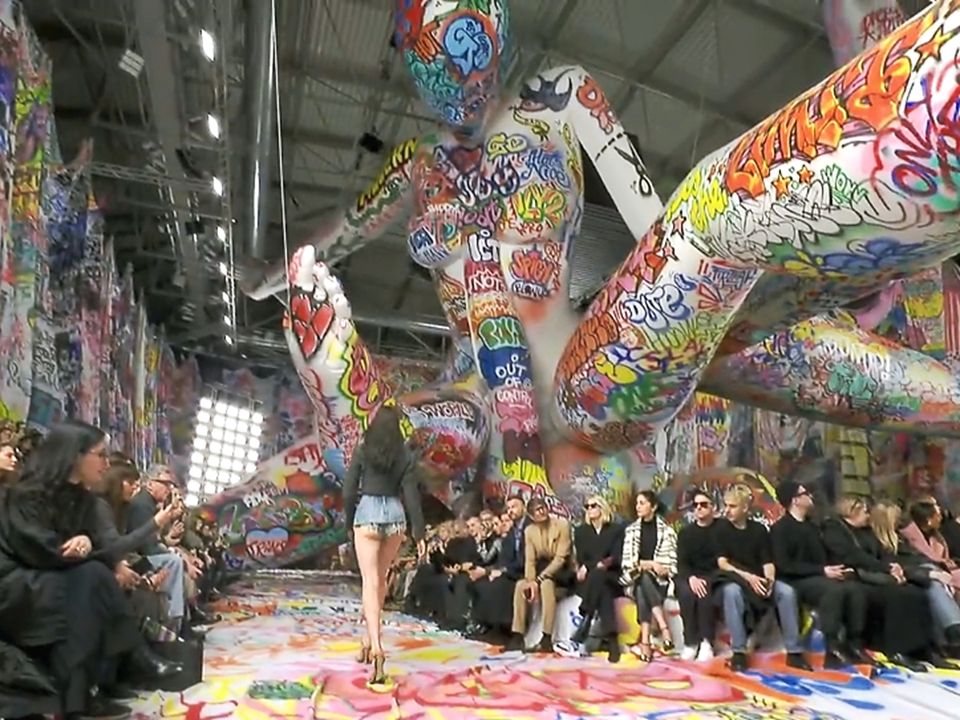
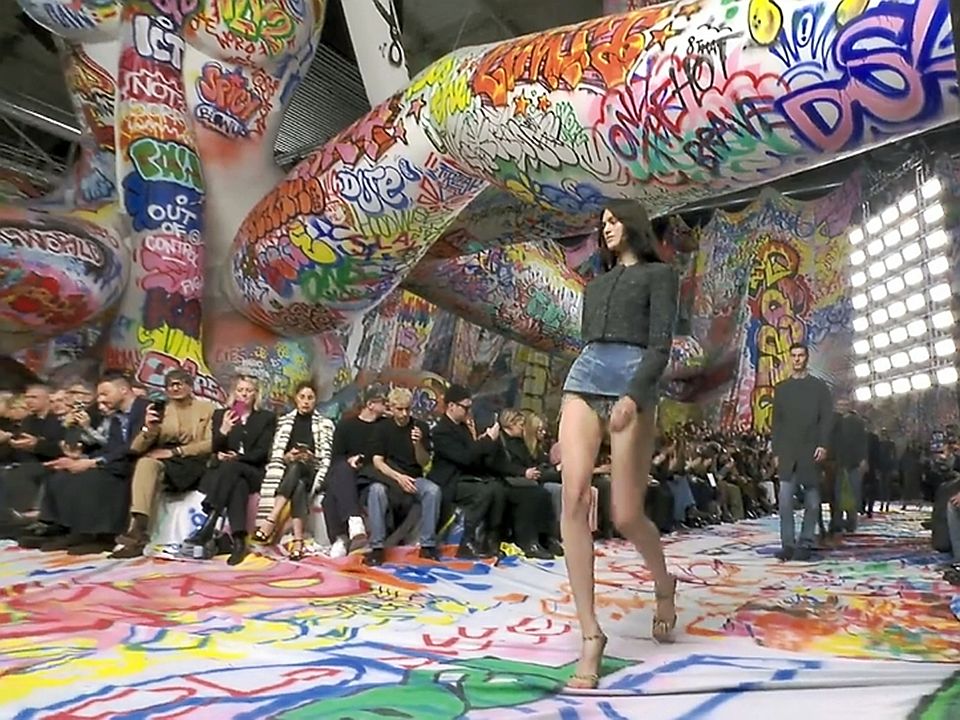
This season, Diesel is likely the show with the best set. The brand has become known for their evocative productions, such as the pile—quite a hillock, actually—of condoms (co-branded with Durex) for the autumn/winter 2023 presentation. This time, it is graffiti art on a scale quite unseen before. The nearly 50-year-old label believes that what they created could be the “biggest ever known graffiti installation, with over three kilometers of graffiti fabric, made by a global street art collective of around 7,000 of amateur and expert graffiti artists.” These people of various ages hailed from China, India, Italy, Japan, Saudi Arabia, South Africa, USA, United Arab Emirates and offered “many points of view and hands from the Diesel community around the world”. While graffiti is often used to illustrate anything that speaks to youths (and is really hackneyed that way), the Diesel set is backdrop for happy, hippy visual mayhem on which the clothes, combining elevation and deconstruction, and oddball pairings, truly stood out.

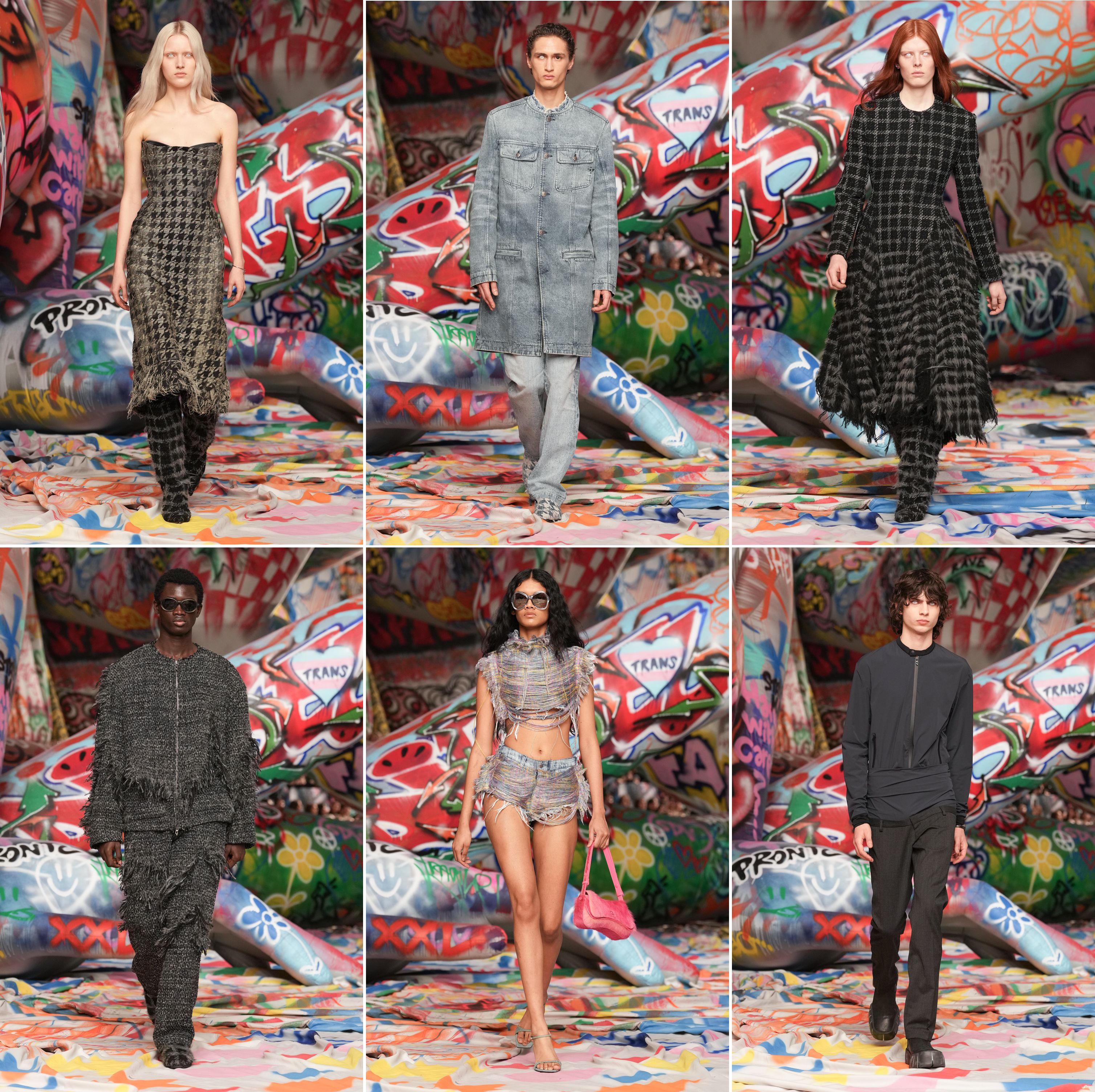


And, in the end, it was how the clothes came together that entranced. There were collarless bouclé jackets paired with denim peplums (too brief to be called skirts, and worn atop denim shorts—distressed no less), more jackets in the fabrics associated with Chanel, but looked infinitely more contemporary (less stars desiring identifiable clothes on the red carpet), and versions for men that did not look like G Dragon’s from the double C’s womenswear. Mr Martens is a textures guy, so other tweed pieces had surface treatments that were as if a digital eraser was randomly applied to them. The prominence of tailoring suggested that the studios of Diesel were serious in going beyond re-imagining what jeanswear could be and how denim could appear. And that also meant that they were equipped to do the softer pieces too, such as dresses with flounces and the simpler robes sac (which had the arresting clean lines of Raf Simons at Dior), as well as the slim dropped waist skirts that did not recall the ’20s. And the intriguing trio that ended the show: crushed torso-tops that are worn only in front! How did they stay on the body?
And all these crowned by some of the most curious show faces seen. The models wore contact lenses to obscure the irises (sometime in only one eye), which gave them appearances of aliens or whatever one considers otherworldly. You weren’t even sure if the models were looking. Perhaps they were possessed? And there were those parabolas that underline mouths to exaggerate non-existent smiles, drawn as if to effect an amateur’s delineation of the Joker. A spray can misfired? These looks were not Pat McGrath’s make-up for John Galliano’s final Margiela couture show, but they were oddly—even strongly—beguiling. And they were—as well as the superbly executed clothes—possibly prelude to the wonders to come at the other OTB brand Glenn Martens shall unveil soon enough.
Screen shot and photos: Diesel
 Style on the Dot