A moody languor was Daniel Lee’s Burberry autumn/winter 2025. And it seems he is staying put

London Fashion Week did not close with a bang. It ended with a plaintive sigh. Burberry, despite its marquee name, wrapped up one of the top four global fashion weeks like a quick shut of a book one will quickly forget. Amid rousing rumour that designer Daniel Lee could be leaving the brand, following changes in brand direction, the collection was not the swan song that one might expect from someone making a final mark. In fact, it was business as usual. By that, we mean Burberry is continuing with their less-fashion-more-merchandise (coats!) approach. The first look quickly reminded us of what Audrey fforbes-Hamilton (To the Manor Born) would wear on her jaunts outside her residence. It has been reported that CEO Joshua Schulman wants Burberry to be an “outerwear brand” (such as Moncler?). And Mr Lee showed lots of what would make Mr Schulman happy, all the while keeping to a dourness that is old-world respectability.
Sure, the brand now wants to augment its name that “resonates timelessness”, as tour guides to London will say about Burberry with gusto and pride. The “idyllic rural” inevitably comes to mind too, so do country estates (remote and unwelcoming?). Burberry’s own communique lauds that: “Daniel Lee’s latest (not last!) collection is inspired by weekends in the country, long rainy walks (how desolate!) in the great outdoors and the interiors of grand stately homes. Rendering coats and scarves, evening wear, daywear and suits in a mix of twisted fabrics by British makers, the collection is grounded in Burberry’s values of design, innovation and skill.” That means Burberry need not be the cool that it had been during the reign of Christopher Bailey. And no, not even with Naomi Campbell, fresh from her government-advising role, on the runway.
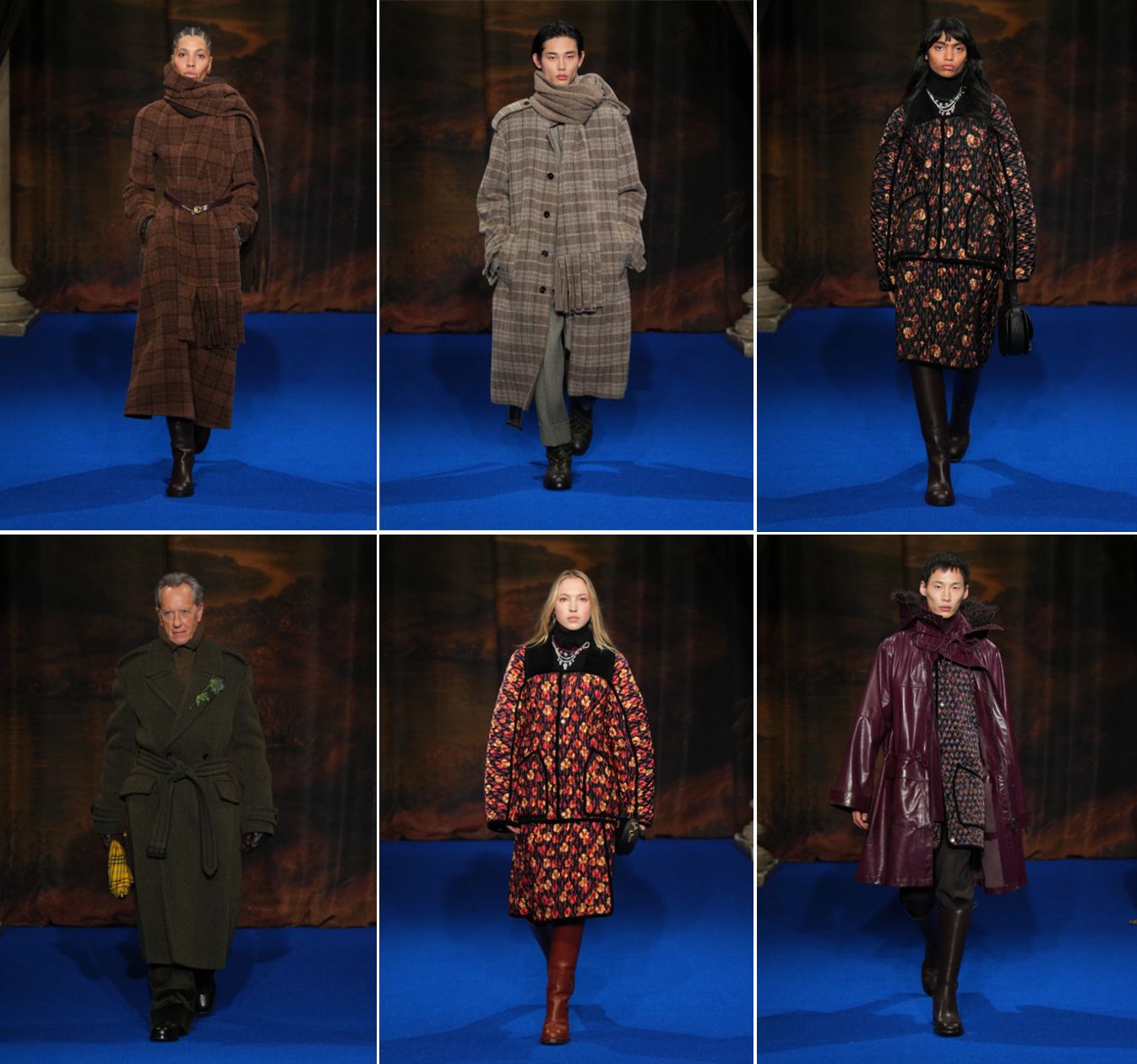


Rather, it was actor Richard E. Grant (of the 2023 black comedy Saltburn), who had apparently captured the mood of the day: playing respectable, with hints of wealth and a home in Moggerhanger, rather than Margate. Even the staging of the show in the halls of the Tate Britain hinted at that. It was hardly cheerful or spirited. Sullen drapes hung between stoic pillars suggested, again, inherited respectability. The soundtrack—dominated by Sinead O’Connor’s sometimes tortured voice—afforded the remembrance of wasted youth. Or, a bleak, even lonely, existence. Mr Lee’s collection comprised clothes that could be worn for walks on a wet day, for sure. Even to a dance at a neighbouring stately home, but how will they fare at, say, the BAFTA is not so discernible.
Dominant were colours that reminded one of moors and marshes, or boggy grounds, with the occasional foray into the kitchen for mustard or strawberry jam. It was like re-wilding—or re-ageing—the brand. But this is not Barbour refreshed through collabs with White Mountaineering or, recently, Ganni. Burberry may wish to double down on the outerwear positioning (every protective garment style is offered), but they are not like technical outdoor wear labels, such as Daiwa Pier 39, Goldwin, or Nanamica. Which is a tad ironic considering that back in 1879, Burberry was known for their textile technology, having invented gabardine, touted as “the world’s first breathable and waterproof fabric”. The 166-year-old brand now seemingly prefers to play it safe and sombre. In fact, with repeated viewing of the show, the clothes looked like costumes for a murder-mystery-at-the-mansion movie, with Naomi Campbell looking every bit the obvious first suspect. Who will, in fact, kill Burberry?
 Style on the Dot