Her bags are so in demand that non-fashion brands desire to collaborate with her. Who is Christy Ng?

Christy Ng for Redman by Phoon Huat tote, Photo: Zhao Xiangji for SOTD
We are beginning to see her tote bags here, even at pasar malams (night markets) although it is not certain they are original. Malaysia’s popular Christy Ng tote bags are so prevalent, that there are now dupes in places were you’d find throngs of tourists (just look at the shops of Penang’s Penang Road). During the weeks leading to the last Lunar New Year, bakery supplies store Phoon Huat even offered a collaborative version free to shoppers who spent above a certain amount. And each proudly displayed the brand name in sans-serif, full-cap font across a solid-colour band on the front of the bag. The printed cotton canvas totes and the many others the company produces bear a striking similarity to a luxury version that costs very close to S$5,000 for the large. No prizes for guessing that we are referring to the also-ubiquitous Dior Book Tote. Christy Ng’s good-enough can be had for RM44 (about S$13 ) or RM54 (about S$16), making them quite a steal if you are in search of an east-west tote that can be a distant cousin of the Book.
These printed totes are part of the merchandise mix offered by the namesake founder Christy Ng or 伍美眉 (Wu Meimei), originally a shoe designer so well-regarded in her homeland that Malaysian media—humorously rather than seriously, we believe—dubbed her as “Malaysia’s next Jimmy Choo”. But Ms Ng found another calling and business opportunity: The making of handbags, especially totes of a particular aesthetical recognisability. She has been so successful at selling them that not only are other bag makers copying her, brands not related to bag retail want to be associated with her moniker. During the last Hari Raya, paint maker Jotun wanted to show their fashionable side and availed a collaboration with Christy Ng—the ‘Balik Kampung’ tote. Months later, Family Mart convenient stores in Malaysia retailed a co-branded tote with Ms Ng, featuring an illustration of the former’s store with Mount Fuji in the rear, in approximation of competitor Lawson’s Fujikawaguchiko store that has been drawing massive number of tourists to the frustration of residents.
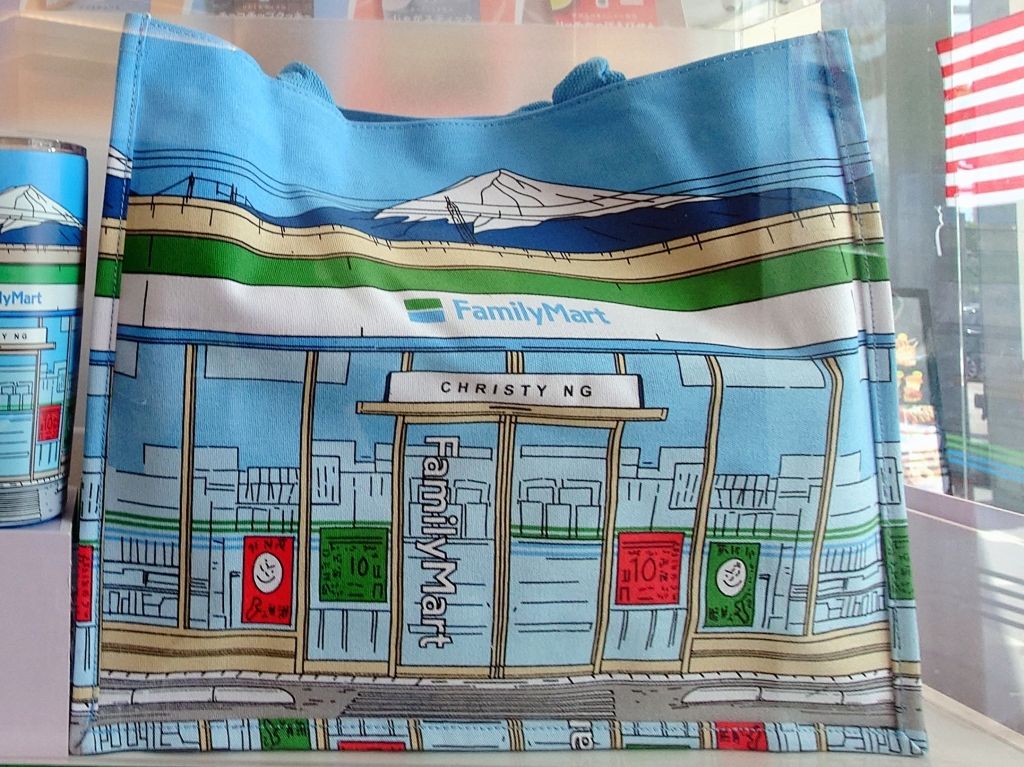
The Family Mart X Christy Ng tote. Photo: Hafiz Hazaini for SOTD
And Japan’s Family Mart was not the only convenient store that tapped Christy Ng’s common touch, remarkable marketability, and mass appeal. Korea’s CU chain, too, offered co-branded totes, featuring a grid pattern of CU’s store fronts in Korea. Christy Ng tote’s collaborative desirability is not limited to the konbini. Last September, at the opening of the Limbongan, Melaka Uniqlo ‘Roadside’ store, a collab tote with the Japanese brand can be had for free with purchases of RM300 and above. The bags were snapped up in no time. This was surprising because Uniqlo makes bags—and totes too—and they are not less attractive or durable than what their collaborator could offer. So successful the Melaka special was that Uniqlo reprised the pairing for the former’s 1Utama store in Kuala Lumpur. At the time, the bag/shoe brand said the limited-edition tote featured “an original artistic render of Uniqlo’s iconic storefront, illustrated by artisans from Christy Ng.”
There is perhaps no other bag brand in Malaysia with their own artisan-illustrator. It is this value-added service that other retailers not in the business of fashion, including those selling bakery supplies such as the 77-year-old Phoon Huat, possibly found appealing. Fashion association can augment one’s perceived relevance. That, and the chance to have one’s own brand appear alongside “Malaysia’s next Jimmy Choo” must have been such an immense reputational boost that a partnership is highly attractive. Non-fashion brands have found gaining a more stylish image by associating with a well-established fashion label to be bottom line-boosting. As one industry observer said to SOTD, “Fashion is always good for brand image enhancement. And if you can’t afford to pair with Dior (and they might not want to pair with you!), Christy Ng is a very good bet. Moreover, in Malaysia and (increasingly) in Singapore, hers is a very recognisable name.”
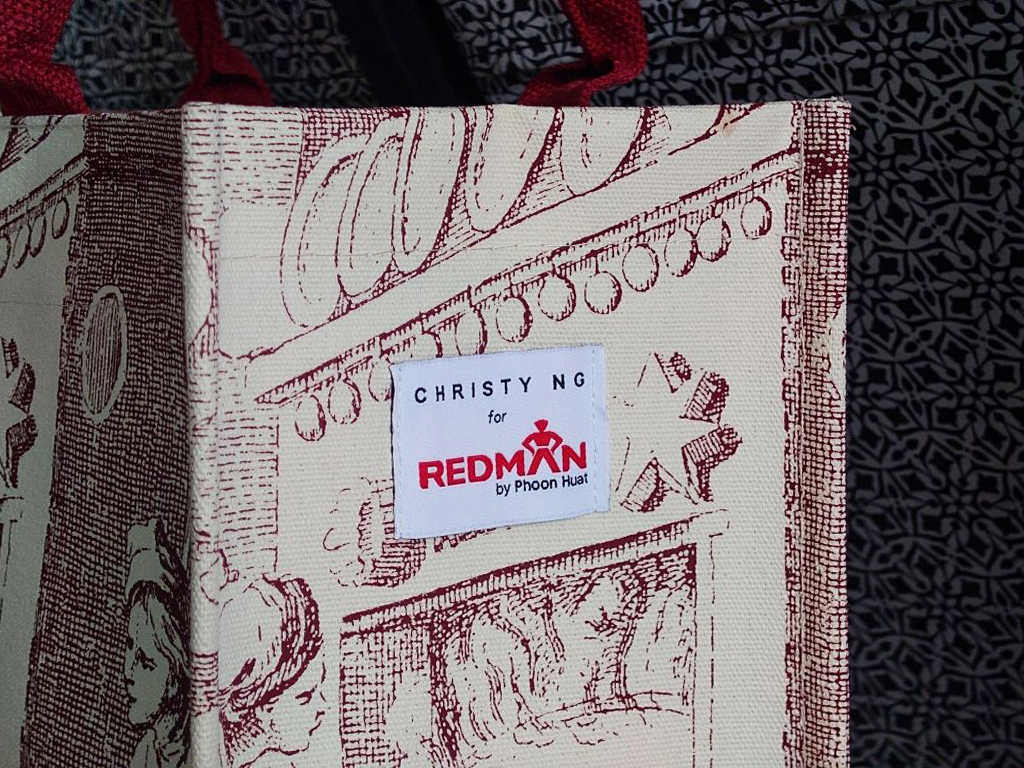
The Phoon Huat shopper that came with its own label announcing the unlikely partnership. Photo: Zhao Xiangji for SOTD
Christy Ng is a rabid follower of the trends in totes, especially those of east-west orientation. And keenly reacts to them through her pocket-friendly product offerings. She recreates some established styles with amazing faithfulness. Want one in the semblance of Goyard’s Saint Louis with their Goyardine monogram? Or one that suggests the Saint Laurent Rive Gauche? Or the Longchamp Le Pliage? Or the Loewe Fold Shopper? Or The Row’s Margaux? Even Michael Kors’s Kors Love? She has you very well covered. Your sights are not set that high and you prefer something humbler? A Gentlewoman-style tote to suggest you have been to Bangkok, or Kuala Lumpur? You won’t be left out—definitely not. The Christy Ng version comes with the familiar two-line logotype that fills up the sides of the bags, leaving those around you in no doubt who you are carrying.
Collaboration is a mainstay with Christy Ng bags. Like Vetements, she has team up with the courier DHL too (there were slides and water bottles in the offerings), as well as with Starbucks and Krispy Kreme, even Guangdong soy sauce brand Lee Kum Kee, making her possibly the most prolific collaborator in the fashion business in Malaysia. Such a go-to collaborator she is that Malaysian stars such as singer Yuna and actress Scha Al-Yahya could not resist the chance to pair up with her too. Apart from corporate and celebrity co-branding, Christy Ng allow regular consumers to customise the bags with names of their own choosing, printed on the surface, with a blank band designated to highlight whatever text appears on it. The service is not dissimilar from Dior’s for their own Book tote, introduced in 2020. It is not clear how popular this customisation is or if shoppers prefer their own name on the bags or the bag creator’s, but that it is available show how receptive the brand is to consumers’ displeasure with the impersonal.

Christy Ng bags are customisable. You can print your name on the bag. Photo illustration: Just So
As widely reported by the Malaysian media, Christy Ng started her business in 2012, initially selling just shoes, specifically high heels. Her love for shoes started young, when she was not totally out of her teens. According to popular telling, Ms Ng and some friends went to Thailand (presumably Bangkok) when she was 18. She bought some “cheap shoes” in a “flea market” (likely the weekend market Chatuchak, the sourcing hub of so many budding fashion businesses in Southeast Asia or, perhaps, the wholesale centre Platinum Mall). When she wore them back home, her friends found them so attractive that they insisted the shoes (style unknown) be sold to them. They were purchased in Bangkok for RM10 and she got rid of them for RM15. She told Sin Chew Daily (新州日报) in 2019 that her friends “觉得我品味很好” or felt that she had good taste. That initial transaction made her realise that money could be made in such a manner and she began as a personal shopper.
Christy Ng was born in 1988, in Kluang, a small town in central Johor to an air-conditioning technician father and a self-employed mother whom Ms Ng introduced as 黄美华 (Huang Meihua). When she was about four (some reports say three), the family, including her younger brother, moved to Petaling Jaya, also popularly referred to as PJ, part of the Greater Kuala Lumpur area. Ms Ng said that the relocation was necessary to better provide for the children. The businesswoman often says that she comes from a “poor family” (perhaps to better suit a rags-to-riches narrative). It is not known if in PJ, her father continued with his previous work. But her mother sold straw flowers at the Kelana Jaya LRT station, within PJ itself. At around nine, Ms Ng started helping her mother hawk the flowers after school. It was to be a foretaste of business, she would later say.
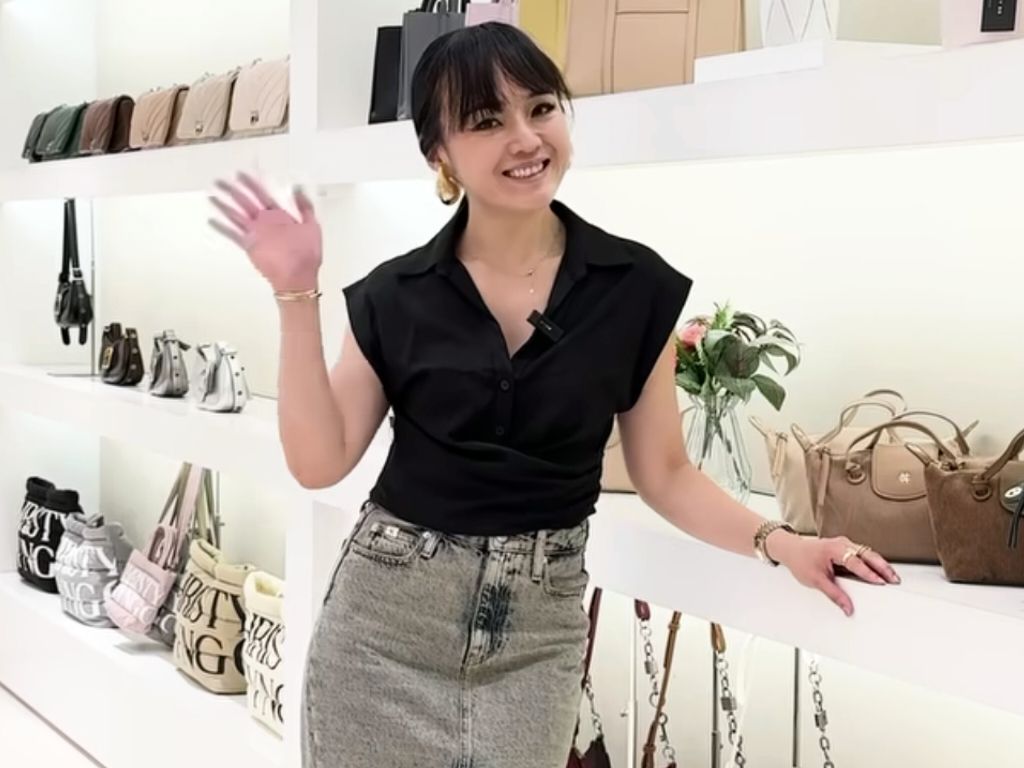
Malaysian shoe designer Christy Ng in one of her stores. Photo: christyemilylove/Instagram
Despite the outside-school work, Ms Ng did well enough to further her education at tertiary level (it is unknown which university she went to) and graduated with a degree in plant biotech and life sciences. Although she has not abandoned her love for shoes, she did not dive into the trade immediately. Ms Ng, who calls herself a “scientist”, joined the Swiss pharmaceutical firm Novartis as a drugs saleswoman, and left two years later. She took a short course in entrepreneurship at Standford University, and in 2012 started Christy Ng Shoes, at first sold at a night markets in PJ (and sometimes on “the roadside on Jalan P Ramlee”), then online. “I was just an ordinary girl who had a deep passion for shoes, who started it all in my mother’s living room,” she had said. That living room was not in a small flat as one might imagine a seller of artificial flowers at an LRT station would live in, but a house that looked like one-half of a semi-detach, as revealed in the 2012 Astro AEC reality show 叫我老板 (Call me Boss).
In the show, Ms Ng, who spoke in surprisingly halting Mandarin, said: “When I started, I was not sure if I would make money or not.” But with “free” labour from her mother, overcoming the “trials and errors from the start” and rapidly growing the business, she was able to move from her home operations into an office space in Damansara Uptown, a commercial and residential district in Petaling Jaya within two years, notable for someone who somewhat proudly admits that she has “no background in shoemaking or fashion design”. By 2016, Ms Ng was ready to open her first physical store in—1Utama, where the Uniqlo store offered bags from one of the collaborations with her. In the following eight years, the company would open another 11 physical stores throughout Malaysia.
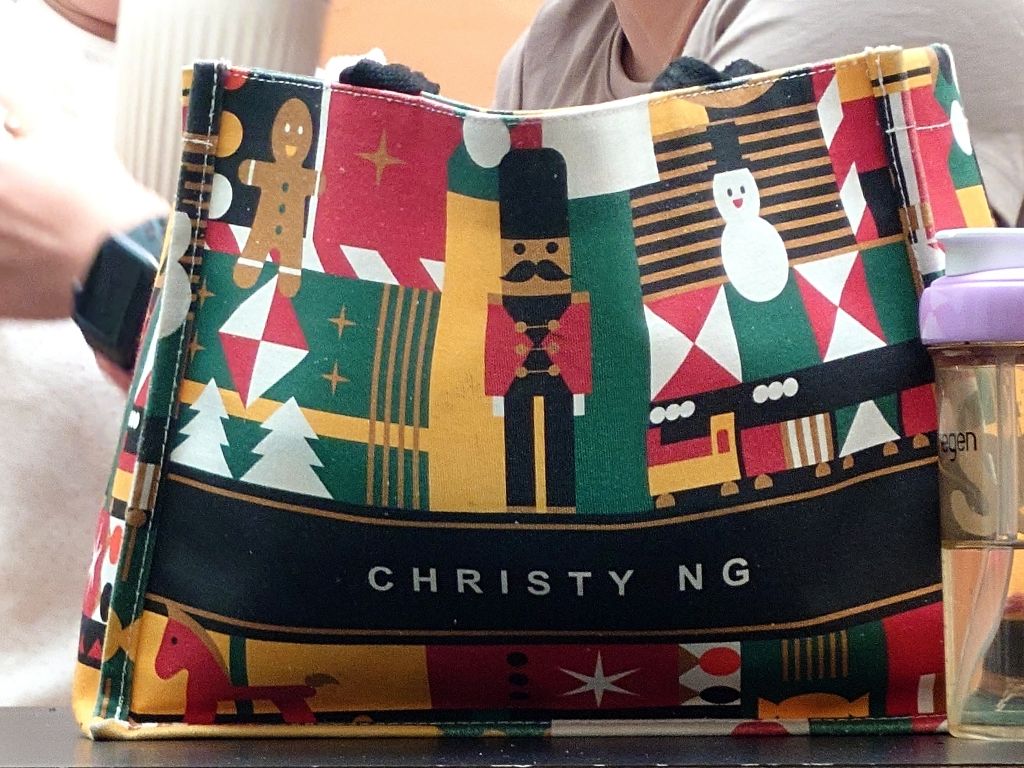
Christy Ng ‘Noel’ tote used as a baby bag, as spotted in a café in Penang. Photo: Hafiz Hazaini for SOTD
As her brand gained traction, Christy Ng began adding bags to the array of shoes she sells. The bags were—and still are—mostly iterations or adaptations of what is poplar in the market. As with her shoes, there is no signature style, just digestible merchandise for the masses. Although her bags are seemingly popular, they have received criticisms for looking very much like those of other brands, and they are not restricted to just her totes. Currently, one ‘Luciana Woven Bag’ looks uncannily like the Bottega Veneta ‘Jodie’, down to the Italian brand’s intrecciato leather. But this is not be the first time that the brand offered a BV alternative. Back in 2020, a clutch that could pass of as the Pouch was available on the Christy Ng website. Her shoes, too received flak for their similarity, now to those by compatriot brands. In January, a stink was raised when Netizens accused Christy Ng Shoes of copying a particular floral style from Machino (interestingly a moniker that itself brings to mind that of an Italian fashion brand!).
A huge fan of FIZIWOO, Ms Ng has been unfazed with the allegations of plagiarism. At least by how she continues to be inspired by luxury brands. The designer has not publicly addressed the issue of seemingly appropriating the design signatures of others. But her supporters (including, purportedly, her staff) suggested that the brand has been merely responding to trends that already exit in the fashion industry. They belief that her bags, for examples, are “original interpretations ” of what is popular and not facsimiles. Such as the tote with ‘Toile de Jouy (a cotton fabric) motif’ so synonymous with the Dior Tote? It must have been really popular in the eyes of Christy Ng that they had to be applied even to those bags she co-signs with others, such as those for the insurance company Great Eastern. Now that even the boba tea seller Changee’s carriers—their cups too—are in similar style, perhaps that particular aesthetic has reached saturation point, and any likeness is no longer a copy. Cunning.
 Style on the Dot