The exhibition at the China Cultural Centre spotlights a palace that was once the residence of Qing-era Prince Kung. Although considered one of the finest homes from the time, the exhibition is less about the property than fashion inspired by it through the years
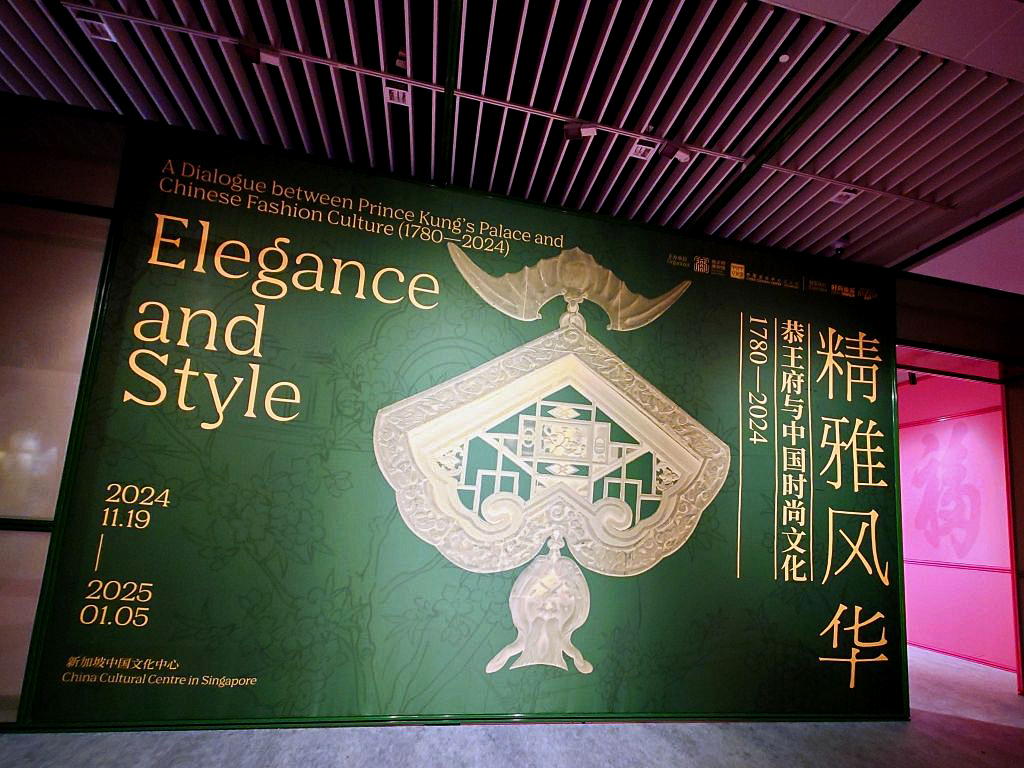
Elegance and Style: A Dialogue between Prince Kung’s Palace and Chinese Fashion Culture (1780-2024) is a rare exhibition that trains the spotlight on an imperial residence through its influence on fashion between the late 18th century to the present. Some fifty looks are assembled in a rather compact space, but they are not clothes from ancient times. In fact, may of the pieces would not be out of place at a gala event in Shanghai or Beijing today. Despite their opulence, not all designs are consistent with what would be considered contemporary, but the craftsmanship is, without doubt, of exceptional quality and refinement, honed from many years of ancient Chinese métiers. Elegance and Style (精雅风华), staged at the China Cultural Centre on Queen Street, has been described as “the first thematic exhibition of its kind”. While the palace—also called a mansion—is the focus of the exhibition, it is not the garments once housed in the splendid residence that are on show.
Rather, it is a displays of how Chinese fashion designers today (and those of the recent past) view and re-interpret their culture of yore. Most of the designers would be unknown to the casual Singaporean exhibition-goer other than, perhaps, London College of Fashion alum and LVMH Prize nominee Chen Peng (陈鹏) or Central Saint Martins MA grad Samuel Gui Yang (aka 杨桂东, Yang Guidong), who is described by WWD as the “leader of the New Chinese Style movement”. The exhibition is curated by Xu Ning (徐宁), a media veteran who joined Harper’s Bazaar China in 2006 and created the first-of-its-kind Harper’s BAZAAR ART. Last year, he created the magazine’s Culture & Arts Department, where he serves as its chief planner. At the opening, Mr Xu delivered the keynote address: Oriental Aesthetics and Chinese Fashion.
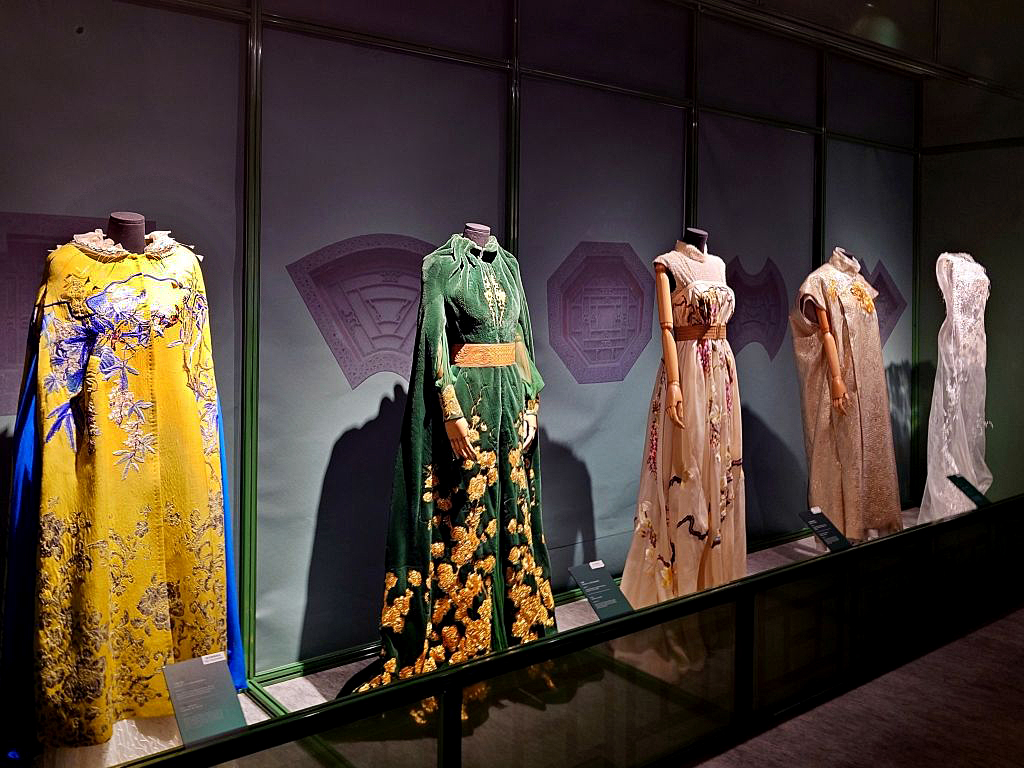
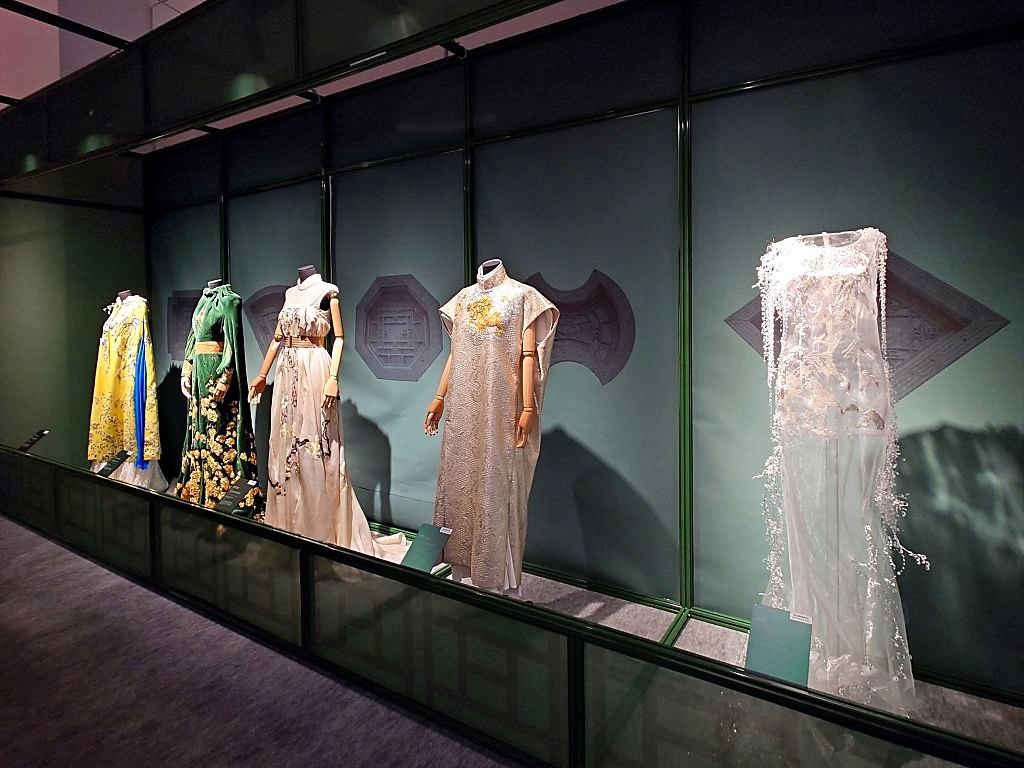
The exhibition for the most part, illustrates that Orientalism in fashion need not be a caricature of Eastern exotica or begin slavishly from the qipao. Nothing displayed here is a la Lisa von Tang. To be certain, it is not an easy dialogue. Chinese designers have yet to achieve what the Japanese had in the early ’80s. The latter not only shattered notions of acceptable dress, but also a fashion system that did not necessarily favour the aesthetical newness of the East. The Chinese designers now emerging have nothing really to impair, given that what can be destroyed, has. While they feel the need to adhere to their roots, they do not, however, try to play up the dichotomy between the Oriental and the Occidental. Sure, there are embroideries that can be traced to the imperial past on clearly modern silhouettes, but they are not clothes that look like bad or lazy reiteration of court dress. This is not homage to the 汉服 (hanfu) or traditional Han Chinese dress.
Some pieces do evoke the luxurious lifestyle of yesteryears, as can be imagined to exist in the Prince Kung Mansion. A pair by Lawrence Xu (许建树), remembered for his dragon robe-dress worn by Fan Bingbing on the red carpet of the 63rd Cannes Film Festival in 2010 (the dress is now in possession of The British Museum), had the sumptuousness of ceremonial wear—one a dragon robe-like cape, in royal yellow, embroidered with flowers and birds (using a technique known as 京绣 [jingxiu] or Jin embroidery, also 宫绣 [gongxiu] or palace embroidery) but not the elaborate pomp, and another, a coat-dress in green mink with gold floral盘金绣 (panjinxiu or couching embroidery), both distinguished by their regal bearing. If these garments convey the resplendence of lavish noble life, one can truly imagine the extent of luxury adopted in the Prince Kung household.
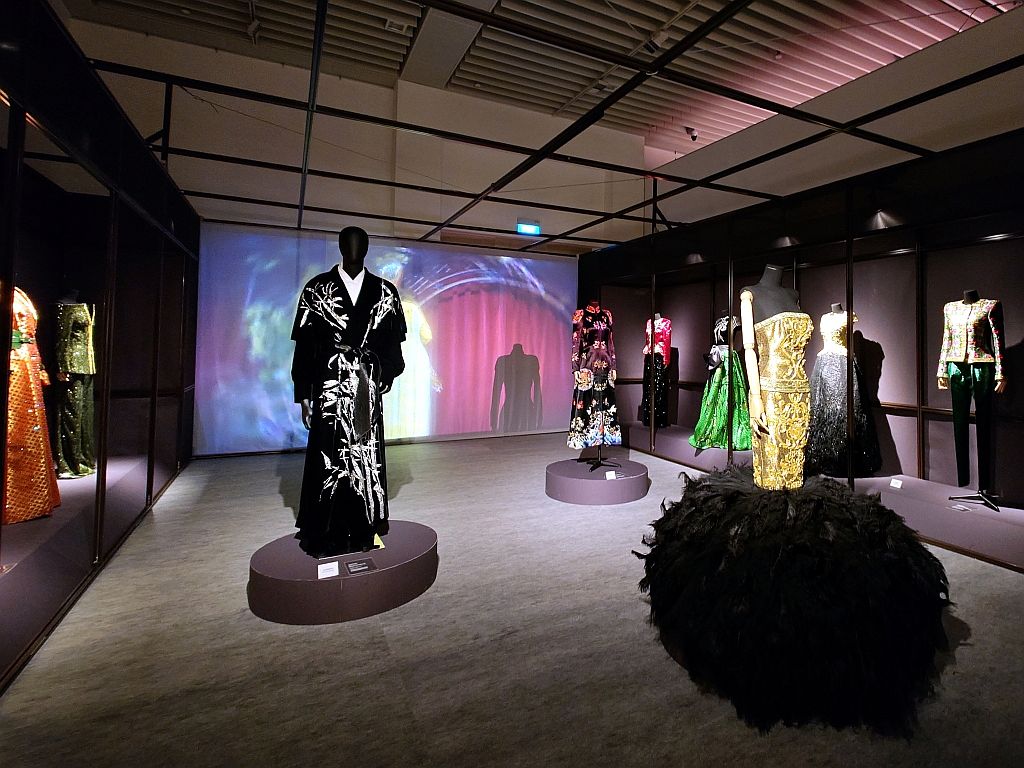
The Prince Kung (also spelled in pinyin as Gong [恭]) Mansion is considered to be Beijing’s largest and the best-preserved Qing-era prince’s residence. Known in Chinese as 恭王府 (gong wang fu) and built in 1780, it was initially the home of the notoriously corrupt Qing official 和珅 (Heshen)—a favourite of 乾隆帝 (Qianlong Di or Emperor Qianlong)—before turning into the abode of the emperor’s youngest son 永璘 (Yonglin) and then Prince Kung (also known as 奕䜣 or Yixin). The royal, who had close ties with Empress Cixi (慈禧太后), lived here with his wives and children for more than four decades, until his death in 1898. The mansion went through several hands and was even once offered as mortgage to the Order of Saint Benedict, whose monks spared no expense in restoring the mansion, which by then was in a dilapidated state. Following the renovations, it became the Furen Catholic University (天主教輔仁大學) until the monks were deported from China in 1951.
Today, the mansion is considered a fine example of traditional Chinese siheyuan (四合院) residences of the nobility. The private quarters are set amid meticulously designed gardens, punctuated with scenic spots, from which to view artificial hills, the opera-theatre-in-the-garden, pavilions, ponds, and the intricate (read: ornate) architecture of the buildings in which the Qing nobility enjoyed their life of considerable luxury. For modern visitors, the Kung Mansion showcases not only the vestiges of a bygone era, but is also an open museum that reflects the dynastic history within its 60,000 sq m compound. Regrettably, this is not conveyed in the exhibition. With the exception of a video short and some artifacts, there is little from which to draw an understanding of the mansion’s grandeur.
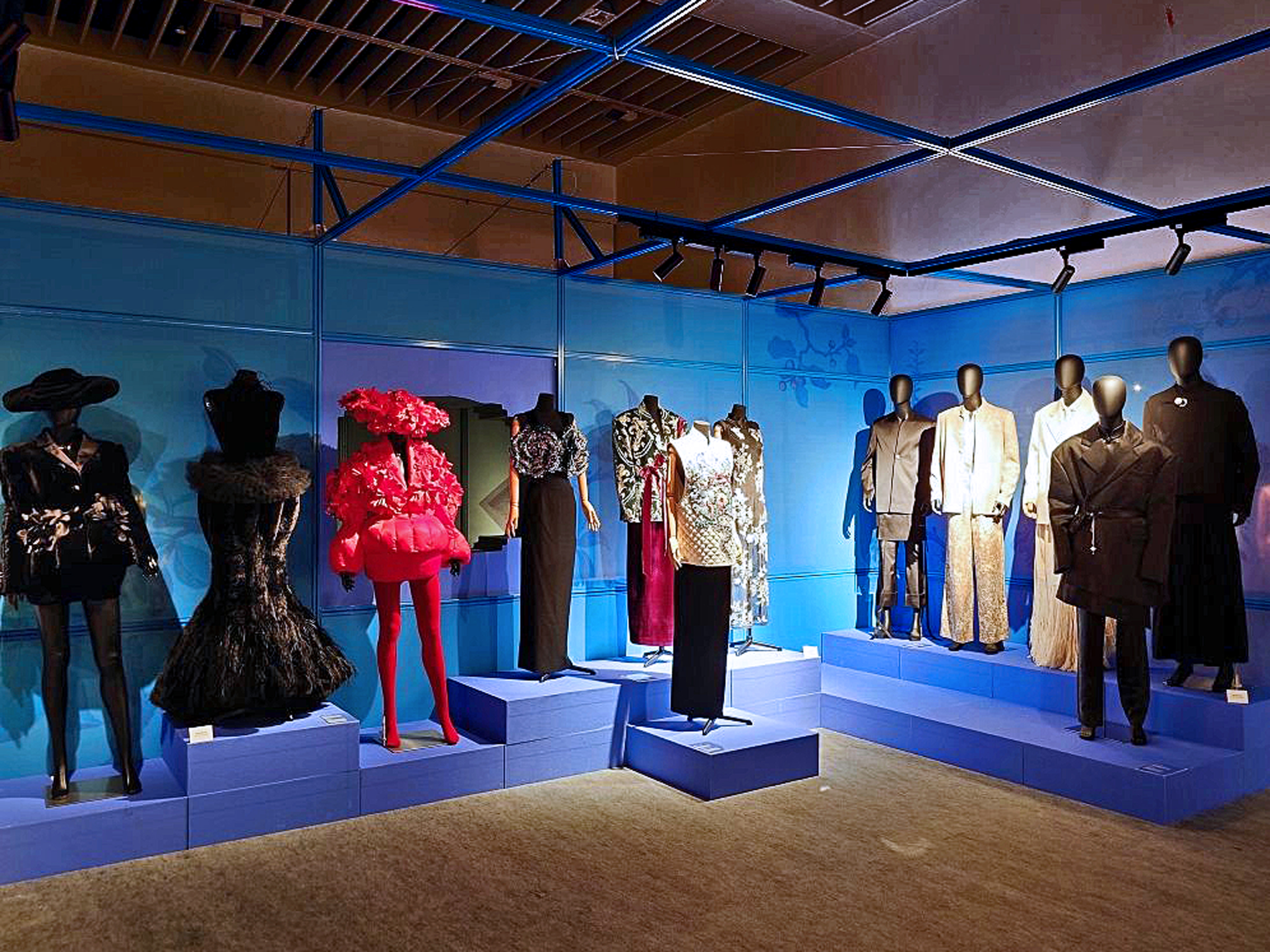
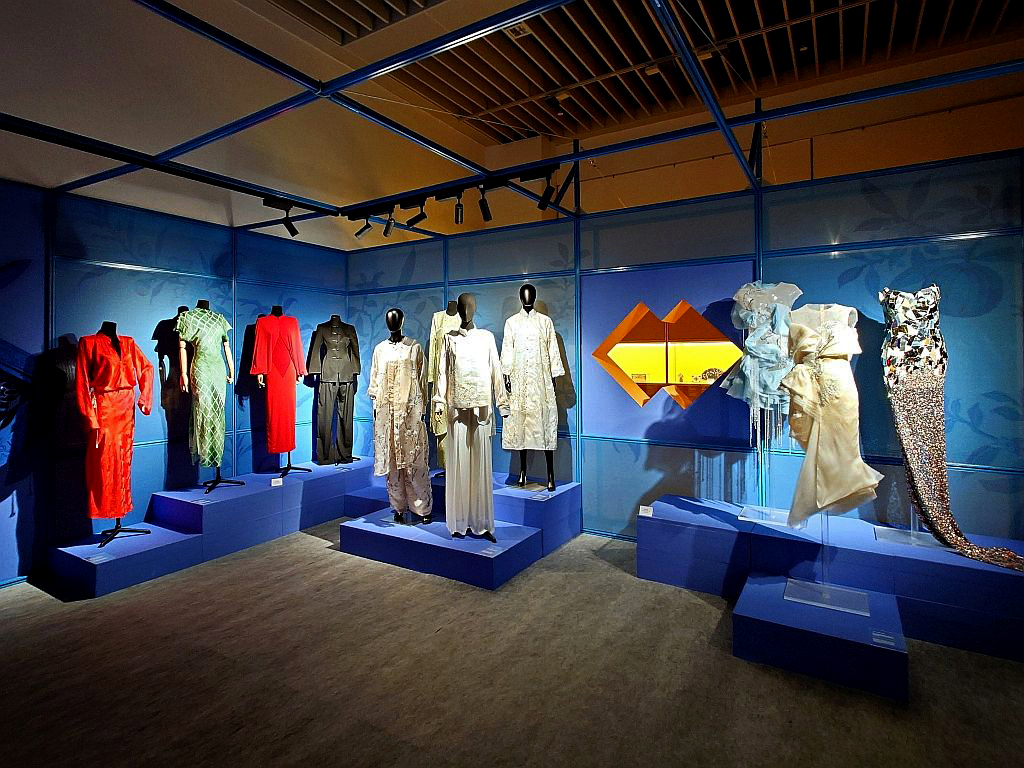
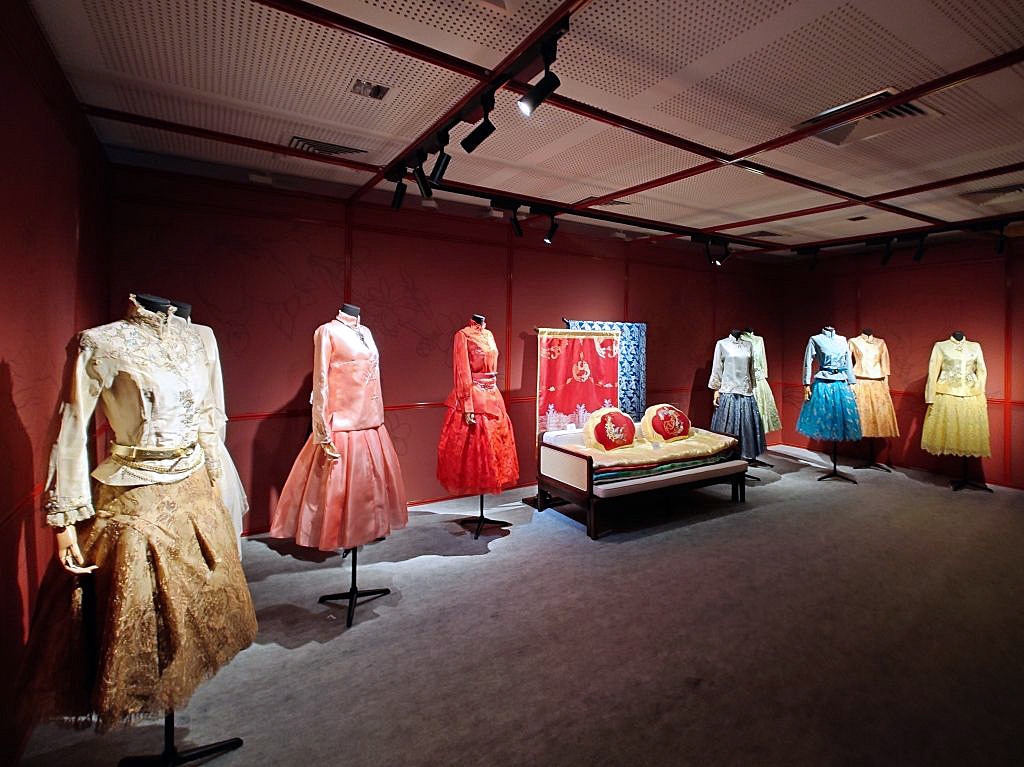
The exhibition comprises of four “Chapters”, each intended to represent the splendours of the palace grounds, but only vaguely. Although there are bilingual descriptions accompanying each of the zones, they barely furnish the viewer with the cues that would enhance the visualisation of the “architectural grandeur” of the residential complex. The opening chapter is about the Prince’s famed garden theatre, but no such spatial breadth or glory is captured. Instead, a narrow passageway with five exhibits to the left draws the visitor to the other chapters. The clothes on display are not directly associated with the mansion. They are probably not ever worn there, during, say, a party or for state affairs. Connecting the dots between garment and architectural majesty is not for those who do not draw from their imagination.
Among the galleries, the most striking piece is an ultra-sheer column dress by 兰玉 (Lanyu), known for her skills in 苏绣 (suxiu or Suzhou embroidery) and her incredibly gossamer gowns. Inspired by the poet Libai’s (李白) Viewing the Waterfall at Mount Lu (望庐山瀑布), the dress is a spare form of incredible lightness. Even the suxiu on the bodice provides almost no opacity, while the decorative beaded cascade from the shoulders, depicting droplets of water, is palpable airiness. Diaphanous silks are not a recent creation to take advantage of the craze for ‘nude’ dresses. In fact, back in the Han dynasty, women wore sheer outer garments that were known as 素纱襌衣 (susha danyi or plain-yarned unlined robes). They were made of super-fine lightweight silk gauze that attested to the Chinese textile technology of the time. Ms Yu’s unmistakably modernist take is, perhaps, indication that Chinese designers are on the cusp of something major.
Elegance and Style: A Dialogue between Prince Kung’s Palace and Chinese Fashion Culture runs till 5 January 2025 at the Chinese Cultural Centre, 217 Queen Street. Admission is free. Photos: 炤祥记
 Style on the Dot