They may be rid of Virginie Viard, but they are trapped by her legacy
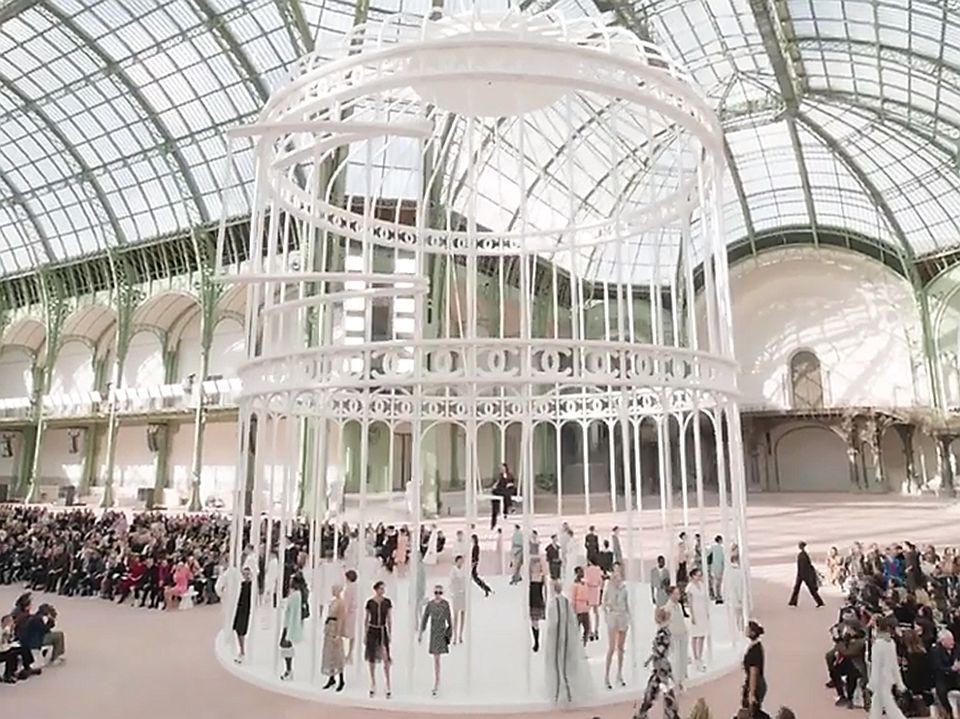
Chanel is back to showing at the newly-renovated Grand Palais, but this was not the show to end all shows. The set was huge, but no more spectacular than those under Karl Lagerfeld’s watch. The centrepiece was a birdcage, circled with more double Cs than you cared to count. In it hung a swing—the seat served as a perch. We expected a cirque, but nothing even close unfolded. At first we were puzzled by the birdcage. Sure, feathers were used in the collection, but they hardly suggested ornithological study. When the finale act came on, featuring American actress Riley Keough singing Prince’s 1984 track, When Doves Cry, it made sense. Subtlety was never Chanel’s strength anyway. Nor an unusual soundtrack. This times, it could have been a Sunday afternoon at Galeries Lafayette as shoppers go about their business half-oblivious to Barry White, Jamie xx and The Avalanche (to be current?), and Elkka. When the Lacoste show was better soundtracked, Chanel was not in a good place.
By the third look of 77, with its cheerless pilgrim collar, it was obvious to us that Chanel was desperate for a creative director and they wanted us to know it. Even their specially created and grand-sounding Fashion Creation Studio was not able to put together a compelling collection, let alone a winning show. The pieces were depended on tired house codes, unrefreshing use of bouclé, near-frumpy silhouettes, and floaty outers that offered nothing kinetically. This was a chance (or the second) to break away from the duds of the past, but they did not seize the opportunity. Despite reports of Simon Porte Jacquemus visiting the Chanel office often recently, the maison has not hinted at the likelihood that he would be their man. They were clearly in need of someone, even anyone.

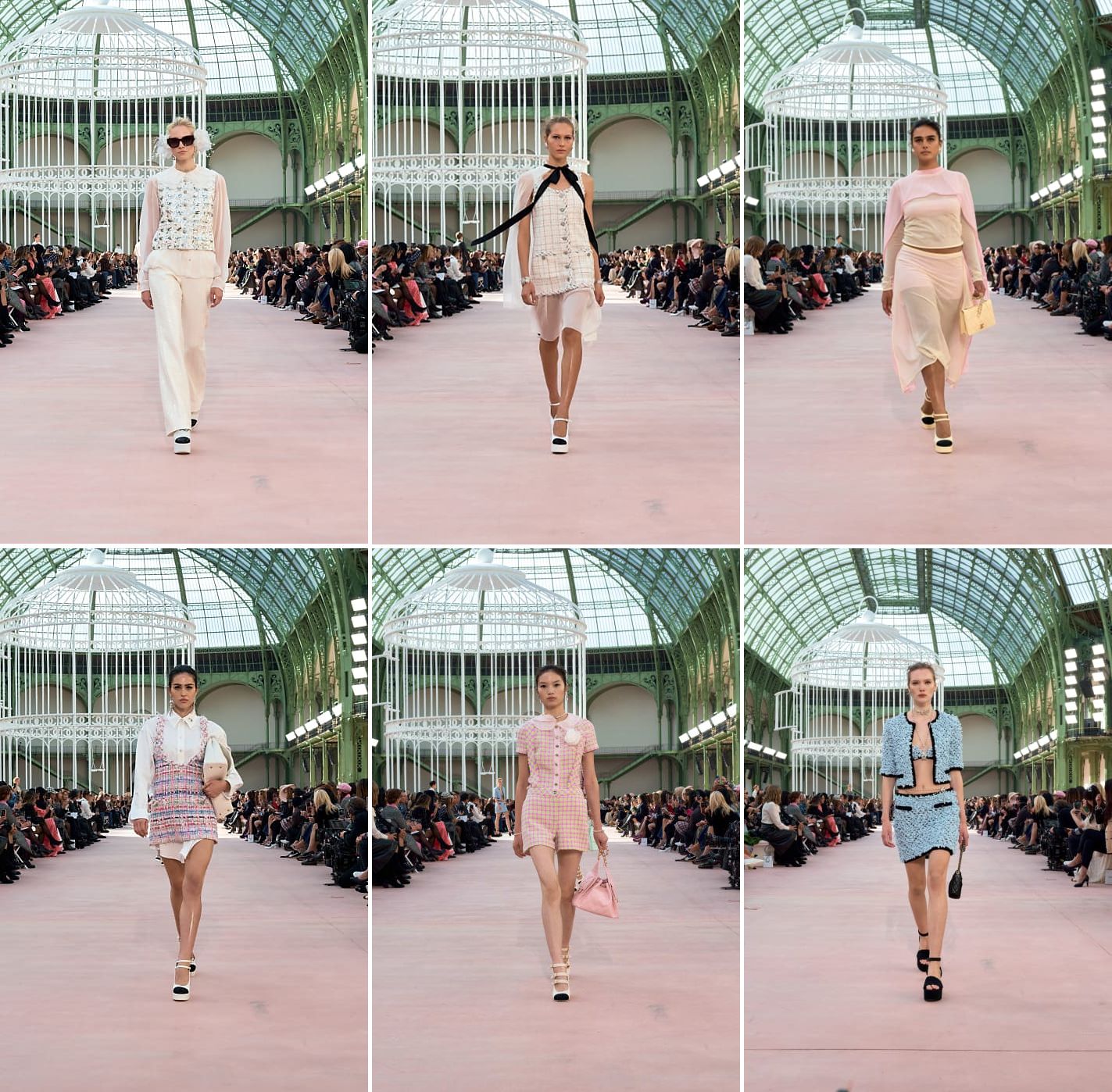
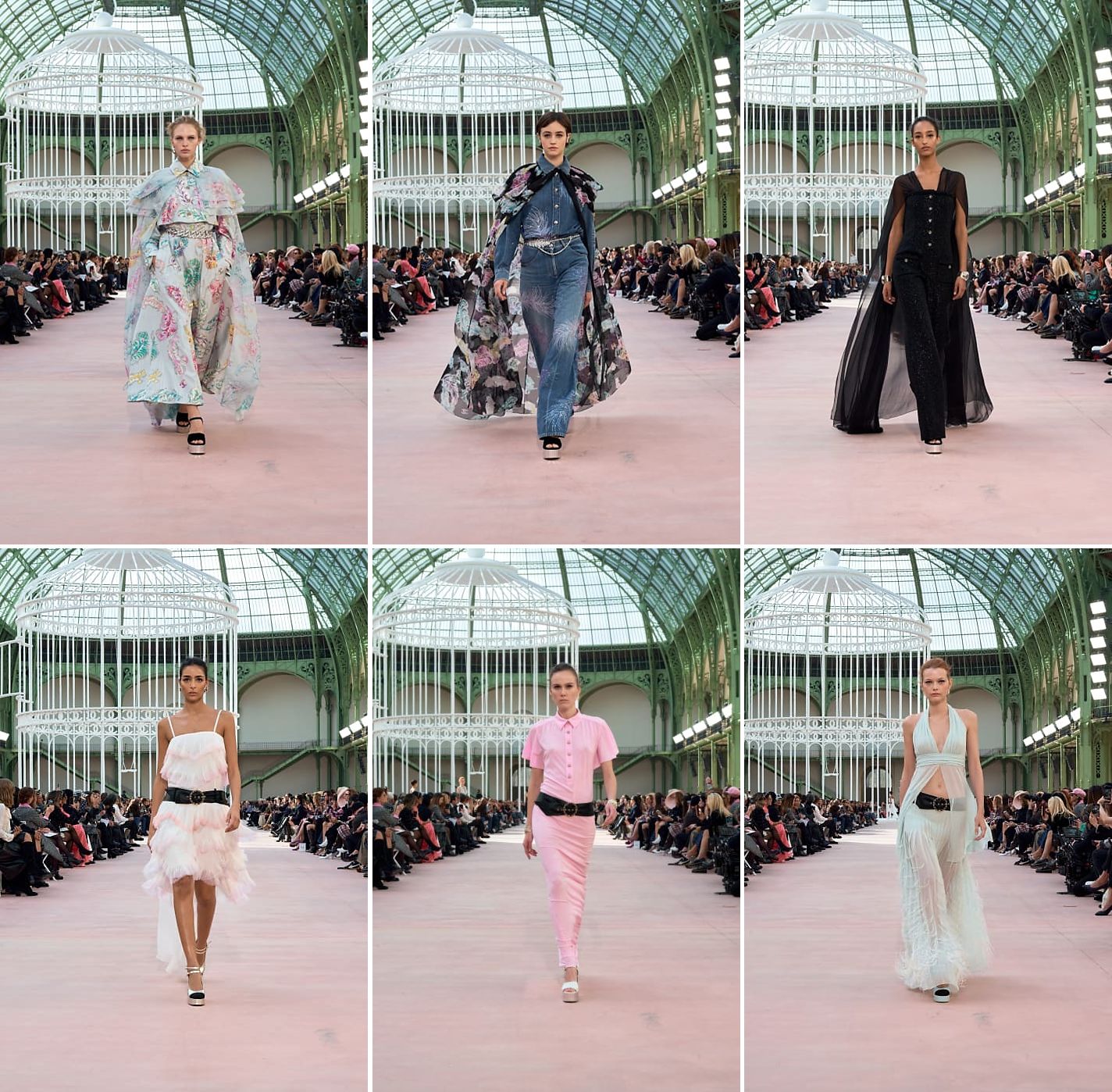
If the sales of Chanel’s RTW during Virginie Viard’s divisive tenure was as good as the brand had claimed, it was possible that Chanel did not wish to immediately do away with the brand of youthful femininity previously imagined by someone who had more mature tastes. Not every customer is like their brand ambassador Jennie Kim, who could get away with anything the brand makes her wear. Even seasoned actresses do not regularly look good in Chanel, on or off the red carpet. It is also possible that the team in charged was unable to design anything CEO Leena Nair would not don or allow in her wardrobe. So they stuck to what Chanel has been—classic, corny, unchallenging. The clothes had to be self-soothing; which was, in all likelihood, preferable to boundary-pushing.
But to make the standard fare of suits, jumpers, shorts and the rest somewhat imbibed with flair or hint of fashion, they added pieces that should have been under existential threat when the world has evolved and we need to move in constricted spaces. The most obvious was the cape—most just a whisper of fabrics, some tied to the neck, with the cape fluttering behind, as if a kid playing her favourite superhero. They also featured bows with curiously long ribbons in the front, and one, caught between legs of pants, offered not a particularly comely stride. And the frilly cloak that hid spectacularly unimpressive separates beneath, as if the diaphanous extras would true fashion make. Additionally, the team wanted us to know they were well versed in collars—every manner imaginable was used, and in case they could not be made out, were sized oddly large. Or pleated, ruffled, layered, feathered. More, in the end, is more, and little else.
 Style on the Dot