The Japanese retailer’s second store offers a tasting menu of what you would get in a typical Lumine Tokyo mall, including the city’s popular Blue Bottle Coffee. But would it be enough to satiate Japanese fashion die-hards?
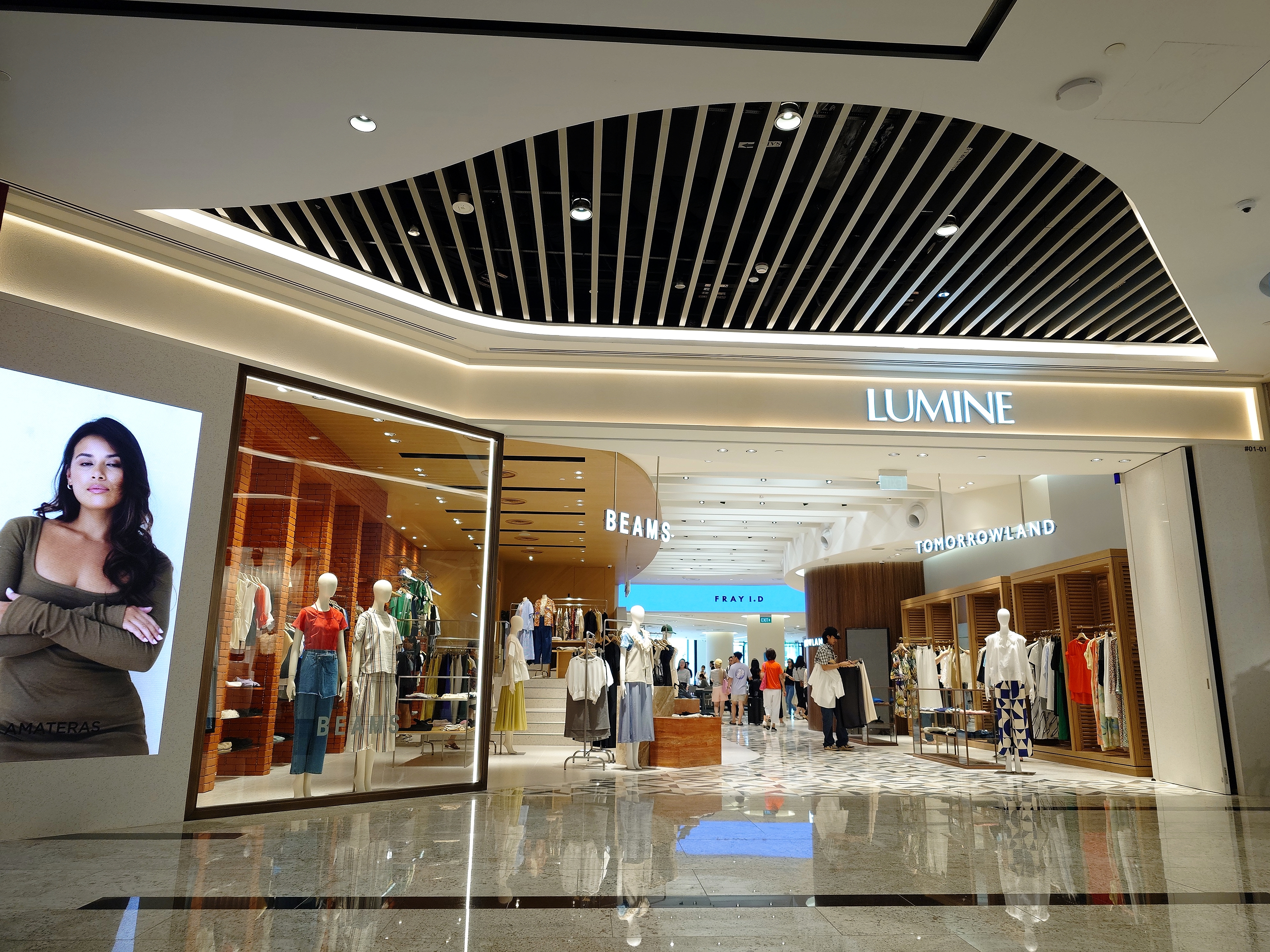
Five days before National Day this month, the fashion emporium Lumine opened the doors of their Clarke Quay Central store for the last time. But they were not shutting for good. Last Thursday, the Tokyo-based fashion retailer unveiled a new space in a far more accessible location—Raffles City. In doing so, they have shifted closer to their ekibiru (station building) origins: Most Lumine malls—and they are that in Japan—front train stations, such as the massive Shinjuku okawa, one that has a staggering 200 entrances and exits, of which some lead to the various Lumine buildings on the station periphery. In their previous sleepy location by the Singapore River, Lumine’s first overseas venture had stayed admirably resilient for 7 years, even surviving the lockdown and the social-distancing days at the height of the COVID-19 pandemic. It is laudable, considering how weak physical retail has been and still reportedly is.
The new Lumine on level one (that covers the shoe department of the closed Robinsons department store) is now branded as their “global flagship store” (a favorite Japanese categorisation), but the 7,000-square-feet (or 650-sqm) space is, in fact, a little smaller than the 10,000 square feet of the original. As with their debut store, the present is a one-level affair, also, interestingly, served by two entrances. Aesthetically, both stores are rather similar—fair-coloured, conservatively laid-out, and predictably linear in their use of racks and shelving. As it was at Clarke Quay Central, it retains the welcome spacious aisles that easily accommodates PMAs and shoppers who love occupying the width of walkways. And this time, there are distinctly-spaced stores-within-store of some of Lumine’s long-time Tokyo tenants, such as Tomorrowland and United Arrows (under which is also the menswear label Beauty and Youth, as seen instore, and their new womenswear brand, Conte, which is not available here).
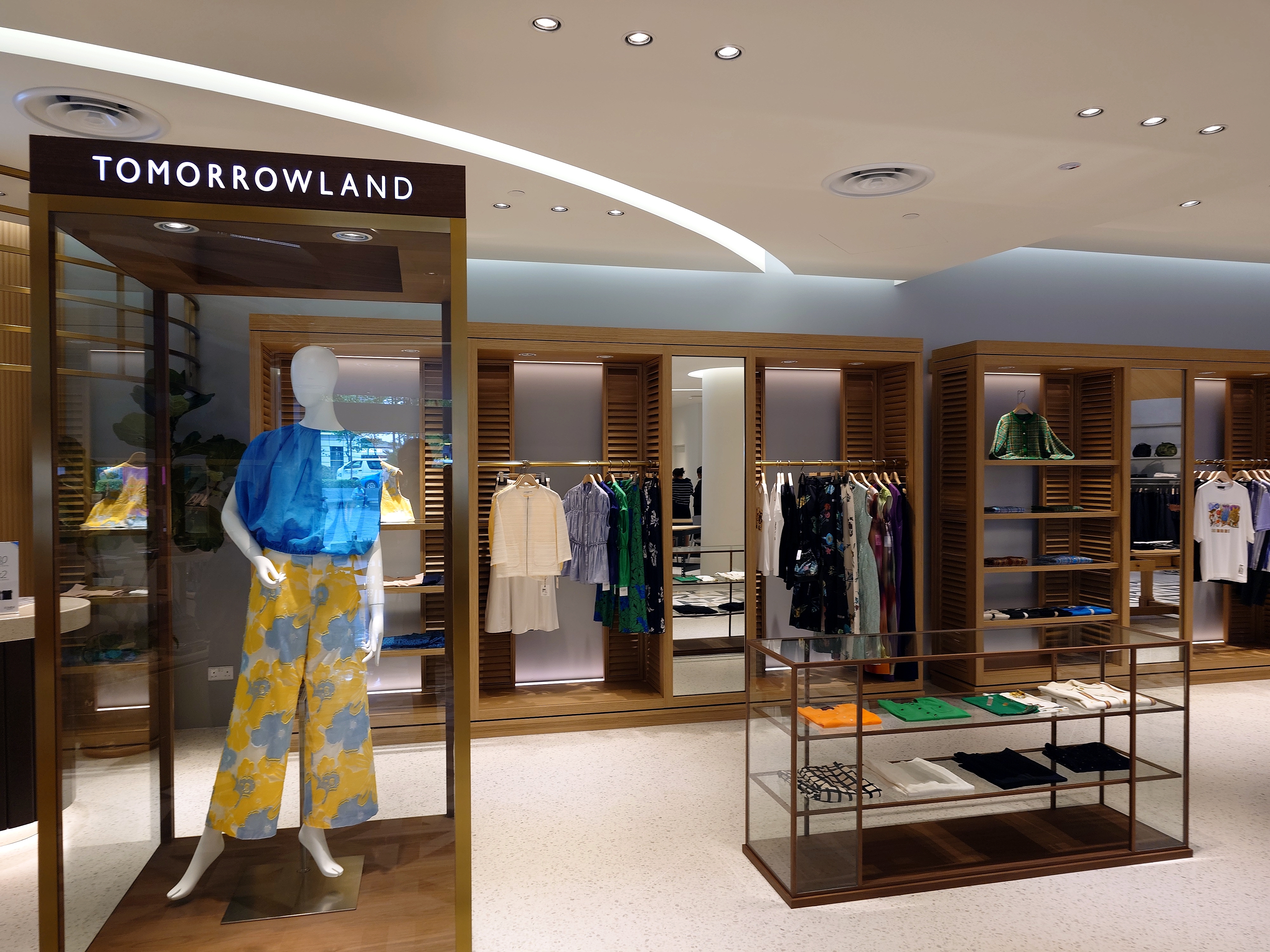
Tomorrowland, one of Tokyo’s staple stores, is firmly represented in the new Lumine
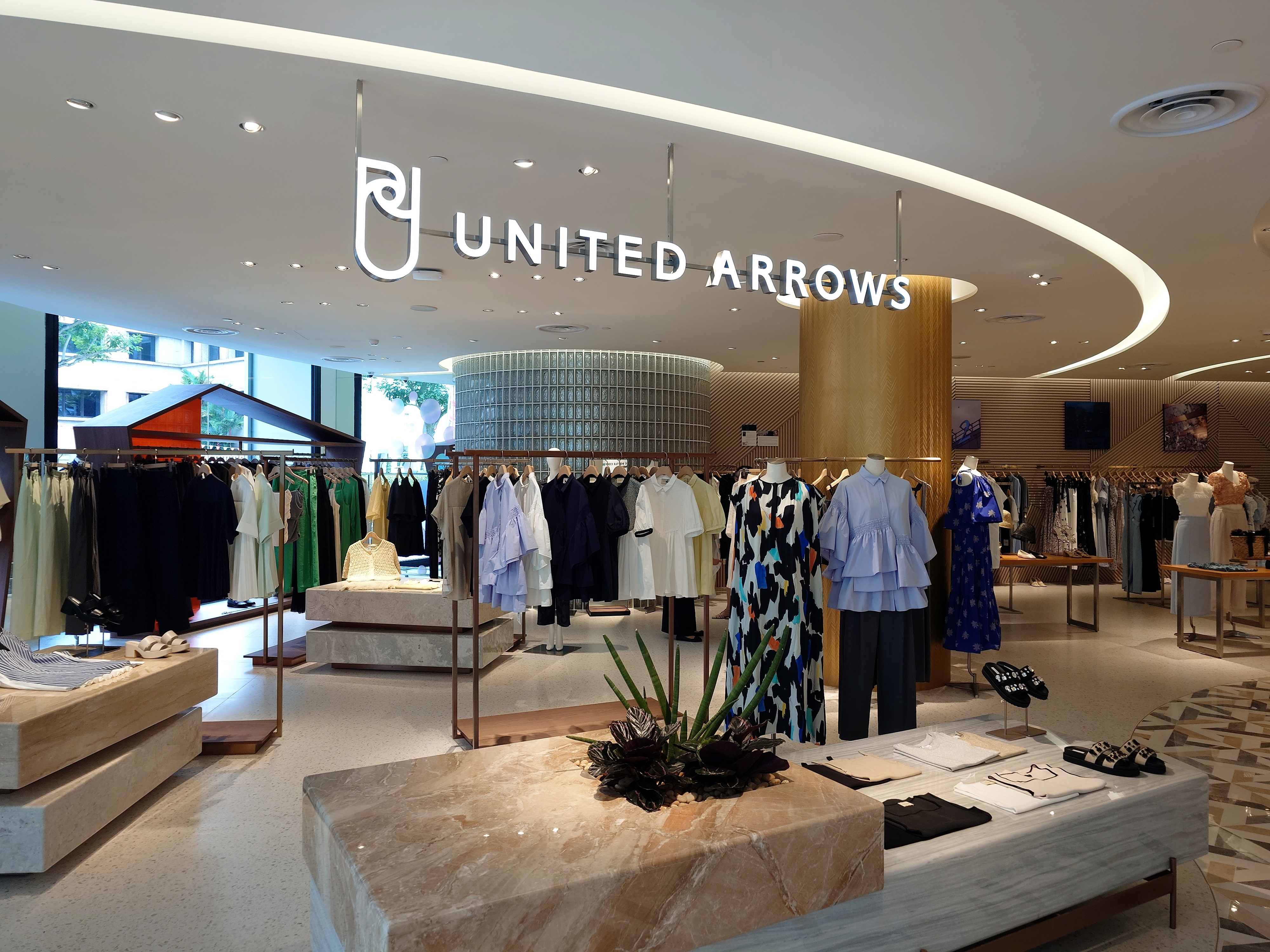
At the rear of the store (depending on where you enter), United Arrows with their generous space
Regular visitors to Japan or fans of nihon no fashion brands would be no strangers to what is stocked in Lumine. These are mostly what are known as ‘select shop’ labels in their land of origin (interestingly, they have omitted the fast fashion brand Wego). Tomorrowland, started in 1978 by Hiroyuki Sasaki, is a bastion of classic and feminine Japanese fashion and the reworking of what is known as Ivy League style. United Arrows was co-founded almost a decade later, in 1989, by Yasuto Kamoshita, Hirofumi Kurino, and Osamu Shigematsu. Both labels still somewhat conform to the kirekaji (or neat casual) aesthetics of the late ’80s. And there is also Beams, an older brand that opened in Harajuku in 1976, then known by the clunky name American Life Shop Beams. Why the moniker was picked is perhaps best explained by Beams’s own corporate message: Back in the day, the store sold American “fashion and homeware products displayed to feel like a UCLA student[’s] dorm room”.
While United Arrows (or UA, as it is popular known in Japan) is considered the earliest purveyor of kirekaji, all three brands have adopted looks (or moved in the same aesthetic direction) that can be considered “birds of a feather”, as SOTD contributor Raiment Young, also a regular Tokyo visitor, told us. “Especially Tomorrowland and United Arrows.” He added, “Take away their respective labels, and you might not be able to tell them apart. Except maybe the more street-seeming Beams”, which was known—and to an extent still is—for their amekaji (American casual) styles. Interestingly, Beams and United Arrows have a rather linked backstory. One third of the founders of United Arrows, Osamu Shigematsu, was formerly from Beams. When the company separated into two sides, following the retirement of its president in 1988, Mr Shigematsu started United Arrows with one of the split halves. Now, both brands are in the same SG store, but are not immediate neighbours.
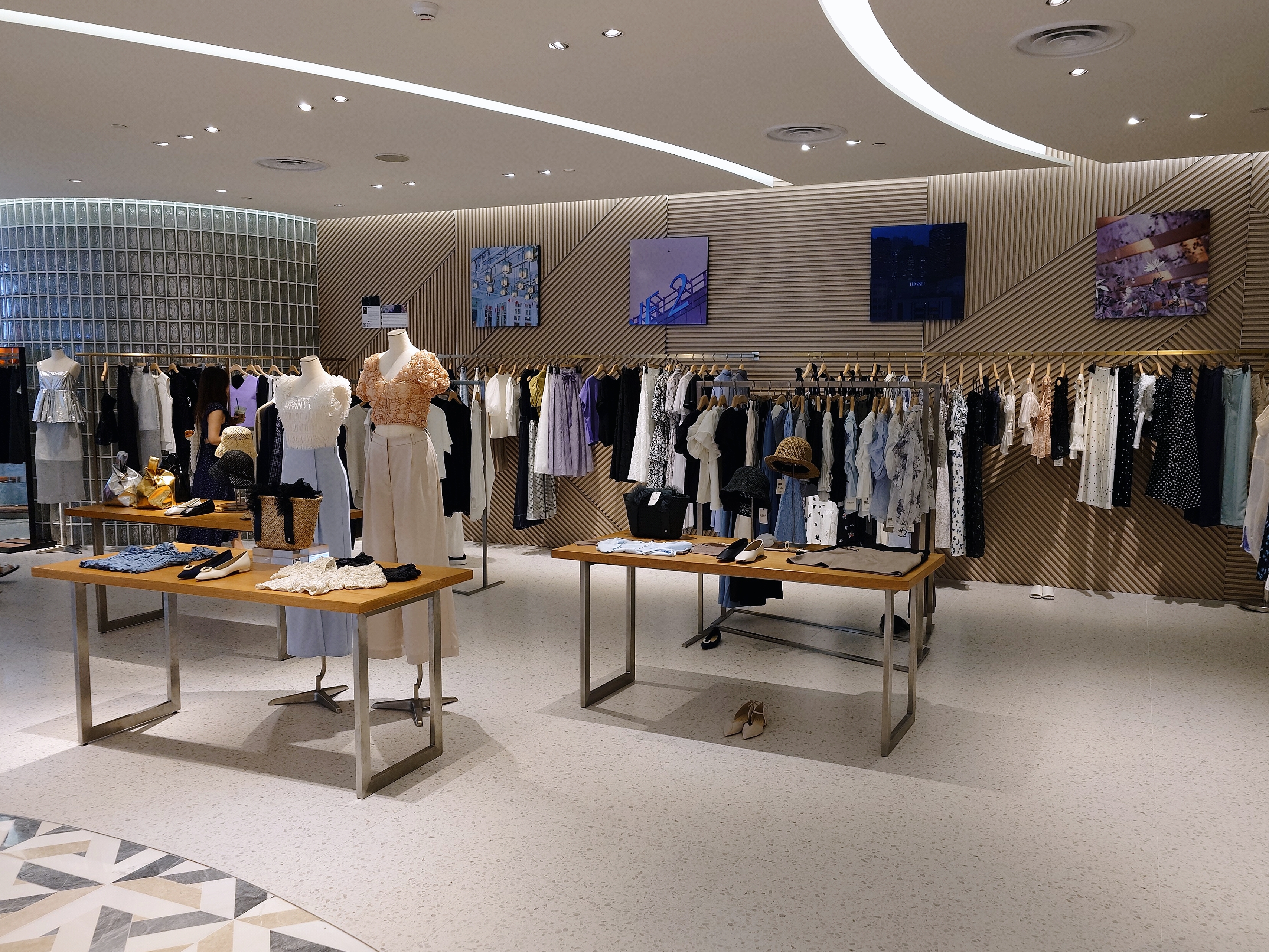
A zone that carries other brands, including Fray I.D and Snidel
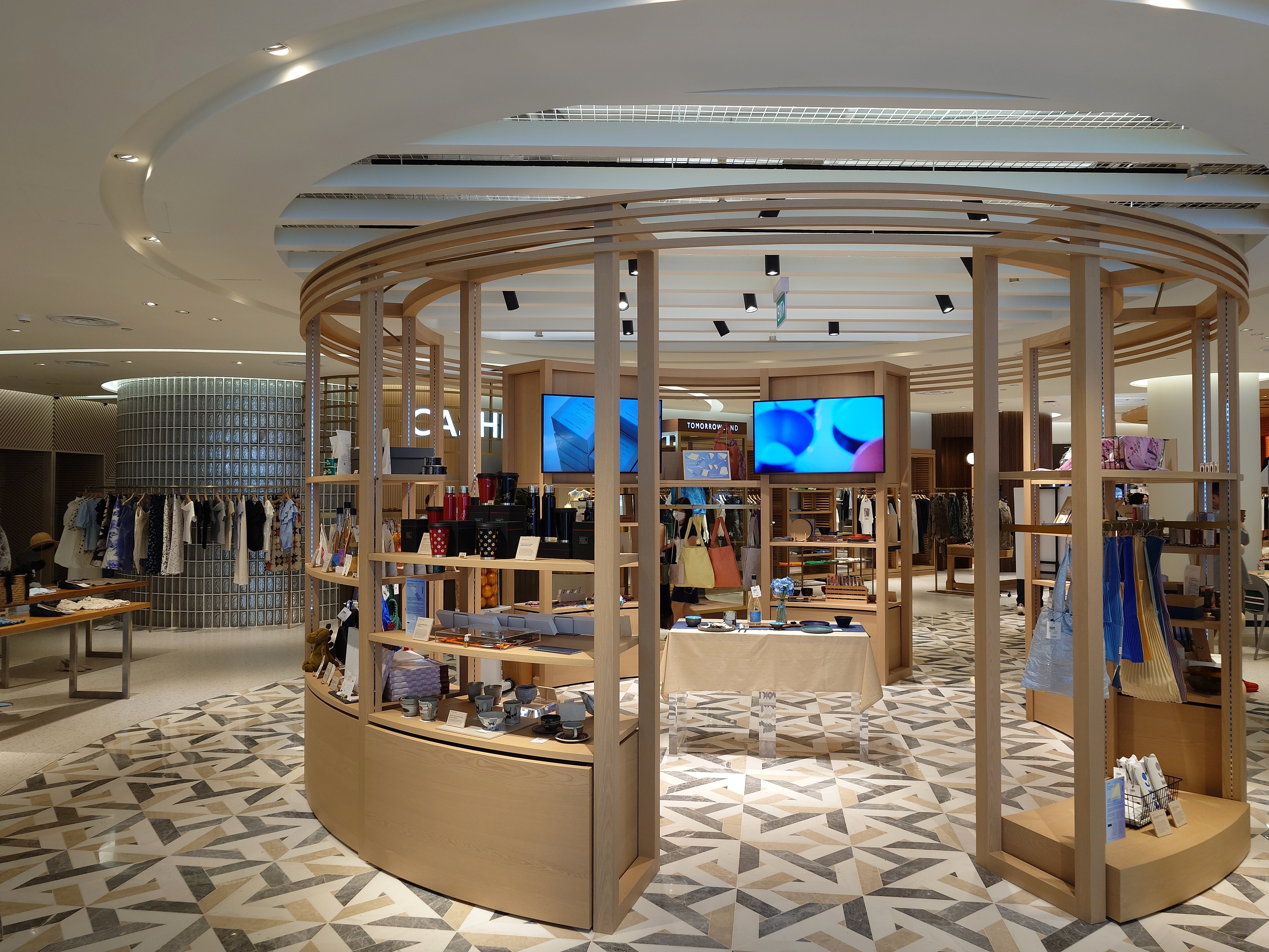
A central promotional zone that features specially selected merchandise
Among these key brands, with their own spaces in Lumine and their own visual merchandising (although all three look similar), Beams is likely the most familiar among SG shoppers. The brand, in fact, debuted here with a pop -up in the now-defunct Hong Kong-based Kapok store at the National Design Centre ten years ago, in 2014. It resurfaced in Takashimaya Shopping Centre in 2019, as part of the offerings of the Japanese-owned, Singapore-based Colony Clothing. Those who visit Bangkok regularly would have shopped at Beams’s two stores—in EmQuartier and Siam Paragon. As much as these Lumine brands represent the best of Japan’s select shops, they are—back on their home turf—also retailers of international brands. But, here, they offer only their eponymous labels. Mr Young told us that what is missing in Lumine to help it paint a more vivid select shop picture are two equally important clothiers—Journal Standard and Urban Research, both also tenants of Lumine in Tokyo.
A surprise inclusion in Lumine is Blue Bottle Coffee, whose cafe debuted in a Lumine building, NEWoMAN in Shinjuku in 2016. There debut here is, however, not a full-fledged cafe. Merchandise is available, but not brewed coffee and definitely no seats to enjoy a cuppa. When we spoke to a staffer, we were told that this was a “temporary” arrangement. Will there be a café in the future? Yes. Is this then a pop-up? The answer was also in the affirmative. While no coffee was available for immediate consumption, the space offers instant coffee (!), as well as coffee-making tools and such. There is space adjacent to the corner, but only “workshops” or coffee tasting—the staffer said—would be conducted (but online chatter suggests that the space will be converted to a cafe next year). One Blue Bottle Coffee fan told us that he was disappointed that it is only a “gift shop” at the moment. “Whenever I am in Tokyo or Hong Kong, Blue Bottle is definitely one of my compulsory coffee stops”. During our visit earlier today, the corner drew the most shoppers.
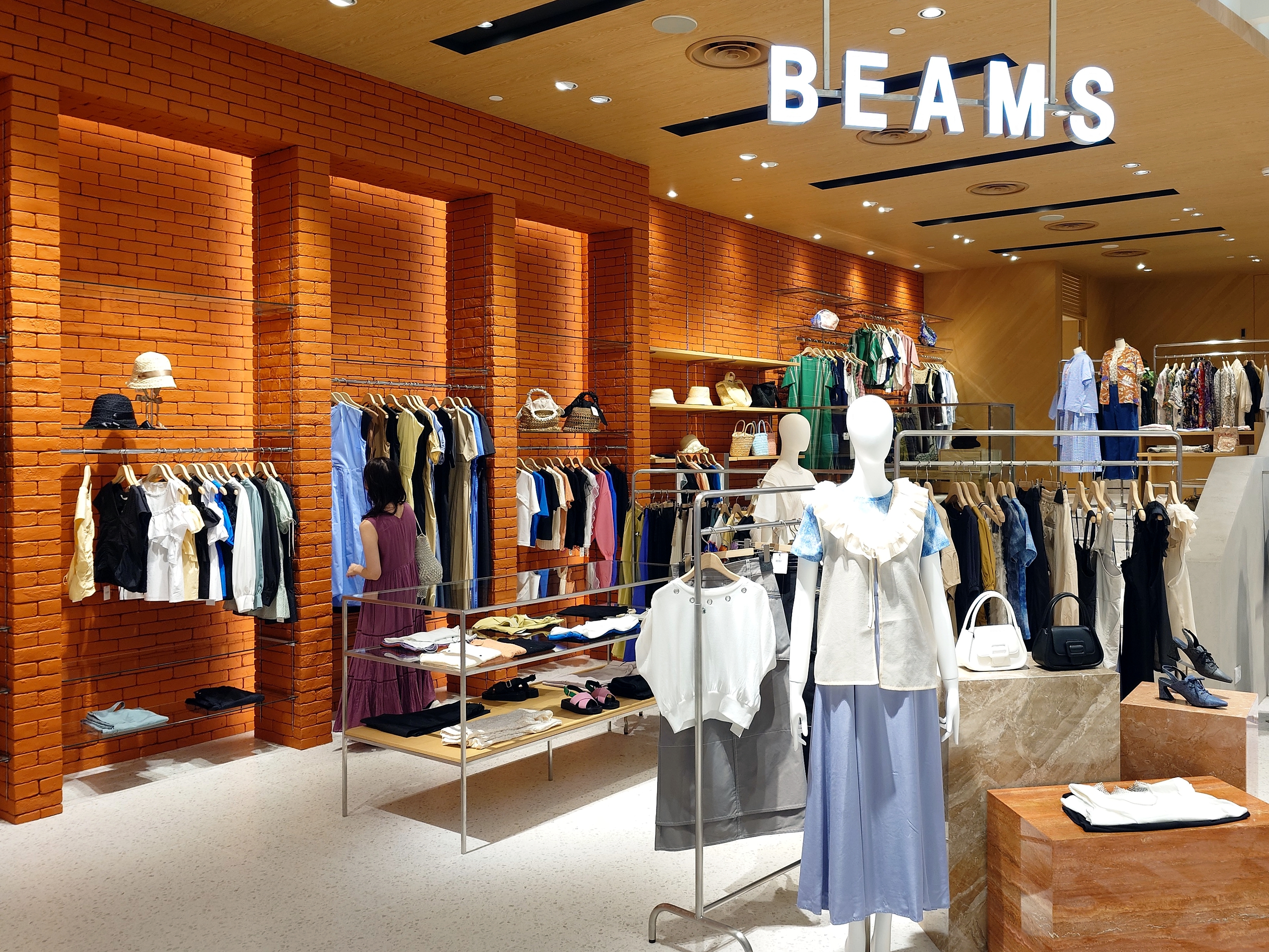
The split-level space of Beams in Lumine
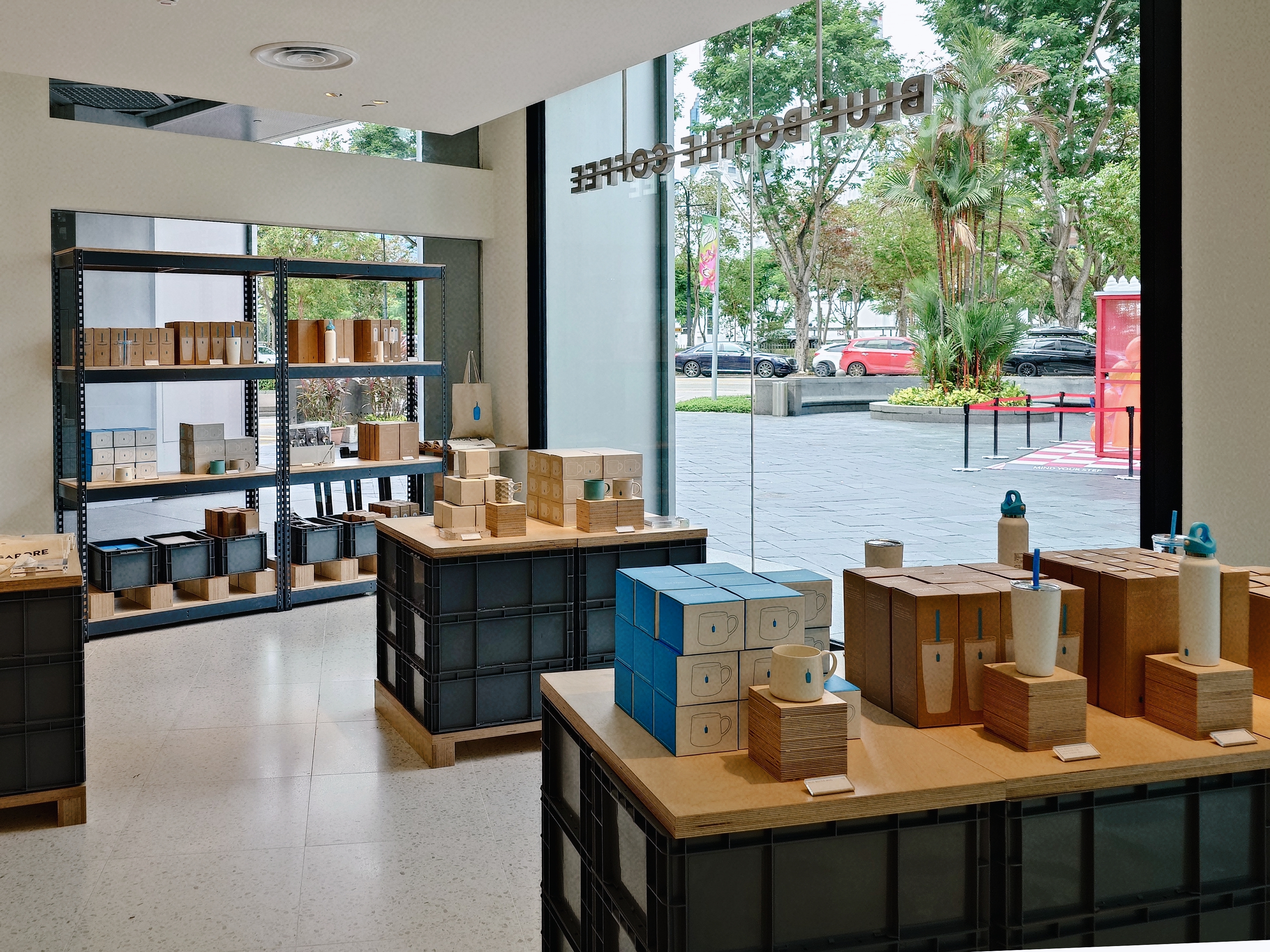
Blue Bottle Coffee debuts in SG with a merchandise corner, not café
Although the current merchandise mix is stronger than it was when they were at Clarke Quay Central, Lumine still presents the results of what is rather conservative buying. This is quite the opposite of what the store states in its opening promotional material: That Lumine has gained “acclaim for introducing cutting-edge fashion trends and creating new lifestyles for women…” While the assertion might be true for Tokyo, it is hard to see the Singapore store at the forefront of any particular direction or trend. A smallish zone, featuring other brands not under the select shop brands mentioned earlier—such as Fray I.D and Snidel (labels/shops under the Mash Group), both Lumine tenants—attests to the shying-away from anything really revolutionary. The ultra-feminine selection hints at the nyutora (new traditional, but still conservative) styles that were prevalent in the late ’70s. Perhaps this is Lumine’s dalliance with the retro.
To be certain, we were not expecting what is known in the Japanese industry as ‘Designer and Character (or DC)’ brands, dominated by Comme des Garçons and newer labels, such as Sacai, but we did hope for a smidgen of the bold or the brash (but not Harajuku-kooky). Lest we are mistaken, Lumine is a good place to shop and to see well-made clothes in a stylish environment that Design Orchard and their attendant brands could learn from. While the space is comfortable and easy to navigate, we were rather surprised by the indifferent service. There was no welcome by the staff to the store, no smiles, no intros to the brands, no recommendations of merchandise. We are not saying that the service is surly, just inattentive, distant, cold. For a fashion store, the staffers—a grand total of three when we were there—were not dressed to reflect its image. Not that they have to be togged to qualify for “Staff Snap”—a uniquely Japanese marketing feature, but so-so is one step shy of banal.
Photos: Galerie Gombak
 Style on the Dot