European labels, it seems, are not looking at their own aggressive expansions and ho-hum merchandise offerings, as the post-COVID 19 luxury boom in Asia slows down
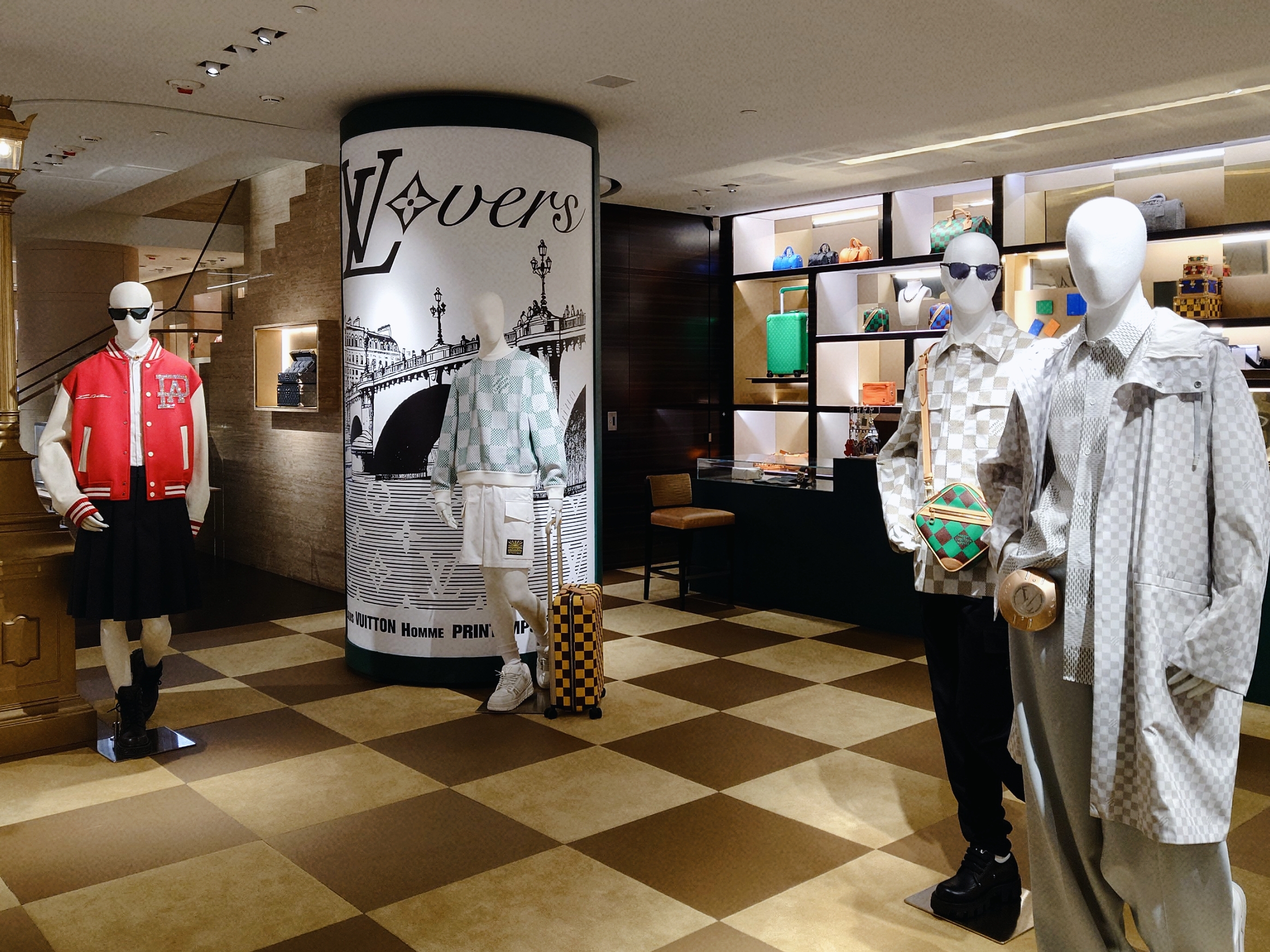
Louis Vuitton in Hong Kong, stocked with the men’s spring/summer 2024 collection
Luxury fashion business is not doing well. And many are saying it is because of collapsing demand in China. The media is going along with that too. The BBC announced that “luxury brands suffer as Chinese shoppers hold back”. LVMH, in earnings reports, stated that sales in Asia, including the world’s second largest economy China (but omitting Japan), dropped by 14 percent in the three months to the end of June. This is worse than the six percent downswing seen in already discouraging Q1. While the figures may unsettle the conglomerate’s CFO, they would not set regular consumers to imagine that luxury brands are suffering. Traffic at Louis Vuitton stores and those of other brands in the LVMH stable may have slowed down, but they do not appear to be languishing in some retail misery. Dior is still trying to sell you more bags.
Sure, the fortune of LVMH chairman and CEO Bernard Arnault has declined too. Bloomberg reported that Mr Arnault “lost more wealth than any billionaire in 2024”. His personal fortune dropped by US$20 billion (or about S$26.9 billion). As a rexult, Mr Arnault’s global wealth ranking “has tumbled to No. 3 from being the world’s richest individual as recently as June.” Is it really as tragic a plunge of personal fortune as described? Is Mr Arnault no longer a billionaire? Is he forced to sell his private jet? Is sympathy in order? Unlikely for most since Louis Vuitton will be prominently featured in the upcoming Olympics in Paris. While winners receive their medals presented on trays with LV monogram, it is doubtful that viewers all over the world would think of how not wealthy Mr Arnault has become.
Mr Arnault’s global wealth ranking “has tumbled to No. 3 from being the world’s richest individual as recently as June.” Is it really as tragic a plunge of personal fortune as described?
“The decline in Mr Arnault’s fortune,” Bloomberg continued, “is rooted in the economic malaise in China, a market the luxury industry has long relied upon.” A single cause. It’s China’s fault. Sure, China’s post-COVID 19 economic recovery has been described as “patchy”. But, there are other reasons why the Chinese are not buying as much as they did. The distaste for showing off and the penchant to save their money have turned Chinese consumers away from the luxury flagships in may cities in their country. But there are also causes not entirely connected to Chinese economic downturn or consumer restraint. It is surprising that LVMH has not considered that, perhaps, they are not creating products that consumers really want. And worse, the undesirable merchandise are tagged with even less enticing prices. For a while now, luxury fashion, whether the merchandise or store experience, has not quite lived it up to its name.
France’s other luxury conglomerate Kering, the parent company of Gucci and Balenciaga, too had posted dismal sales figures. It is so disheartening that, according to Reuters, the company has projected a 30 percent drop in operating profits for the second half of the year. The news agency attributed the likely poor performance to come to “sluggish China demand”. The figure comes on the back of already discouraging Q2 performance—a 42 percent drop. Sales in Asia, even with rising consumption of Kering brands in Japan, has dipped by 25 percent, with Hong Kong and Macau in particular reportedly experiencing worrying declines. Kering’s Gucci—often referred to as the group’s “key” or “star” brand—is dragging overall business down. The turnaround planned for Gucci is not materializing.
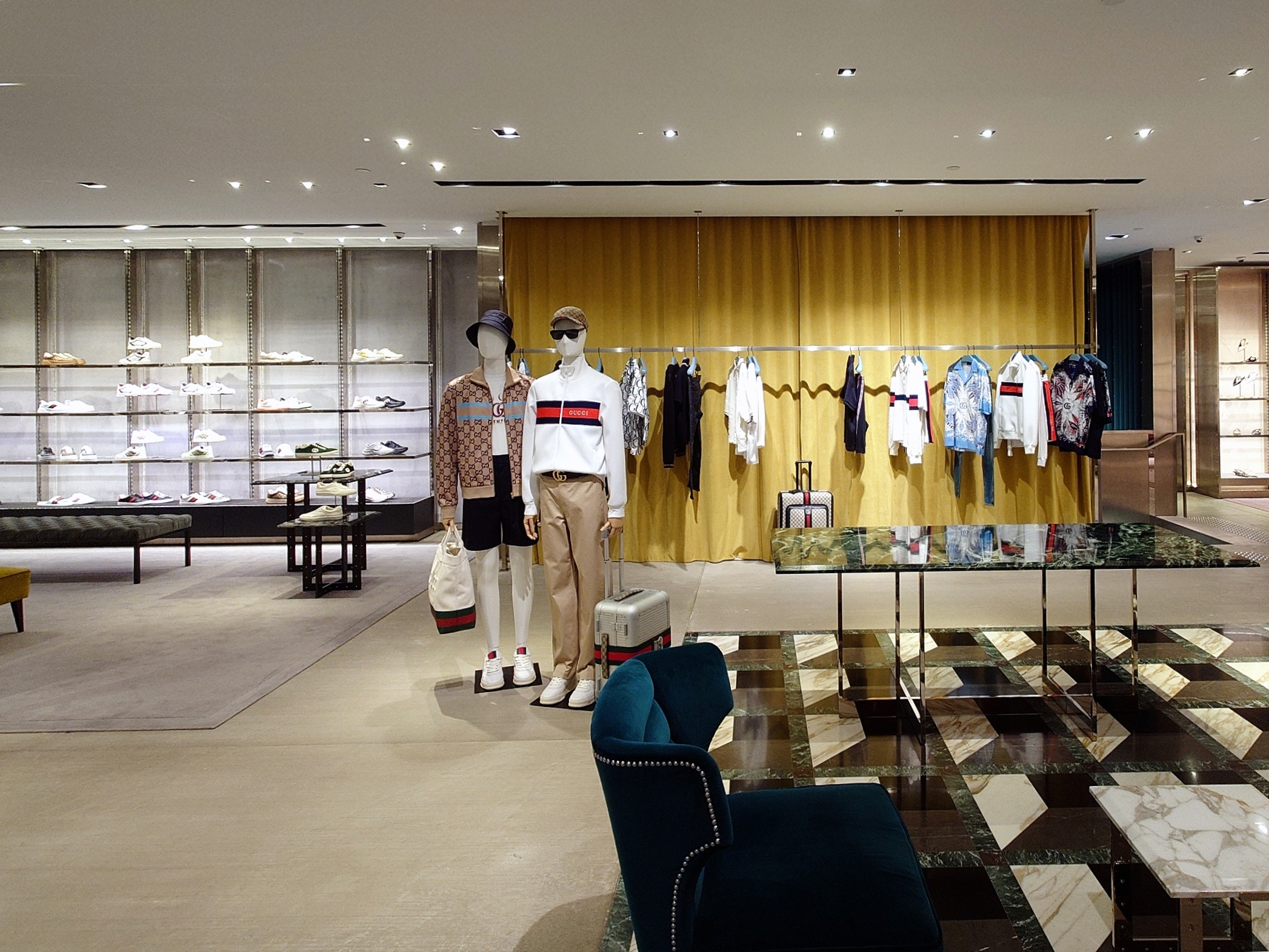
A shockingly customer-free Gucci store in Hong Kong’s Times Square, with very little merchandise to entice
On paper, the reworking of Gucci should work. But it has not. What is more curious is how devoid of shoppers Gucci stores have been. Although Kering says that the Gucci rollout of products by Sabato de Sarno is “well received”, according to the Financial Times, their boutiques aren’t buzzing with shoppers nor filled to the rafters with merchandise, as they once were. In Hong Kong, the Gucci store in Times Square in Causeway Bay and at the Landmark in Central are earily quiet, even on weekend afternoons. At the latter, racks are curiously sparse even when it was at the height of the summer selling season. Walking into the store from the entrance on Queen’s Road Central, one is confronted with racks against walls. Most of them are hung with two to four garments. And the shelves are not thronged with bags, once so high in demand. Walking around the mall, it is hard to see Gucci bags on even an arm.
Interestingly, the media has not made much of Kering Chairman and CEO François-Henri Pinault’s loss of riches or how he has tumbled, as rival Bernard Arnault apparently has. Last September, Mr Pinault acquired the Hollywood business Creative Artists Agency (whose clients include Zendaya) for €7 billion (or about S$10.2 billion). It does not look like Mr Pinault is suffering regardless of the declining sales of his labels in China. It is understandable that so many brands desire a slice of the China pie, but what happened to putting too many eggs in the one basket that many others are keen to fill as well? The luxury business is essentially the sale of non-essentials. And, increasingly, these items are losing their allure when merchandising is based more on sales charts than line sheets. Fault China now, but things in the Middle Kingdom may not look up too soon. Eyes are now on the summer Olympics in the home city of Bernard Arnault. As a major sponsor of the Paris Games, it is hard to imagine that LVMH cannot handle a dent in their fortunes.
File photos: Perrier Chow for SOTD
 Style on the Dot