For autumn/winter 2024, Kim Jones seemed to be in his elements as he explored the traditionally not-quite-masculine pursuit of ballet
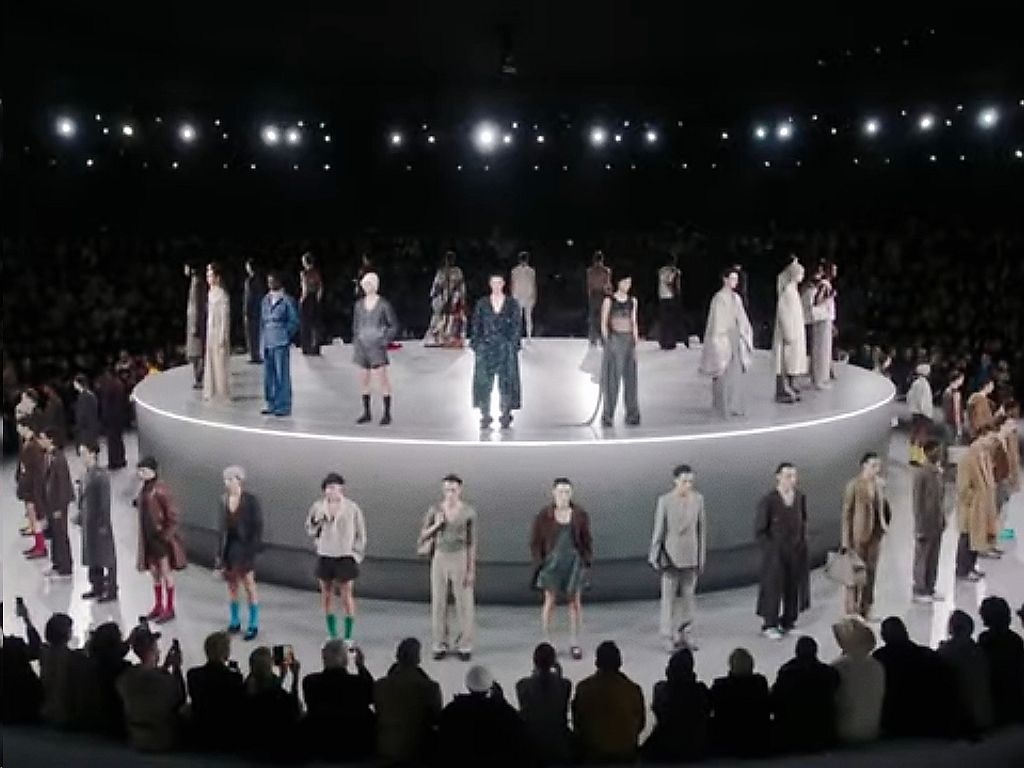
This season, Dior’s menswear showed that a simple production and a centre of the runway/stage that rotated like a lazy Susan (and then rose, looking like a tiered cake) were all you needed for a spectacular show. Yes, a brand can dispense with theatrical scenography or massive set pieces, or fake snow, and still deliver a spirited show and collection. Under a stimulated and exaggeratedly starry sky at an annex of the King Louis XV-founded École Militaire in the 7th arrondissement also home to the Eiffel Tower), Mr Jones delivered what, to us, was one of the most inspired collections of his career at Dior. Sparked by the most exalted of dances—the ballet, he showed ensembles that were a romantic interpretation of what could be costumes seen on stage or what dancers wear when out of the theatre, even if the move was more jeté than pirouette. Mr Jones explained that he was inspired by the Russian danseur noble Rudolf Nureyev and his frequent stage partner Margot Fonteyn. And between them, Mr Jones put out clothes that could have been a fusing of the styles of the two.
But, the results were, surprisingly, not too obvious (except for the tights and the pumps) or convenient in the conflation of the masculine and feminine (and, to be sure, the lines was rather blurred). Mr Jones explained in the show notes: “I had been thinking about the relationship between the ballet dancer Margot Fonteyn and Monsieur Dior. The masculine interpretation of this also involved thinking about her most famous dance partner: Rudolf Nureyev.” (Interestingly, Mr Jones picked Margot Fonteyn (perhaps because she was, conveniently, a Dior customer), rather than the Danish dancer Eric Bruhn, who was Rudolf Nureyev’s lover after the Russian defected to the West in 1961, at the height of The Cold War. Both men were considered “Titans of the Ballet World” back in their day.) As it turned out, Mr Jones’s paternal uncle Colin Jones was a ballet dancer too, but who also photographed. The elder Jones apparently became acquainted with Mr Nureyev, and had focused his lenses on the star on stage and in private moments (surely in those photos, there were snapshots of Mr Nureyev and Mr Bruhn). The designer had access to those black-and-white pictures, and that apparently led to ideas that informed the collection.
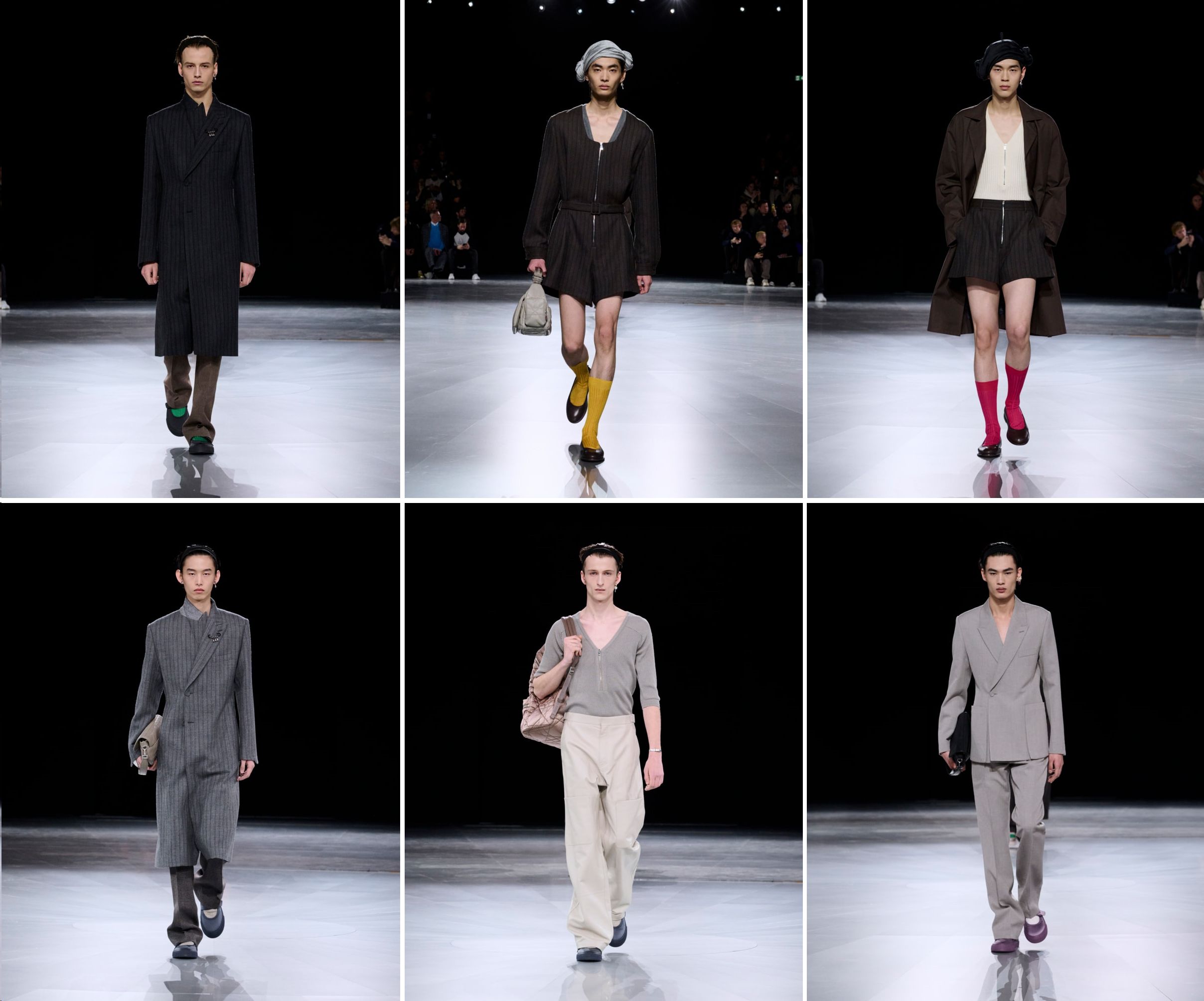
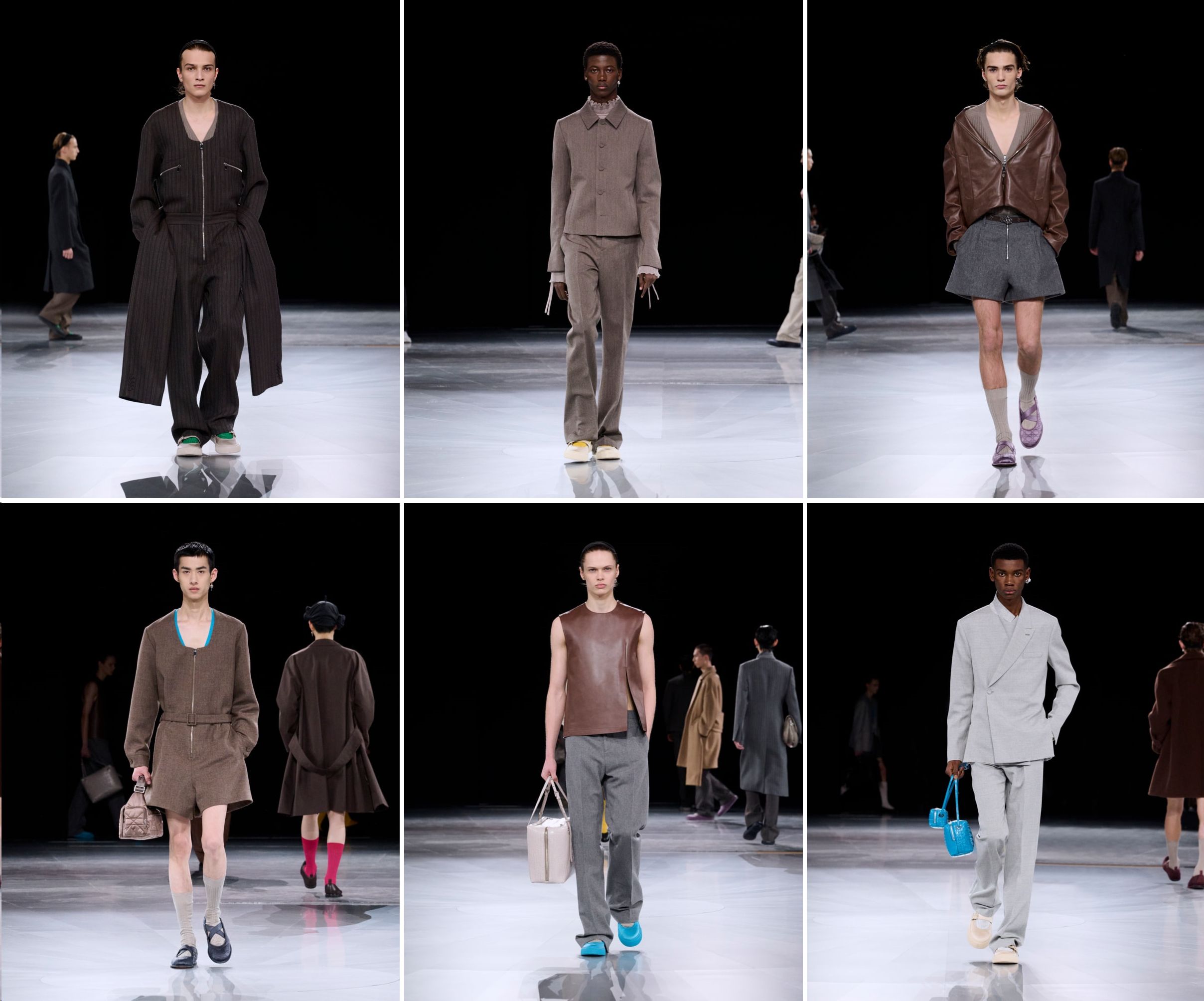
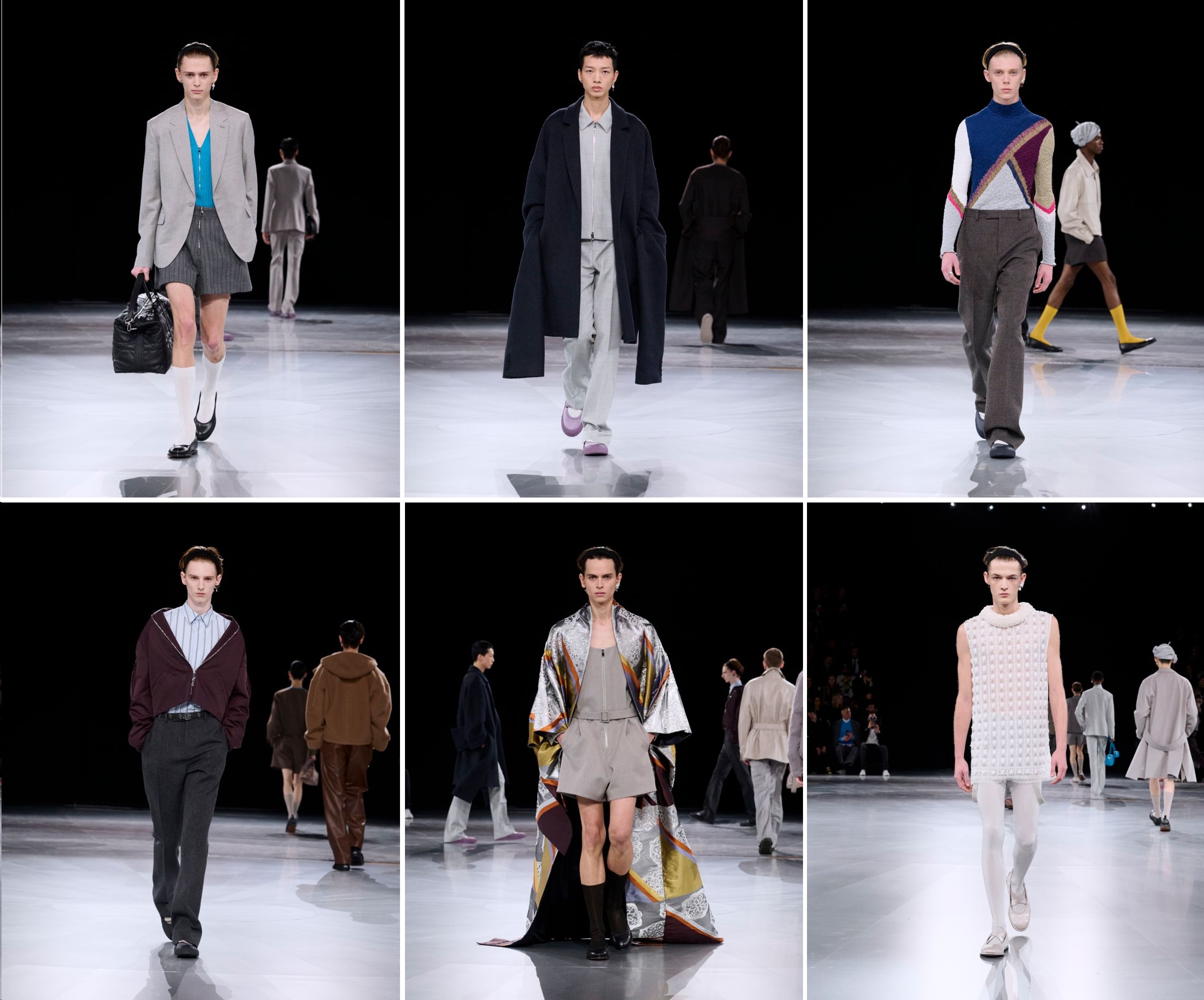

Mr Jones is not an avant-gardist as many of the Japanese designers showing in Paris are. He doesn’t deconstruct, nor does he hybridise. But this time there was an approach that was more experimental than he has ever been. And in that, we were rather captivated. The collection was supposed to be couture-driven (half of the looks—the last 20—were couture pieces, a first for Dior men), and that perhaps explained why Mr Jones could output what he did. Fortunately, the well-considered pieces did not look retro-centred or evocative of the times the two dance partners were at the height of their fame. What perhaps was also appealing was that the clothes did not look outrageous. These were pieces that captured the spirit of Mr Nureyev the fashion adopter, but channeling the the energy and styling bent of today. The rompers may not be the next big, but they have been wardrobe staples among women for a long time. The flared shorts (like the rompers, with visible zips) would need some time to be popular, but given how warm winters can be or how short, they may become necessities. The long kimonos-as-opera-coats (or even Arabian burnooses) might also take a while to catch on, but when the next Andre Leon Talley appears, it might be di rigueur.
Mr Nureyev’s love of wearing his shirts unbuttoned to reveal his chest did not, fortunately, make an appearance, Rather, the centre-chest exposure came in the form of deep V-neck zip-front jumpers or scooped neck rompers. And rather than draw from the Tartar dancer’s predilection for the exotic (Mr Nureyev was into Eastern styles), he gave a hint of it, such as the draped troupers seemingly a nod to the sarong or knotted fabric caps in place of turbans. Mr Jones was not the first designer to draw inspiration from Mr Nureyev’s personal style; John Galliano did too, as seen in the fall 2011 collection for his eponymous menswear (his last before his infamous fall from grace, which he claimed—in the Charlie Rose interview of 2013—resulted from him “heavily researching” into the life of Rudolf Nureyev that led to his anti-semitic outburst, resulting in the dismissal from Dior). This collection was, however, not yet Kim Jones’s virtuoso performance. As Rudolf Nureyev—played by the Ukrainian dancer Oleg Ivenko—said to the French ballerina Claire Motte in the 2018 biopic, The White Crow, “If I had danced, you would remember.”
Screen shot (top): dior/YouTube. Photos: Dior
 Style on the Dot