If news reports are true, Phoebe Philo’s debut “edit” is “sold out”, barely a week after the online launch
After the initial post on the newly created Phoebe Philo Instagram page in February, which has hitherto garnered 367K followers, the brand’s IG grid is currently blank—kosong. There is only the platform-generated message, “No post yet”. Prior to those images seen on the brand’s website, which went live on 30 November, virtually nothing was known about the clothes. The collection was finally seen later that day, at 3.20pm, London time. According to a recent report by The Guardian, “just hours later”, what were made available were “sold out”. We have been unable to verify that (however, a check on the website the day after its launch showed that some pieces were still available). If the report is true, Phoebe Philo enjoyed an incredible sell-through even before the end of the business day on launch date. That would be as good as the drops for most of the H&M designer collaborations. And Ms Philo did not even have to pitch her prices low.
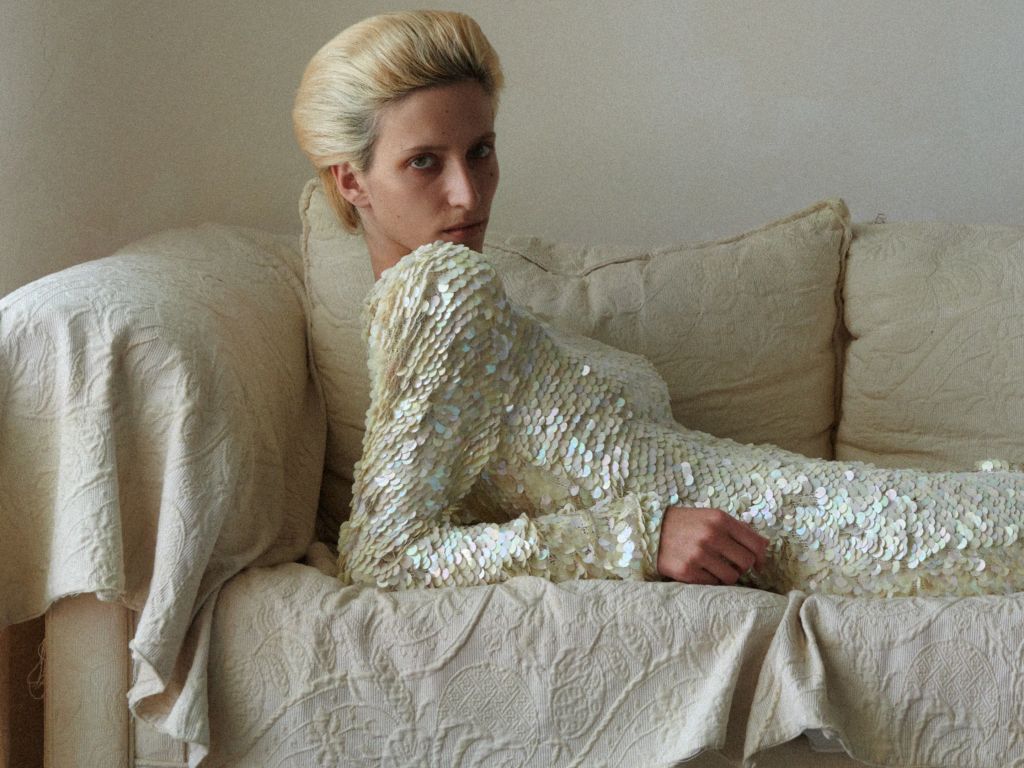
The launch itself was fairly restrained. The brand did not hype their entry into the market. Their fans did it for them. Even the press. Vogue, typically enthusiastic about the labels they approve of, proclaimed in a headline that the “Phoebe Philo eponymous debut is a confident, uncompromising delight”. Many of enthusiasts, too, seemingly shared the same pleasure that the launch collection gave, with one general disappointment: the eye-wateringly high prices. The sell-out pieces, even when they were not marketed as limited editions, indicated that the brand knew how much women were willing to pay for the pieces that they deem covetable, before even touching them. Or, how alluring the name is. It is not immediately clear if the clothes really tugged at an unfulfilled desire.
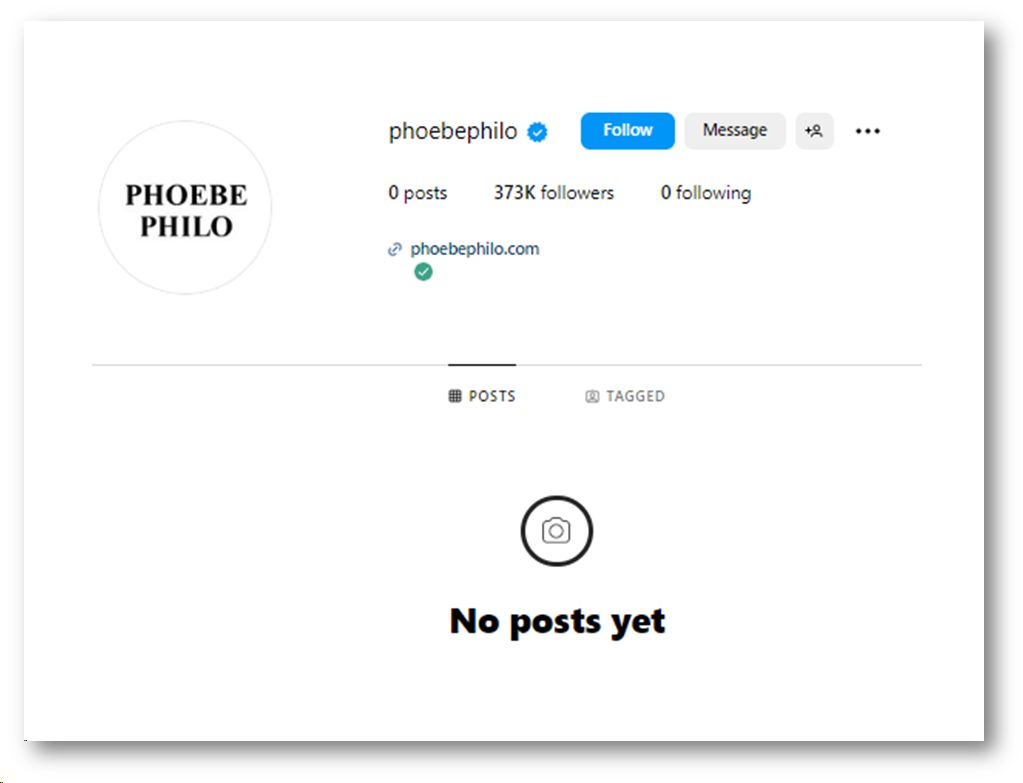
Phoebe Philo Instagram page on 2 November 2023, three days after the launch of her collection. Screen grab phoebephilo/Instagram
Phoebe Philo, the label’s seeming success does indicate one thing: you don’t need a flashy name, splashy products, staggering breadth of range, or even an expensively appointed store to arouse demand. As Cathy Horyn pointed out in a long and glowing review for The Cut, “many people don’t know Philo’s name, though they might have worn her designs.” But the familiarity with her name among fashion folks—not necessarily the indiscriminate shopper—is not at all modest. And between the time she announced that she would return to the business and the day the collection hit the e-store, there were many profiles on her, explaining her appeal, analysing her success, even when she did not grant an interview. In all likelihood, Ms Philo is not interested in designing for “many people”. She has even been accused of not being inclusive enough.
Phoebe Philo may be the archetypal woman designing for women, especially those described as “grown-up”, as if they are a rare breed, but—if her sizing is any indication—she probably isn’t keen on catering to every woman. Her “limited” sizing was, unsurprisingly, called out (it is not known if the complaints were made by Philophiles). Although, she offered sizes up to UK 14, and 16 for some pieces (or, XL and XXL here, respectively), many (namely Americans) thought her sizes “fell short of catering to plus-size bodies”. Phoebe Philo is not Cotton-On; it should not be expected to be able to serve every body type. Most luxury brands do not. If things are to change, it won’t happen immediately, and certainly not upon the shoulders of one designer. It has to be a cultural and professional shift. And, there is that now-widely-viewed video, in which the model Iman pointed out that Ms Philo had refused to cast Black models for her Céline shows. Phoebe Philo now uses black women in their images. But, still, the novel brand is not inclusive or embracing enough. Is it because the merchandise is willfully out of reach for so many? Nothing is worse than being left out of the frenzy.
Photo: Phoebe Philo
 Style on the Dot