There were as many looks as the last, but what did they really arouse?

The Burberry show took place under a massive tent—printed with the brand’s check but amplified—in verdant Highbury Fields, in the north London borough of Islington. Designer Daniel Lee told Suzy Menkes (which she shared on Instagram) that he “live[s] five minutes away from here”. But the leafy grounds did not provide a foretaste of what was to come—a surprisingly unassuming follow-up to his debut collection. Burberry is banking on Mr Lee to turn the brand around. The strategy seemed to be keeping the looks in favour with stars/fashionistas, many of whom arrived wearing the blown-up, diagonal checks of the pre-spring 2024 collection—uniform dressing at its best. If not the monogram, definitely the recognisable checks, now on the canvas used for the marquee.
The collection was reminiscent of predecessor Riccardo Tisci’s early output, if not aesthetically, at least in spirit: Something for everyone. The approach commensurate with Burberry’s reported target of generating £5 billion of earnings, soon. So the merchandise must not be challenging. They needed to maintain the mantra “sell”. Or, the kind of clothes and accessories stars wear to run errands and be photographed in. But you’d think Mr Lee would have wanted to make a bigger splash with the sophomore collection after settling into the seasonal grind. Or revive the “cool Britannica” the brand was able to evoke during the Christopher Bailey years. Rather, as he told the press at a media preview, “ultimately we want to design things that people want to wear.” And style them that way too.

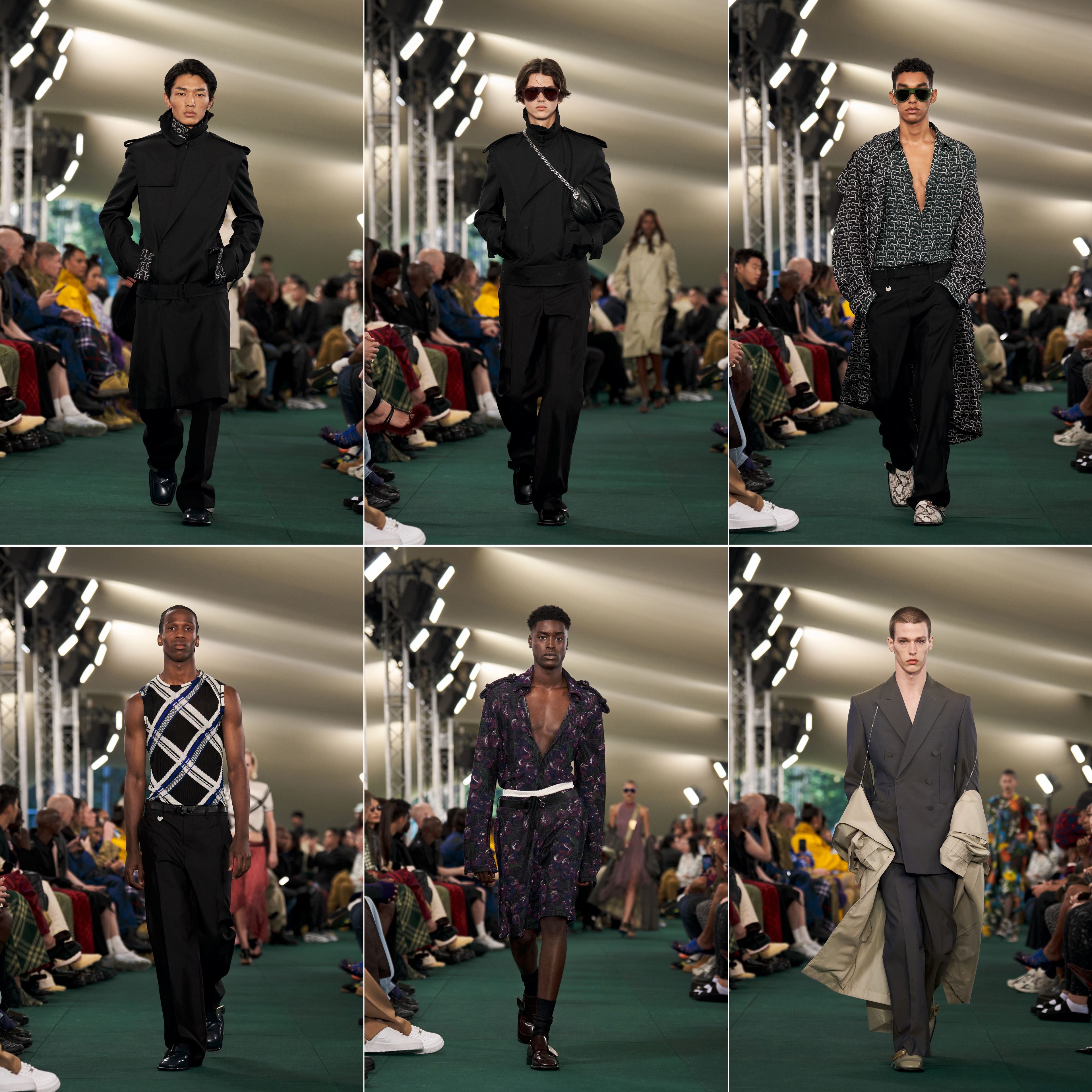
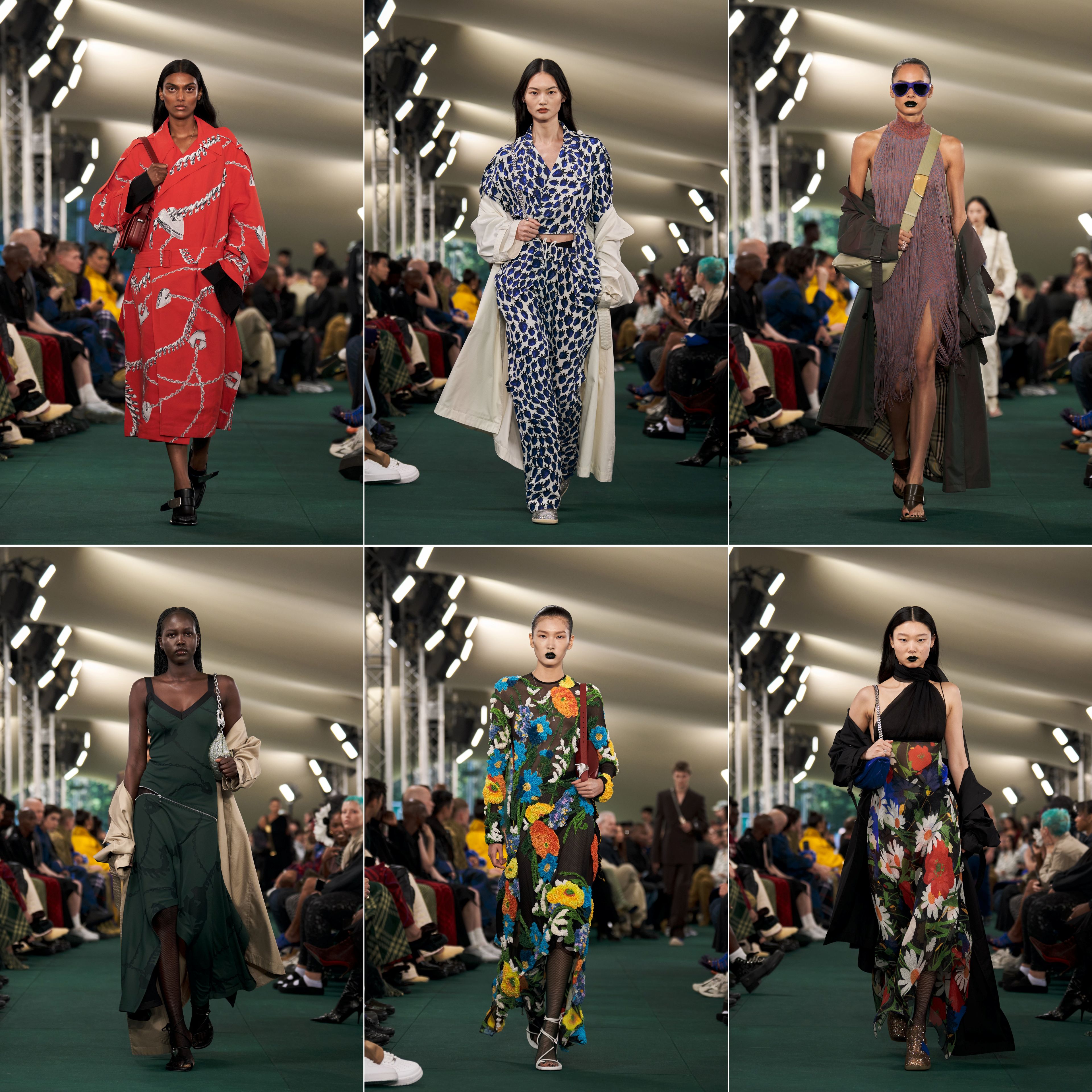
But he did not say who the people might be. Despite Mr Lee’s vague “modern touch” (as he is often described to be gifted with), many of the pieces seemed conceived to target the group once associated with Burberry’s going déclassé some 20 years ago: the chavs (or the equivalent of our bengs). This was especially so in how the prints and patterns were employed—a tank top with the magnified house checks, shirts with the TB monogram, and dresses printed with digitally composed heraldry of the knight on horseback, but now sort of deconstructed, and linked to form a repeated pattern with chains and, strangely, carabiners—a nod to Burberry’s gorpcore aspirations? Not forgetting the English summer blooms that have been the driving force of the Chelsea Flower Show, but Mr Lee made them large, as with Richard Quinn’s (who, interestingly, had put massive flowers on hiatus this season). If flowers are not your thing, there is always the Hitchcockian blue—“Burberry blue”—strawberries.
Mr Lee wanted his customers to be reminded of Burberry’s legacy in outerwear, especially those picked for inclement weather. He showed considerably many pieces—somewhat traditional, but worn belted below the waist or unfastened—less of a protective garment, more of a style statement. Much of the pieces effected the great cover-up, although, increasingly, layering is not crucial in warmer springs and sweltering summers. And you needed to wear something under the trenchcoat and kin, so Mr Lee offered pretty calf-length dresses that would be easy to pick out for any wardrobe even if the wardrobe does not need them. After a promising start last February, there was a sense of ennui watching the latest show, livestreamed close to midnight here. Perhaps it was the rather late hour. When we woke up this morning, we could not remember the show, let alone what stood out.
Screen shot (top): Burberry/YouTube. Photos: gorunway.com
 Style on the Dot