At his debut for Helmut Lang, Peter Do sent out clothes evocative of the brand’s glory days, but was it enough?
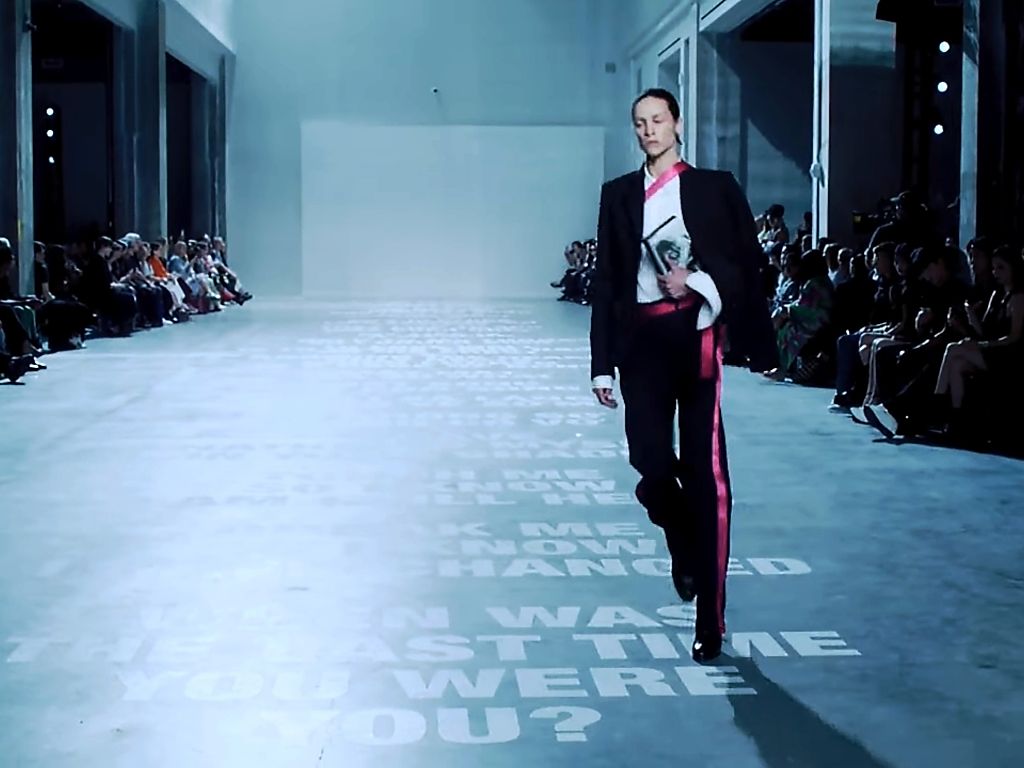
Austrian designer-turned-artist Helmut Lang left the house he founded in 2005. Despite its European provenance, many consumers these days consider Helmut Lang an American brand. Mr Lang did move his studio and operations to New York from Vienna in 1997. He then departed his own label—at the time owned by the Prada Group. Helmut Lang was then acquired by Link Theory (main brand, the New York-based brand Theory) whose parent company is Fast Retailing, the Japanese firm behind Uniqlo (which intermittently carries Theory). In any case, Helmut Lang has never really been disassociated with the Big Apple, even when the brand went though quite a roster of designers: The couple behind Habitual, Michael and Nicole Colovos, and Shayne Oliver of Hood by Air (offering just one season) and “editors-in-residence”—Isabella Burley and Alix Browne. New York had really become its home. Which may explain why New York’s yellow cab lingered longingly in the film that prefaced the NYFW runway show featuring the debut of American-Vietnamese designer Peter Do (pronounced ‘dough’).
The multiple takeovers of Helmut Lang the label did result in an identity crisis for the brand. In an act of (possibly) defiance, Mr Lang burned nearly his entire archive when he made a very sudden exist, not just from his brand, but from the fashion industry. Much of what was recreated for the label by subsequent creative heads did not revive the minimalist-but-not-austere elan that Mr Lang had offered through much of the decade that saw him at his loftiest. The resultant idea of ’90s minimalism in the years of keeping his brand alive had less to do with the legacy of the house, but more in common with the aesthetical bent of, say, Calvin Klein (pre-Raf Simons), then clearly inspired by the emerging minimalism among the Europeans but still constrained by the inability to go all the way. You get a sense that the predecessors of Peter Do did not really know what to do with the brand entrusted to them. So they created a feeling, a sense of the past, but with the needs of the contemporary, replete with the commercialism that evokes desire in America.
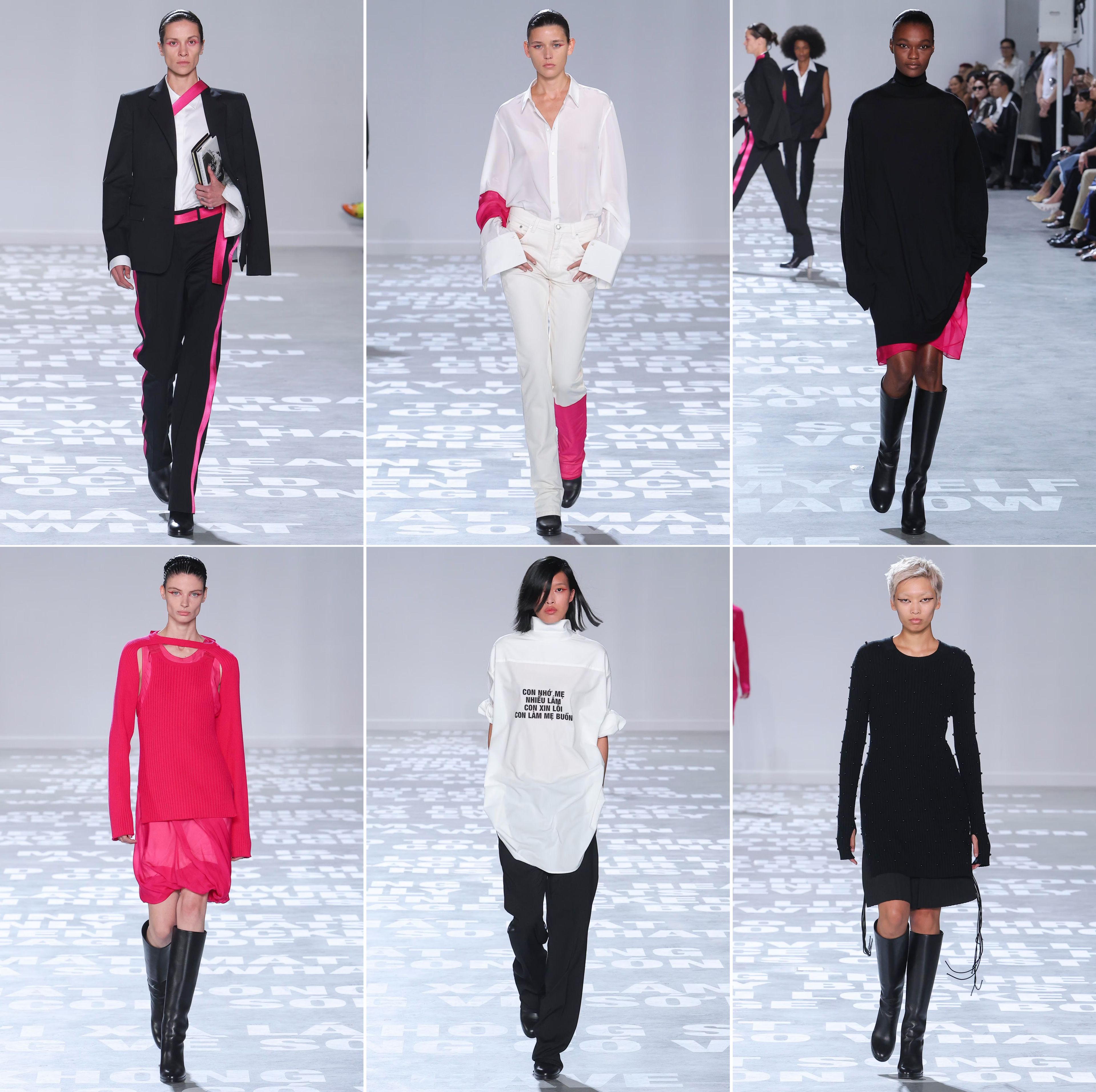
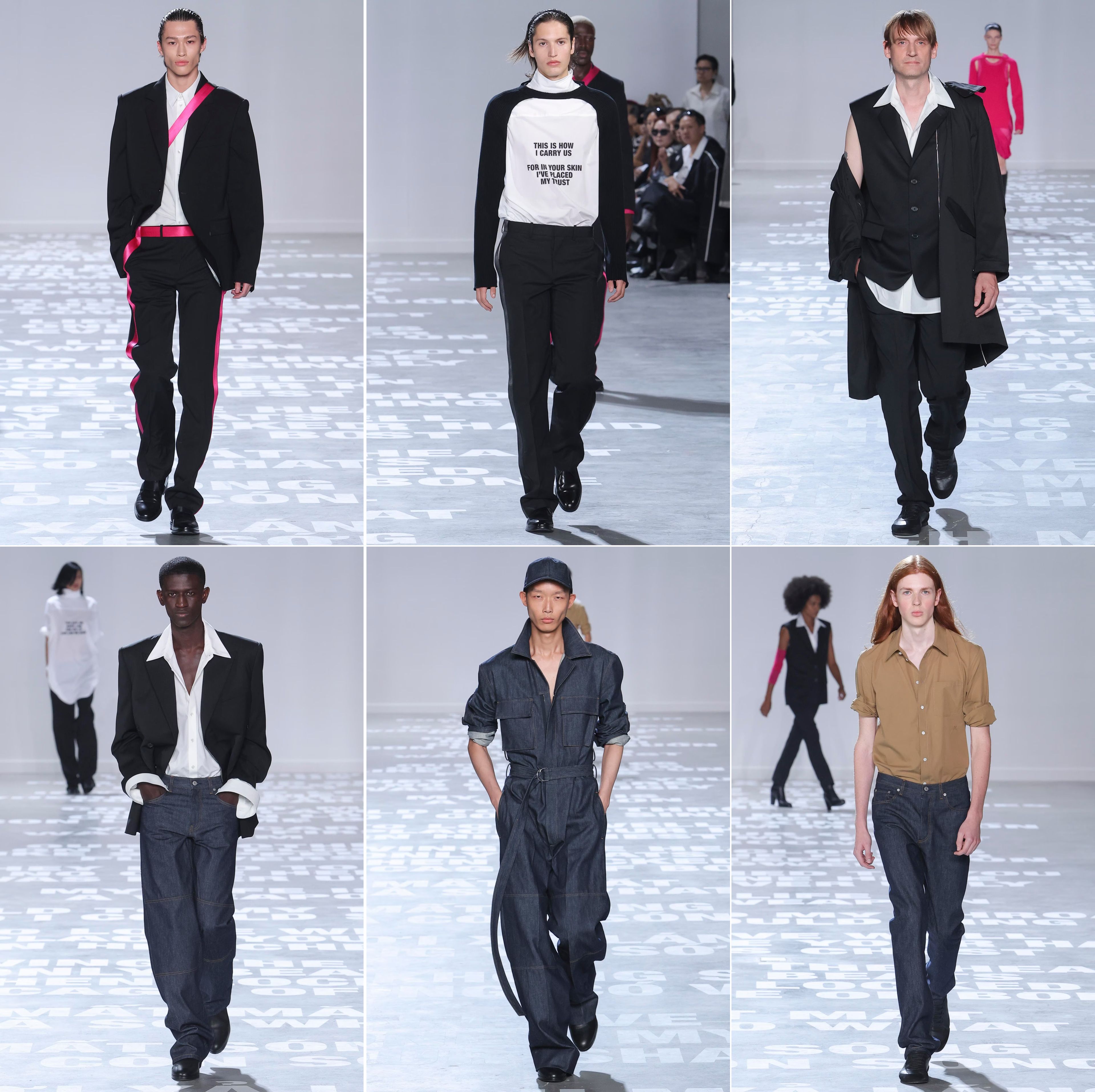
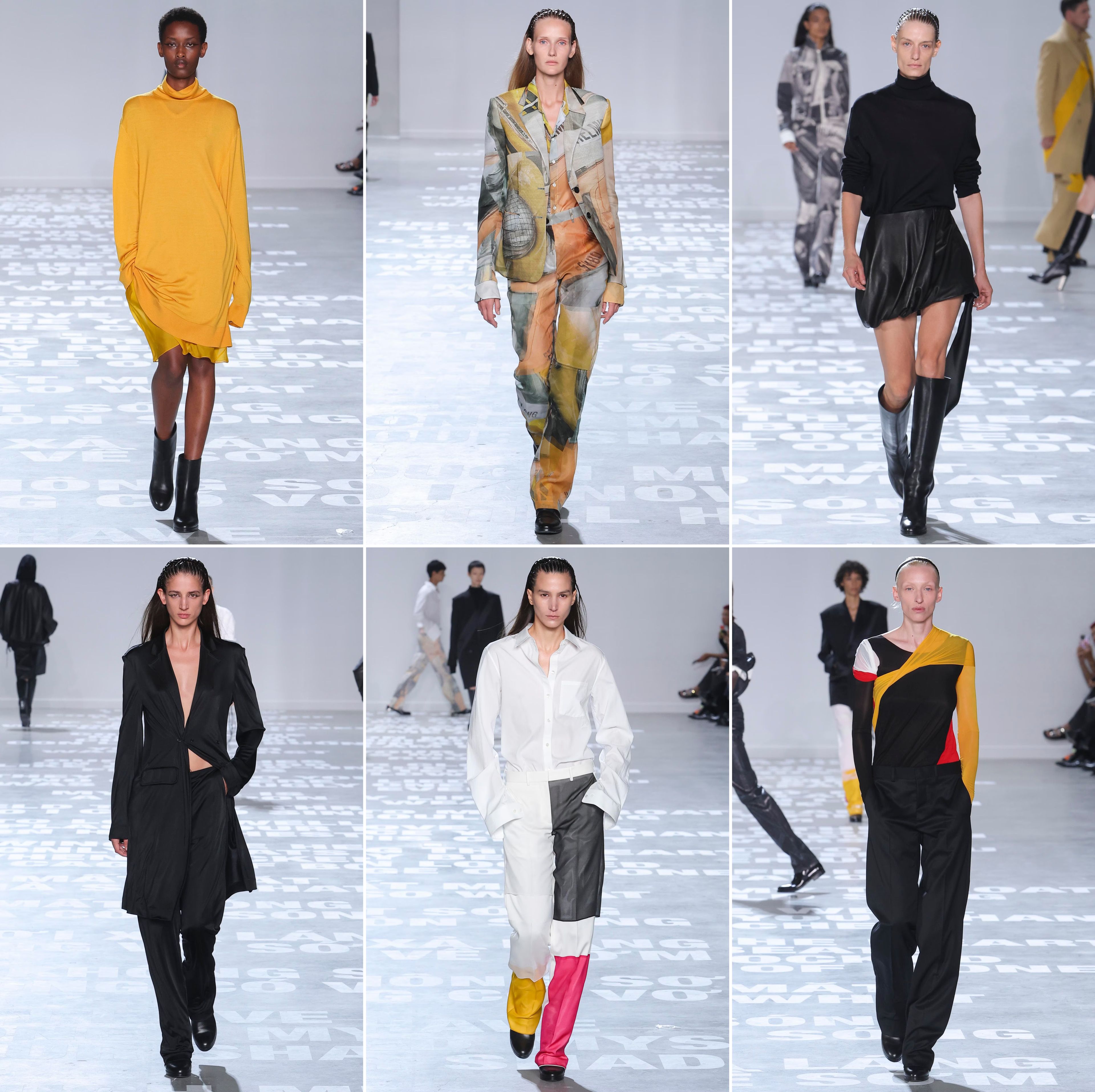
Mr Do was clearly obliged to retain that commercial appeal, while keeping to Mr Lang’s trope of straight lines (but more relaxed), the Austrian’s love of white shirts (this time, worn back to front, and slogan-fronted), even his colour palate—the shots of brights: for now, hot pink and less vibrant marigold. But could one be too reverential when it comes to working with the archive (whatever little there was) or from memory, or fondness? Could one be too eager to please? Mr Do probably had, for his bosses at Fast Retailing, a KPI to meet, and, for his audience, expectations, but did he sacrifice the subversive (a word we prefer not to use, but is applicable) for a more worshipful approach to Mr Lang’s willingness to go the opposite route during an era when designers frivolled through it with the meretricious or the glamorous? The side-striped trousers Mr Do showed were a fleeting trend than tugging desire; the ripped chiffon layers of the colour-blocked pants more token than convincing; the taxicab print more homage than evocation. Perhaps they were just not enough.
It is easy to see that Mr Do is, as one SOTD follower excitedly texted us after the Helmut Lang show, “a good fit”. Too good and, therefore, too comfortable? Mr Do, for certain, has the credentials, the technical strength—and control—to take Helmut Lang to better places than it had been in the past, but while this may well turn out to be the best show of NYFW (the womenswear was clearly stronger), it did not nudge us anywhere near the edge of our seat. Instead, we floated into nostalgic reverie as pleasing pieces appear one after another. It must be said that the knitwear is strong (the ultra-cropped pullover that was really just collar, shoulder and sleeves!), the flat-front (!) and slightly slouchy (not skinny) pants attractive, the trim suits (but not the wide-collared shirts worn with them) sleek—they have a place in the not-over-dressed-but-incalculably-smart way many presently choose to dress and to fill their wardrobes. But will they be adequate, after the initial rush of seeing Helmut Lang so engagingly revived, to keep the brand amply ahead as it was once before? We won’t rush to conclude.
Screen shot (top) and photos: Helmut Lang
 Style on the Dot