Sixth Sense on Penang’s Lebuh Pantai is a must-stop for most visitors to George Town. It single-handedly created the loose silhouettes that have become synonymous with the style of this part of the island, if not the state. With their sister store Warehouse 129, they have basically cornered the city’s fashion market
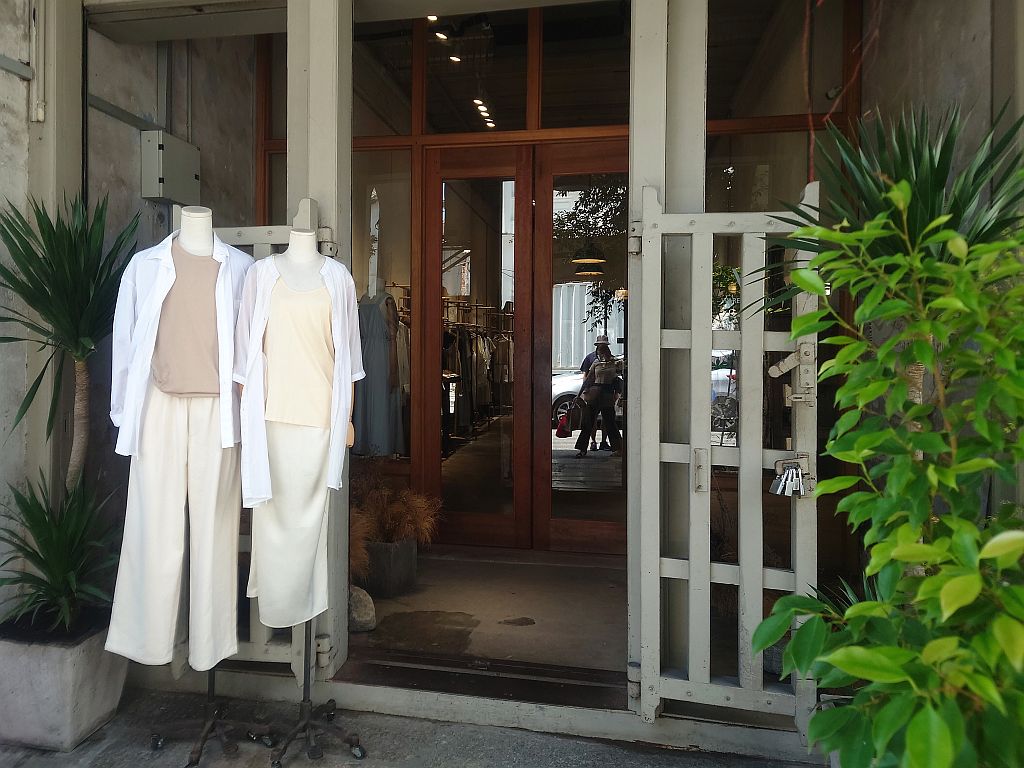
The rustic entrance of Warehouse 129 on Beach Street
By Molly Tan
Penang—state and island—is not exactly known for fashion. The capital George Town’s biggest international label is Michael Kor at the regrettably lifeless, once sea-fronting Gurney Paragon. Food is undoubtedly Penang’s biggest draw, but even char kuay teow would lose its appeal after too many plates, no matter how fabulously savoury (especially if fried with duck’s egg) or beautifully charred they are. Fashion, as the federal capital Kuala Lumpur (KL) know it, is not important to Penangites or penang lang (庇能儂) in the local Hokkien. Sure, Penangites want to look good, but they are not obsessed by it. When friends visiting from abroad ask me where they might find local fashion brands they can bring home, I am always unable to give them a list they can refer to or a name bursting with ethnic pride such as the KL-based Behati (not available in Penang), favoured by celebrities. And, no, not Richard Rivalee—now more a restaurateur than couturier. I would like to name Yeohlee Teng or Self Portrait’s Han Chong, but the two Penang-born designers operate out of New York and London respectively.
The stores I always turn to is Sixth Sense and its sister outlet, Warehouse 129—the one that I much prefer, both situated barely 100 metres apart on the increasingly buzzy Lebuh Pantai or Beach Street in George Town. Once a thoroughfare that ran parallel to the shoreline (which has moved further away as a result of land reclamation) on the eastern coast of the former British entrepôt, Beach Street is now humming with the kind of trade and services not divorced from its past—at least aesthetically—that tend to attract tourists seeking what I consider post-colonial exotica. Or, the kitschy and the retro among the decrepit. At the start of the re-emergence of Beach Street some time in the early 2010s, one of the pioneers who believed in the potential of this area is Australian Narelle McMurtrie of ChinaHouse fame. Every visitor to Penang is told to go to ChinaHouse, a “cultural destination” that was opened in 2011, and is essentially a cafe/bar/gallery known for their cakes (that include, unsurprisingly, lamingtons). But in the wake of new establishments such as Le Petit Four, The Maker, or Jo Gourmand, all on the same street, ChinaHouse’s offering looks and tastes (the shocking sweetness!), to me, far from refined.
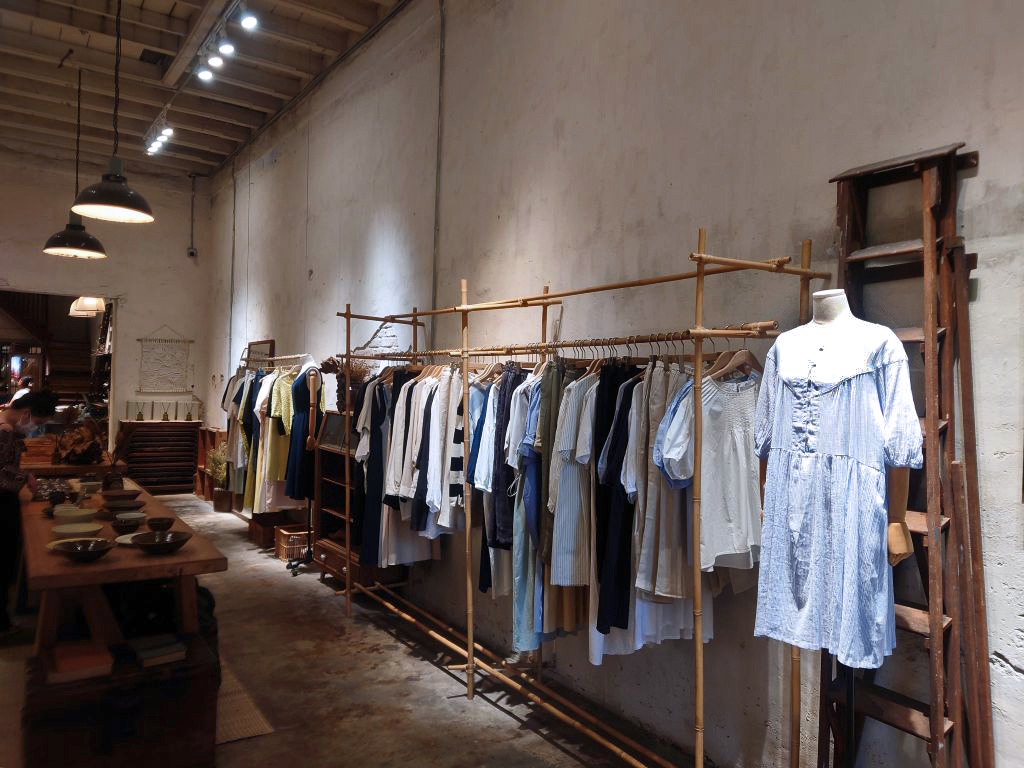
Womenswear occupy the first two zones of Warehouse 129
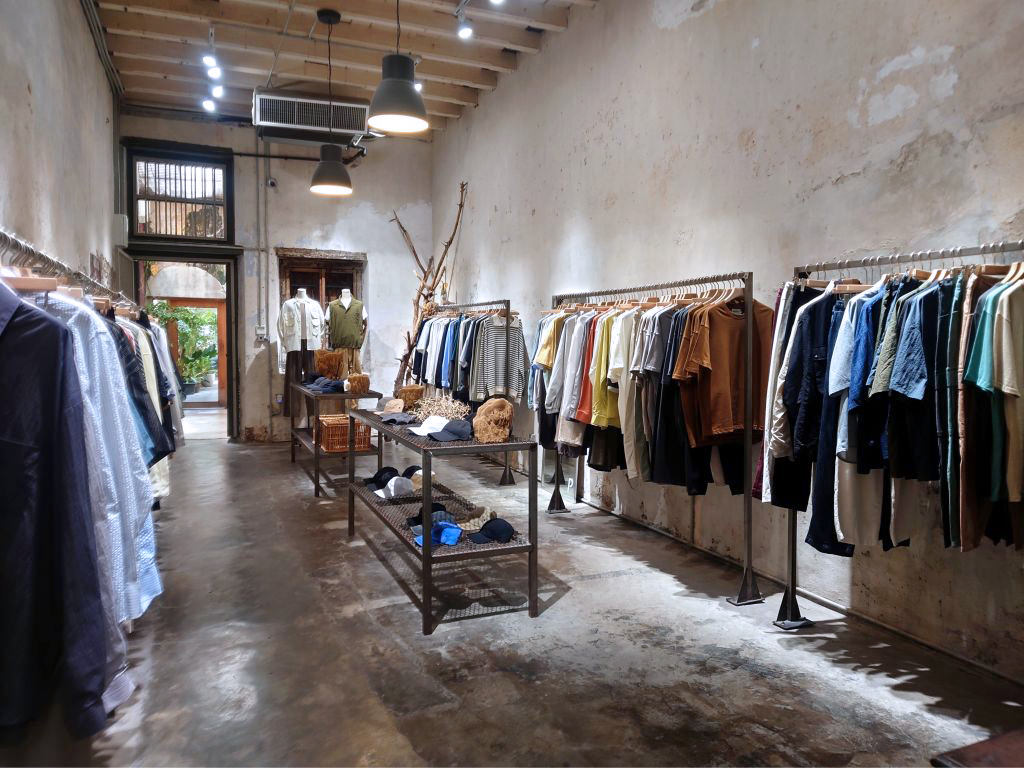
At the far end of the store, the men’s selection
One of the earliest fashion brands to establish themselves here on Beach Street is Sixth Sense—which is, in fact, ChinaHouse’s immediate neighbour to its left. Founded in 2014—the year the Second Penang Bridge was officially opened—by Daniel Tan, Sixth Sense is depictive of the relaxed dress vibes of Penagites, but cast through a moderate fashion eye. Mr Tan is no stranger to the clothing business; his family is behind one of Penang’s biggest garment contract manufacturers—Haute Couture Fashion Bhd—back in the ’70s and ’80s, with factories, at one time, in Butterworth and, surprisingly, Chiang Mai, Thailand. His fashion brands come under the separate entity Sixth Sense Design, which approaches garment conception and retailing by striking “the delicate balance between cherishing the past and embracing the present moment”, according to the brand’s communique. Mr Tan, an accountant by training, conceived what would become Penang’s archetypical fashion label, that has, since its inception, been very much copied, but not with quite the same breadth of visual sureness.
I sometimes think they’re the state’s answer to the KL-based Seed. While Seed is more city-centric in their anything-goes aesthetic and has a far wider reach (they are considered a national brand), Sixth Sense is unabashedly local, relaxed, folksy, and imbued with a naturalness of form that commensurate with the name of the street on which it has become somewhat of an “institution”, as fans would say. This is what Singapore’s Island Shop tried to do, but did not succeed. Sixth Sense Design now operates (and produces for) two separate stores: the original Sixth Sense (comprising its eponymous label and other indie brands) and the newer sibling Warehouse 129, which according to a staffer also includes collabs with other regional indie brands, “from Korean, Hong Kong and Taiwan; mainly Hong Kong and Taiwan”. It is sometimes hard to tell both stores (design and space use) and their merchandise apart, but upon closer examination, it is apparent that Warehouse 129 is stocked with what might be considered trendier styles (boxier and looser shapes) that would work outside of Penang.

The Sixth Sense store, with womenswear taking up the front two-thirds of the extra-long space
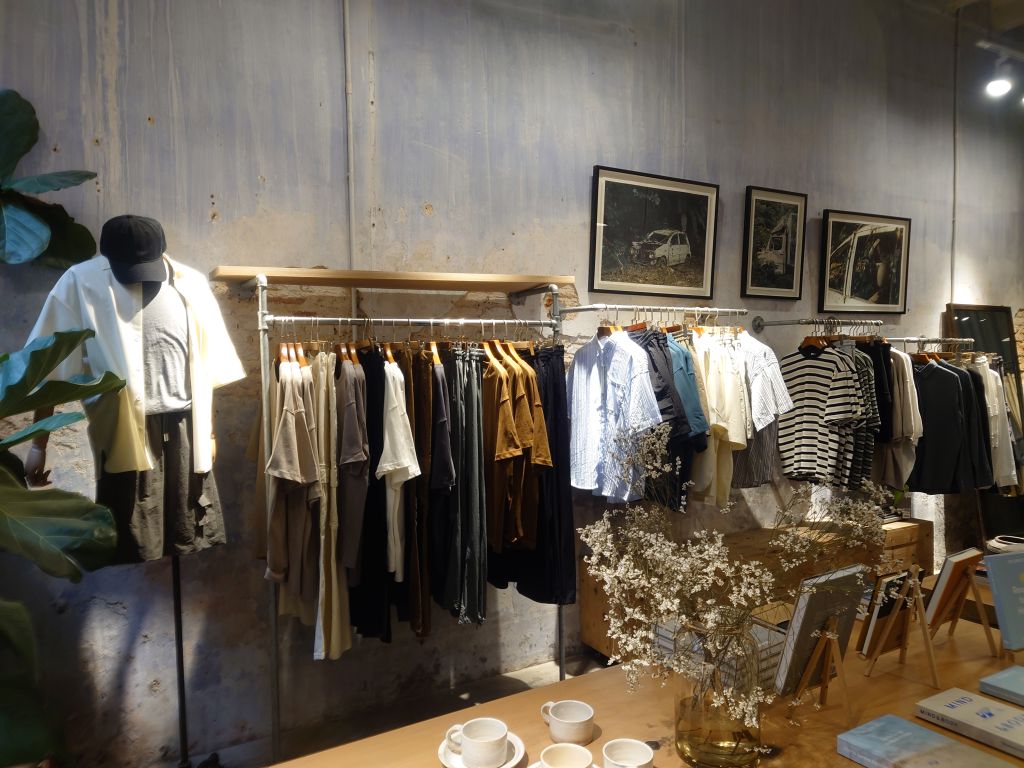
The smallish men’s selection at the rear of the store
Most people discover Sixth Sense and Warehouse 129 quite by chance (the brand rely on virtually no advertising), in their desperate search for air-conditioned respite from the punishing island heat. One lass from 哈尔滨 (Harbin) recently told me that she was inside to “解暑 (jieshu)” or seek relief from the heat, but ended up shopping. Personally, my favourite place to get away from the headache-inducing temperatures, the noisy crowd, and the dispiriting traffic is Gerakbudaya, the nearly-a-decade-old indie bookstore that may possibly be the best in Southeast Asia. But the newer Warehouse 129 is a draw as it is, to an extend, lesser known and, therefore, often less thronged. On my first visit to Warehouse 129 in 2019, just before the pandemic, I was struck by how similar it looked to Sixth Sense (they have similar entrances!), and had, in fact, thought that it was a knock-off of the latter, until I asked the staff and was told that they were from the same company. Four years later, things have not changed. Like Sixth Sense, Warehouse 129 is blessed with a beautiful space—narrow, but long (about 7.6 metres) that deliberately retains bits of its crumbled glory, all in a patina of sepia.
The looks of both brands have been described as “minimalist”, which means that colours are kept largely neutral, shapes simple and mostly tented, and fabrics natural (such as linens), although, increasingly, modal of varied quality is used. Daniel Tan told Tatler Malaysia in 2020: “For us, minimalism means living a simple lifestyle and focusing on what is essential. Minimalism doesn’t mean having less, but having what is important and meaningful to you. So you have to truly understand what you want and who you are.” Despite their appealingly clear aesthetical bent and Monocle-worthy gentility, the quality of their clothes are not consistently favourable. I have been told of dresses that shrank after washing and hems that came undone, unprovoked. I have noticed that the finishing of some of the garments are, at best, perfunctory. Recently, during a visit to Sixth Sense, I overheard a shopper among a group of Chinese mainlanders telling a staff: “你们不可以这样的啊,有线头都要剪 (you can’t be like that, when there are loose threads, they have to be trimmed)”. Indeed, what is important or meaningful to the kindred labels? The odd length of thread does make or break a brand, or a store. But Sixth Sense and Warehouse 129 will hold up it’s shining stature as Beach Street continues to rise. And rise.
Sixth Sense and Warehouse 129 is at 157 and 129, Lebuh Pantai, George Town, respectively. Photos: Dan Lim
 Style on the Dot