Demna Gvasalia at his most serious and severest
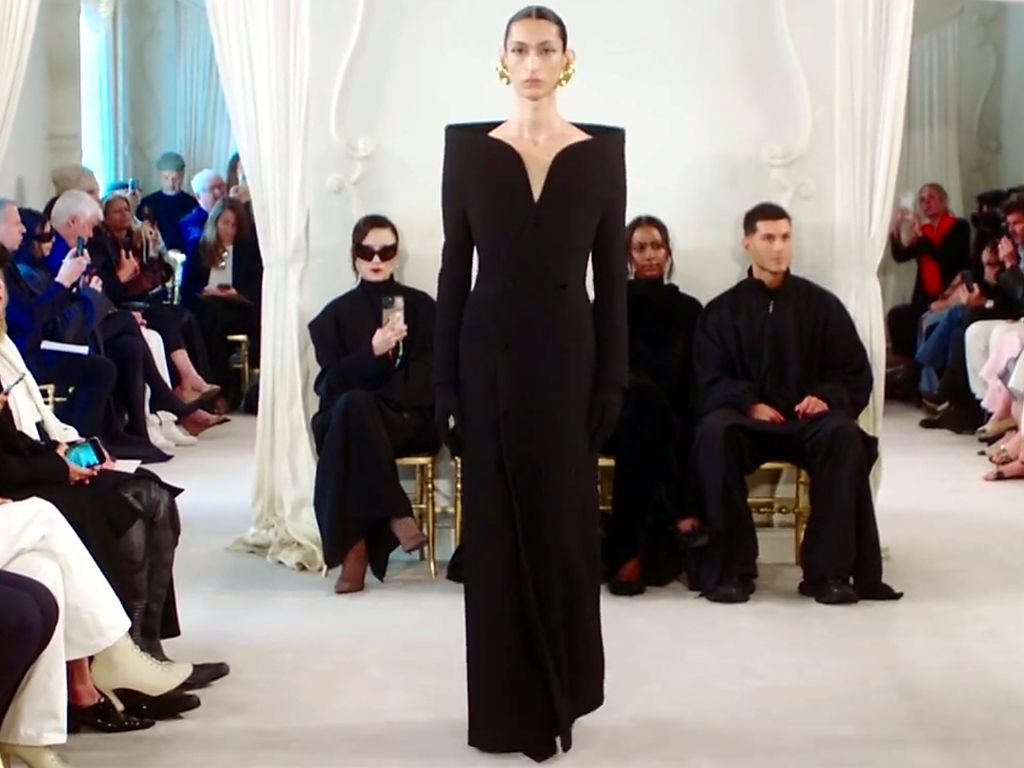
The show was still staged at the Balenciaga salon, a barely appointed space, conceived to let the clothes project their air of rarefaction and refinement. Each look was unhindered by the need for the superfluous (nearly) or the desire for easy pieces. At this level of execution and with the price they charge (on the Balenciaga website, a single “spencer” jacket of look 10 in a light weight fresco wool is listed for €70,000 (or about S$103,000). That would be, according to a Bloomberg report last February, €2,900 cheaper than the average price of a Mercedes in the EU), we certainly do not want what at other houses this season were happy “sophistication and simplicity”. Not either, for Balenciaga, the riparian stolidness that has been the height of both the Men’s Paris Fashion Week and the Couture. Balenciaga offered haute couture of sombre disposition and distilled the pieces to their very essence that captured the exactitude instilled by the maison’s founder.
We were equally drawn to the soundtrack Mr Gvasalia picked—arias, all sung by Maria Callas, with the accompanying music digitally taken out. Ms Callas’s voice filled the space; her higher registers sometimes tremolo than vibrato, but Suzy Menkes described on Instagram as “soaring music”. It was surprising that while he chose to push forward the aesthetical excellence of the house, he chose to lean, at least sonically, on the imperfection of Ms Callas’s voice in her later years. It might be unseemly to say that the music choice perpetuated the cliché about opera and fashion, that the cult of Maria Callas is, to many designers, palpable and not over, and that the inherent extravagance of opera embody the excess that couture is often associated with (earlier, Stephane Rolland, showed a collection in homage to Maria Callas, at the Paris Opera no less!). But the soundtrack of Balenciaga’s show was used to brim over the space with the vocal exemplar and reminder of the fantastic and the exuberant that Ms Callas, even with wobbling voice (as heard in the opening aria of Casta Diva), had epitomised. Back in the day, watching her perform could be a harrowing experience: You did not know if she would be able to hit the high notes. Fortunately, at Balenciaga, one need not—for now—confront that possibility.
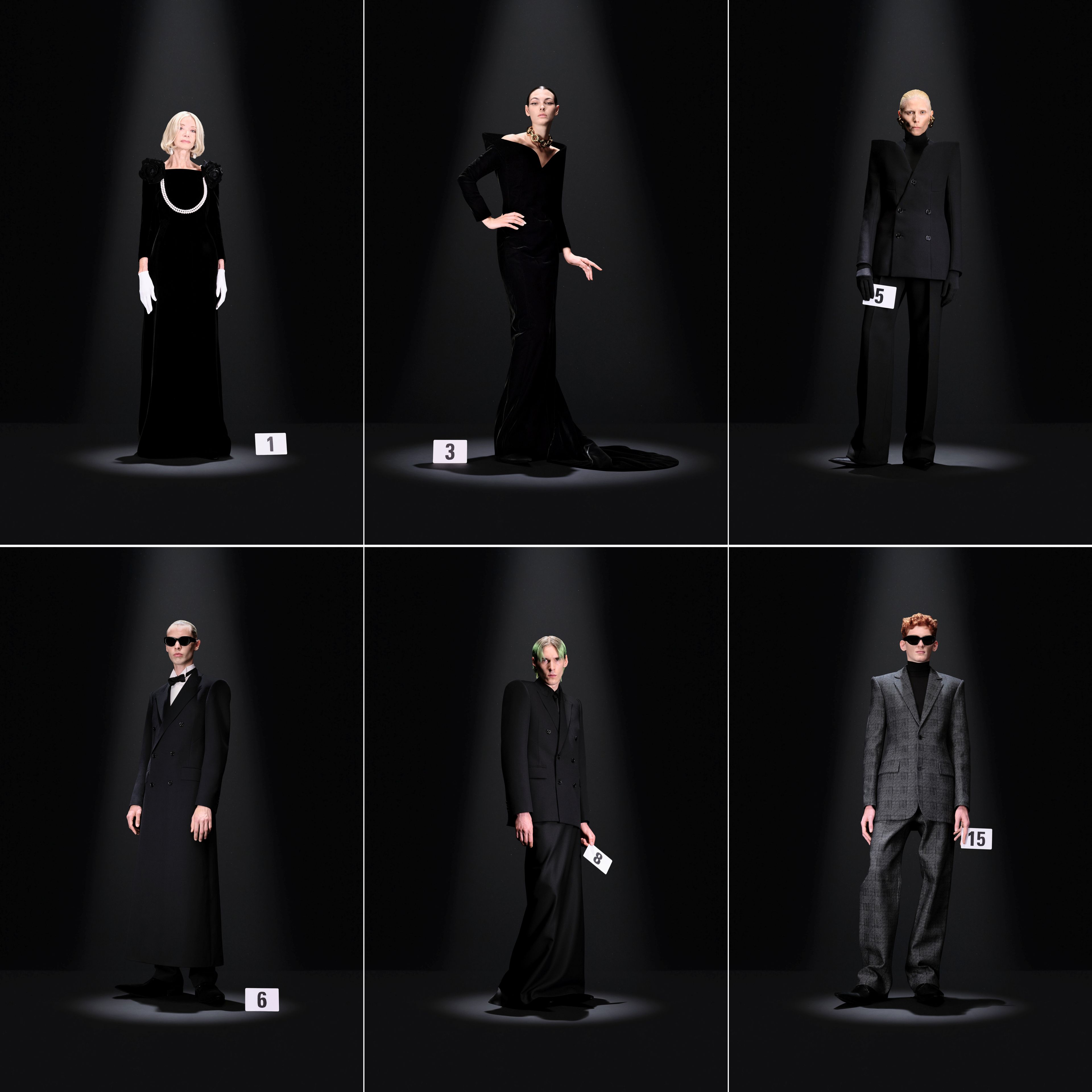


We do not deny that Ms Callas was one of the most compelling operatic greats of the second half of the 20th century. It could be similarly said of the stature of Cristobal Balenciaga. Mr Gvasalia chose to keep the legacy very much alive with the same spirit of punctiliousness as the “master of us all”, an accolade that came from Christian Dior. There is no immediate connection in the Balenciaga designs to what Ms Callas wore, but a strapless pink dress, with the skirt drawn back to the rear into a bustle and train, reminded us of a similar floral version by Christian Dior that Ms Callas wore in 1958 (as seen in photographs of her, shot in her living room). Mr Gvasalia’s lapel-less suit jackets (or coats) with a V neck that splayed slyly into fichu-ed stiffness that framed the shoulders like a proscenium was also evocative of the way Ms Callas pull the shawl of her outfit across her upper chest at the Paris Garnier performance, also in 1958. Even when small the affinity, the clothes stood on their own as bastion of conscientious modernity.
They were dramatic in terms of shape, but they were not absurdly exaggerated. Rather, it was all in the minute calculations of proportion that easily arouse the imagination. We were drawn to the seeming minimalism that was not, however, applied to their construction, as well as the sometimes barely discernible surface treatments, including rather clever tromp l’oeil applications. A pair of worn ‘leather’ jeans in look 28, for example, was paint applied on linen pants to mimic the distress from wear (but, thankfully, not tear) and will set you back €25,000 (or about S$36,600). The evening dresses were especially splendid, never departing from the elegance (and, perhaps, hauteur?) that had characterised the brand from the start. A red lace dress with a rigid bell-skirt was breathtakingly precise in rotational geometry. A one-shoulder dress, from the front, hugged the shoulder, but at the back, hung, like a limp leaf, without appearing to hold itself to the body. The final dress, which evoked an armour-as-party-dress for Joan of Arc, was part Thierry Mugler, part Guo Pei, although the dress is lighter than what either designer had done, as it was made with 3-D printed parts. Eight months after those very public controversies that veered Balenciaga on a different course, it is still in an indefinable place. Could this back-to-good-design restore the brand’s reputational good health?
Screen shot (top) and photos: Balenciaga
 Style on the Dot