Marc Jacobs staged a fashion show. Or, rather, a finale, twice. In three minutes, it was over. Really
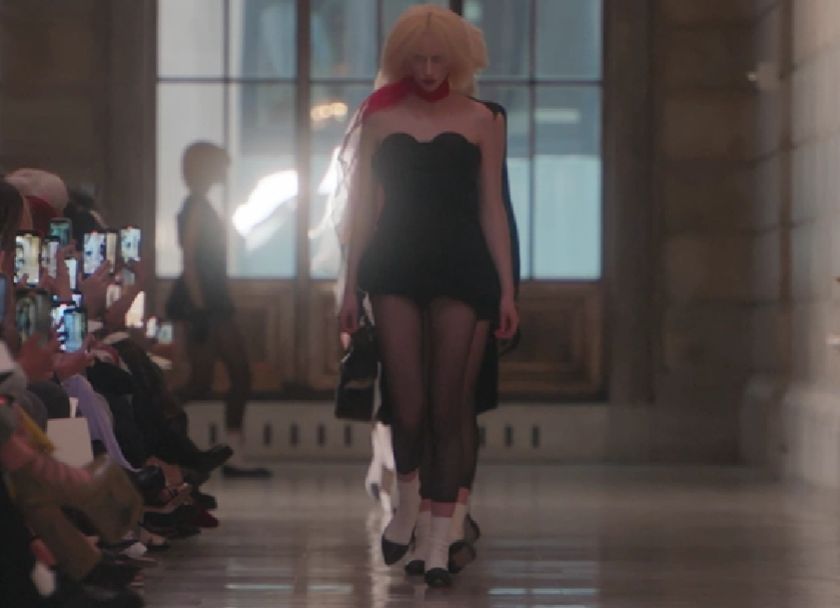
Was Marc Jacobs aiming for the Guinness Book of World Records for the shortest fashion show ever? He could have been when the presentation of his autumn/winter 2024 collection was, in essence, two rounds of the same finale, for less than the time you need to cook an egg in water, half-boiled. It was, to say the least, plain irritating, to watch the 29 models marched that quickly by. Were the clothes so terrible, so beyond comprehension that he did not want viewers to look close enough or spend time dwelling on them? What about the guests? Did they make the effort to turn up to witness a highspeed train ride of a show and then it was no more? Why, indeed, spend all that money and effort to book a place—the New York Public Library, doll up the models to march through a runway presentation that was even shorter than the dresses he showed? Fashion (shows) can be this fast.
His defenders say that’s because he is Marc Jacobs. And because he could. On home turf, he could do whatever he wanted. Just as he had made guests stick around for two hours (some reportedly did not) before he started the spring/summer 2008 collection (in 2007), he could now make them stay for that wee bit. A “crazy-long wait“, as The New York Times once described the result of that tardiness, was presently a crazy-short click-bait. The optimists consider this a stance on how rapidly the pace of everything around us unfolds and then fades away, especially our technology-centred world. Who has time for anything lengthy when there is the next bigger brief to uncover? The thesis on the speed of life’s aggregate highs and lows was more compelling when we later learned that Mr Jacobs enlisted the help of ChatGPT, the talented bot, specifically to come up with the show notes, and going by what was shared so far—”innovative approach to blending men’s wear-inspired tailoring with feminine aesthetics”, the AI smarty-pants isn’t that great after all.


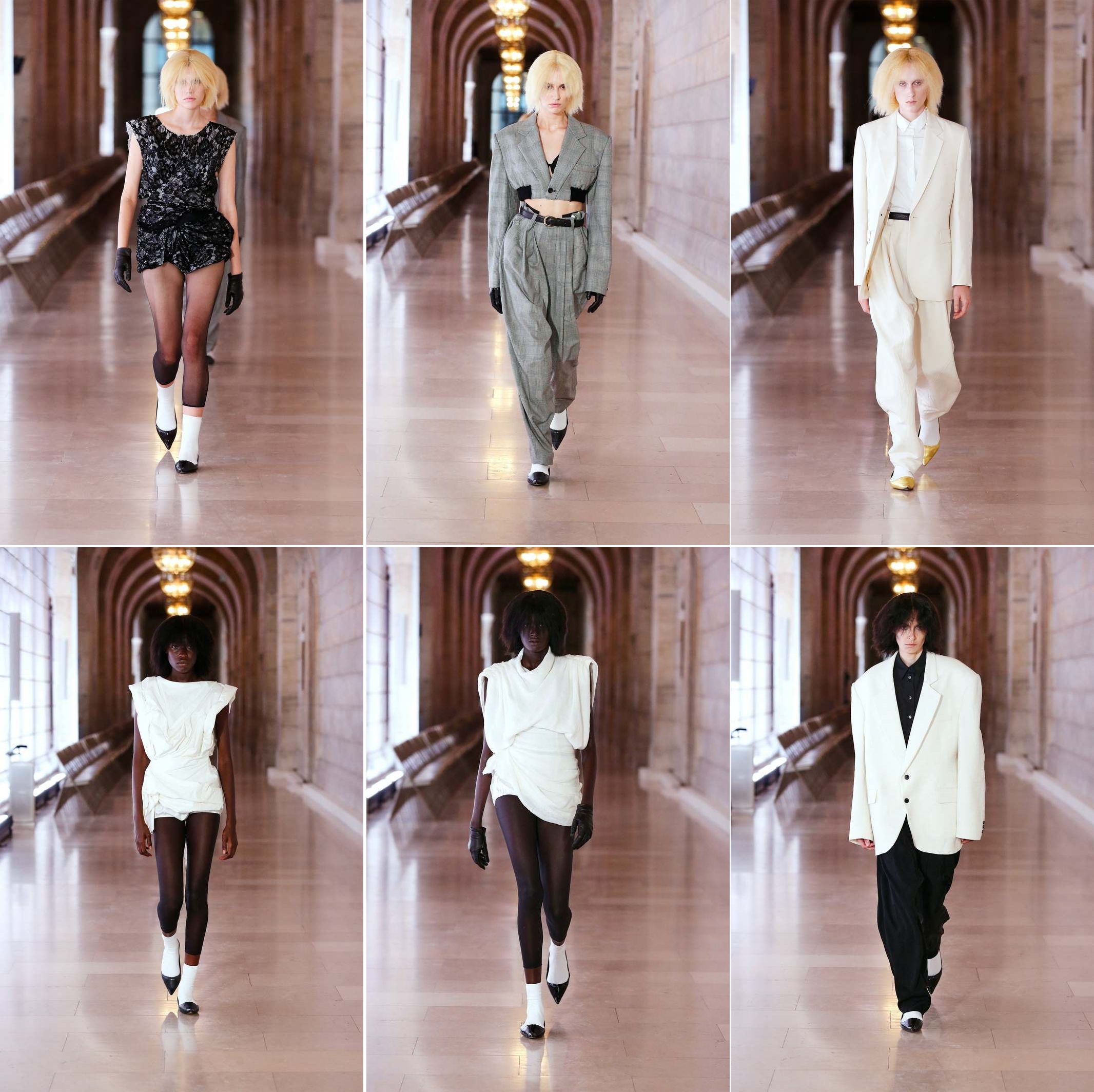
As for the clothes, it appeared that Marc Jacobs did not succumb to the lure of AI. Rather, he yielded to the past and to the pull of those designers he has always loved. It was a neat collection of just 29 looks, which focused on the things he really wanted to create or his ability to manipulate fabrics than be restricted by the need to send out a puffed up collection that is punctuated with fillers. What was immediately noticeable was the apparent total detachment from the oversized craziness of the past few seasons. This time, the clothes stayed with conventional proportions when it came to the spatial relationship between garment and the body. The roomiest items were two not exceptional blazers, but even those were contracted, considering the veritable hulks that he had been doing. The question is, what will those who own pieces from the recent past collections do with them? What from those can be worn with the sanity at hand, but gone in a flash?
These were amalgams of what he has liked: strong shoulders, draped or textured bodices, ruching, the pussy bow (but not tied). These were composed to effect the kind of femininity that seems to hark back to another era—this time, it looked rather ’80s, the kind that will attract rock chicks unafraid or in search of the odd drape, the flash of the bra. The men’s wear-inspired tailoring that ChatGPT saw, we did not. Or was it so feminised that it was hard to say with certainty that Mr Jacobs took a page out of the Savile Row playbook. Sure, there were the few suits. These looked like they could be leftovers from collections that parodied Demna Gvasalia, but never released. Curiously, for an autumn/winter season, the clothes were surprising mostly brief and skin-baring, nary a coat. Just as this was a show that was quick to end, it could be just as brisk when remaining in our memory. Perhaps, it is in the ephemerality that the appeal held, like in the disappearing messages of Snapchat.
Screen shot (top) and photos: Marc Jacobs
 Style on the Dot